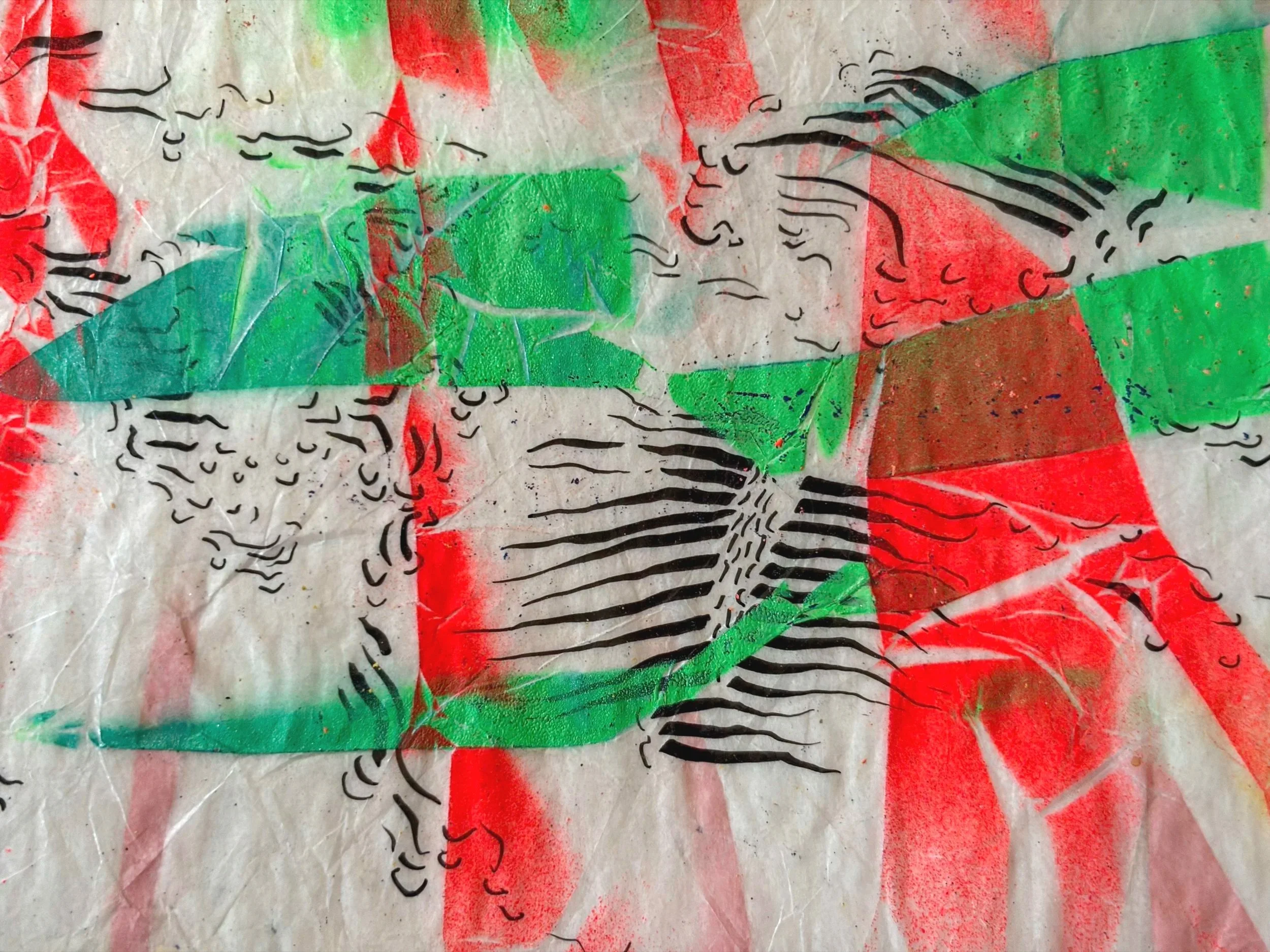
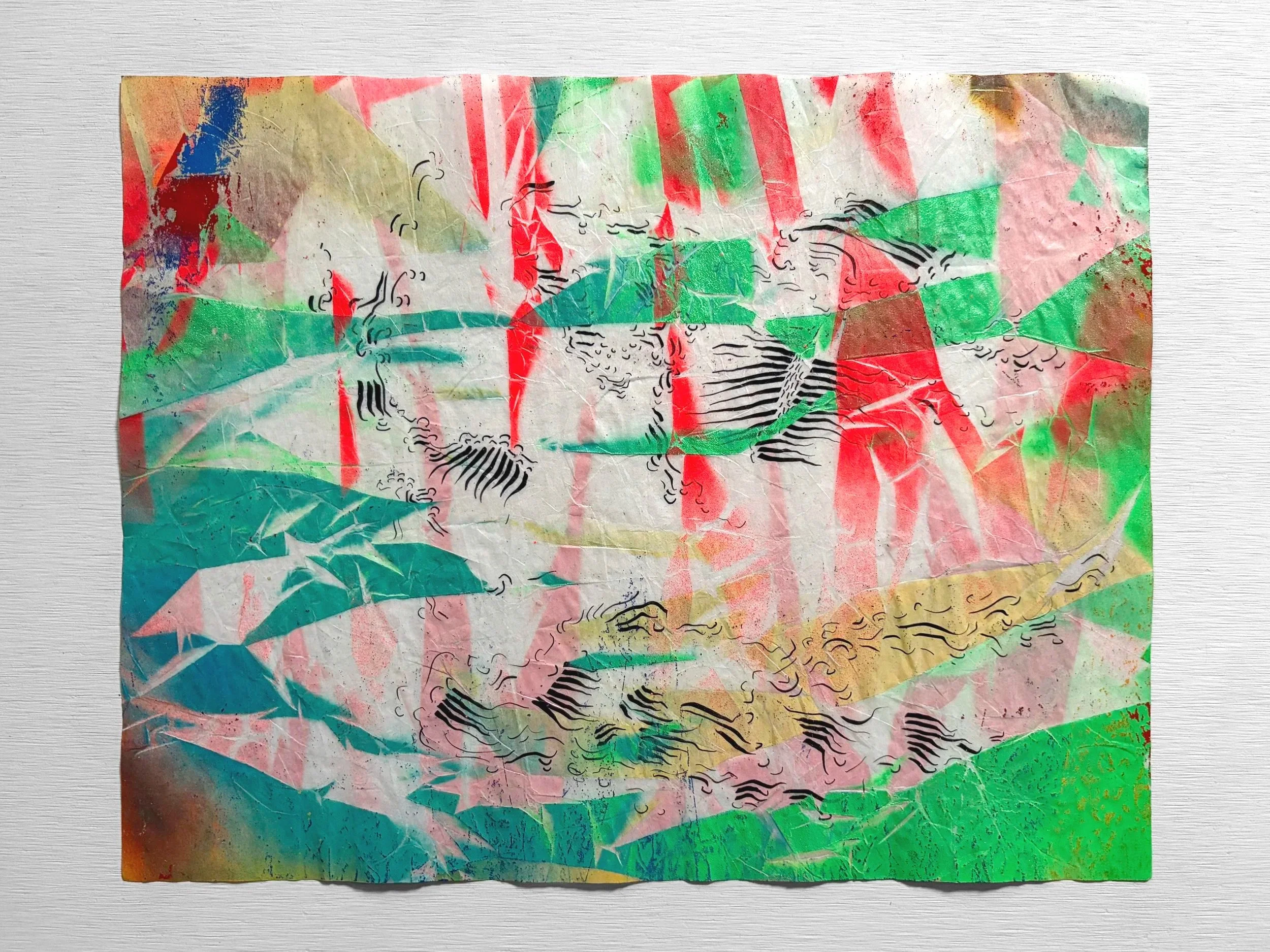
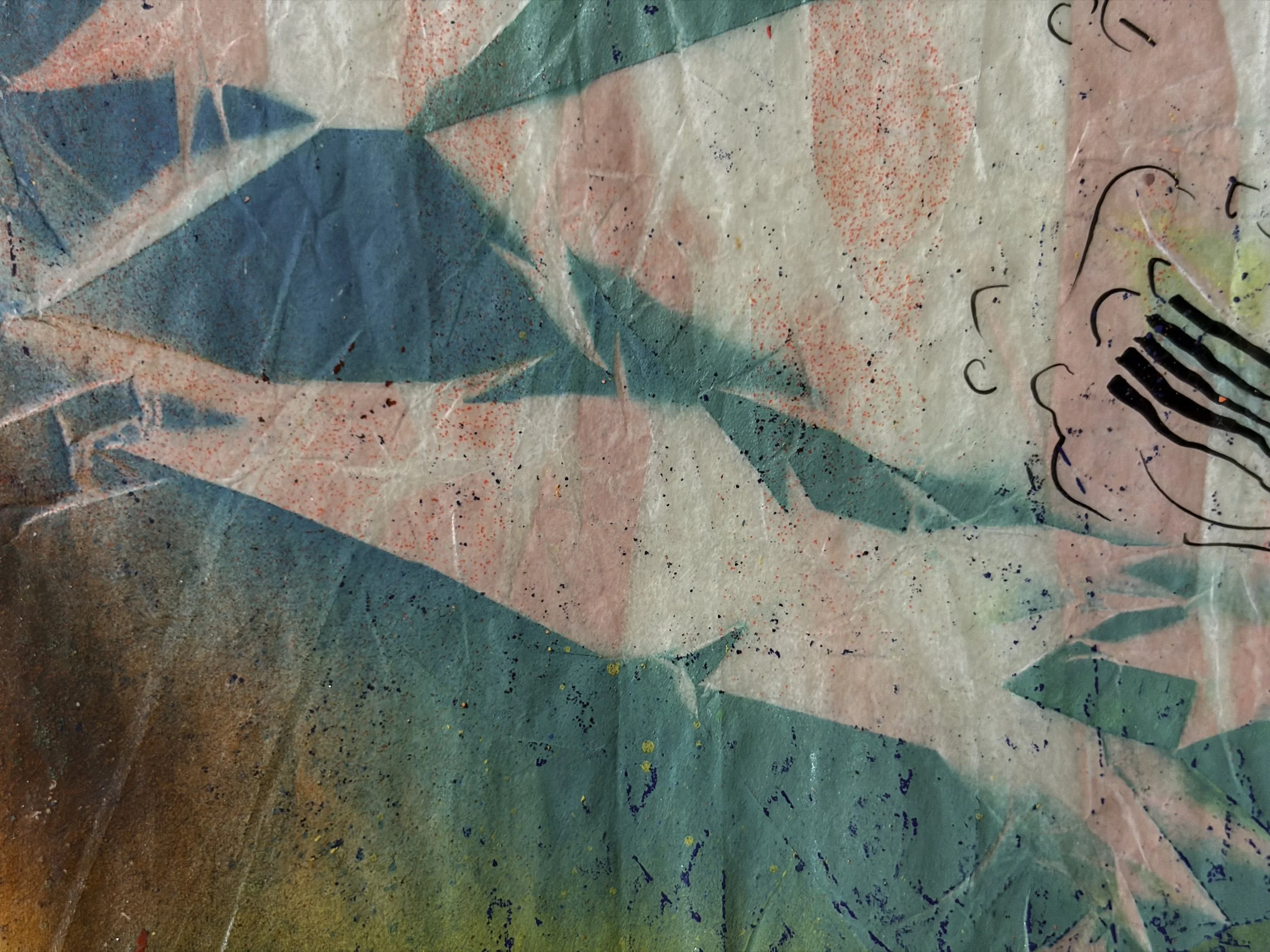
Above: Surprise, Surprise No. 6 is one of the quieter and more intimate works in the series, where restrained color allows delicate structures to emerge slowly. Fine organic marks spread across the surface like follicles, coral growth, aquatic plants, or small ecosystems taking hold within a larger environment.
The work suggests places where life survives through subtle processes: grasses emerging through snow, plants moving gently beneath shallow water, or small organisms filtering nutrients from their surroundings. Warm peach tones and fluorescent greens create a sense of fertile growth, while the muted earth colors give the image the feeling of a hidden tropical environment observed from very close range.
At another scale, the forms shift dramatically. The darker areas begin to suggest a monumental head emerging from the landscape, recalling ancient carved forms weathered by time and surrounded by vegetation. What appears microscopic can suddenly become enormous; what seems alive can become geological.
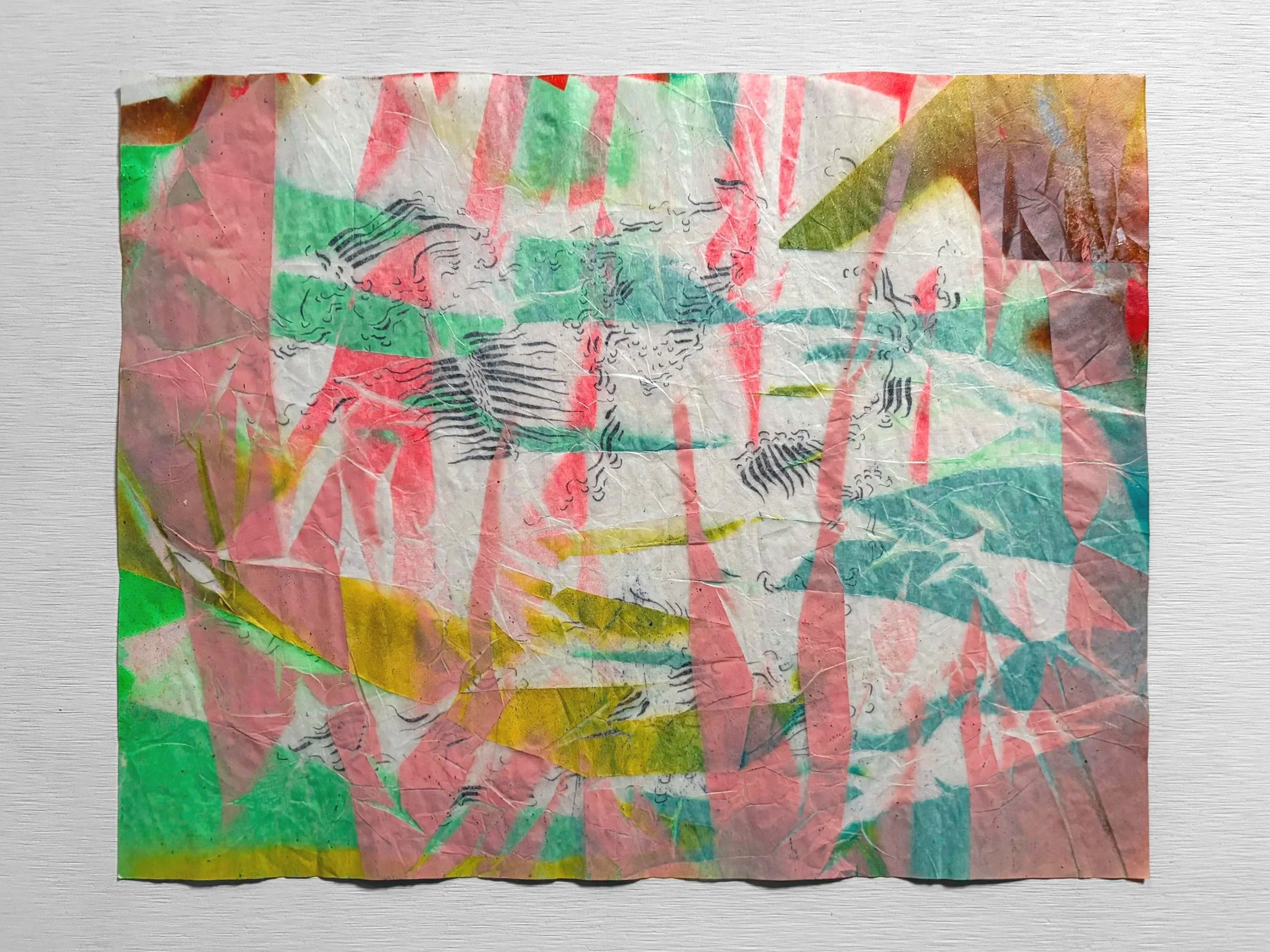
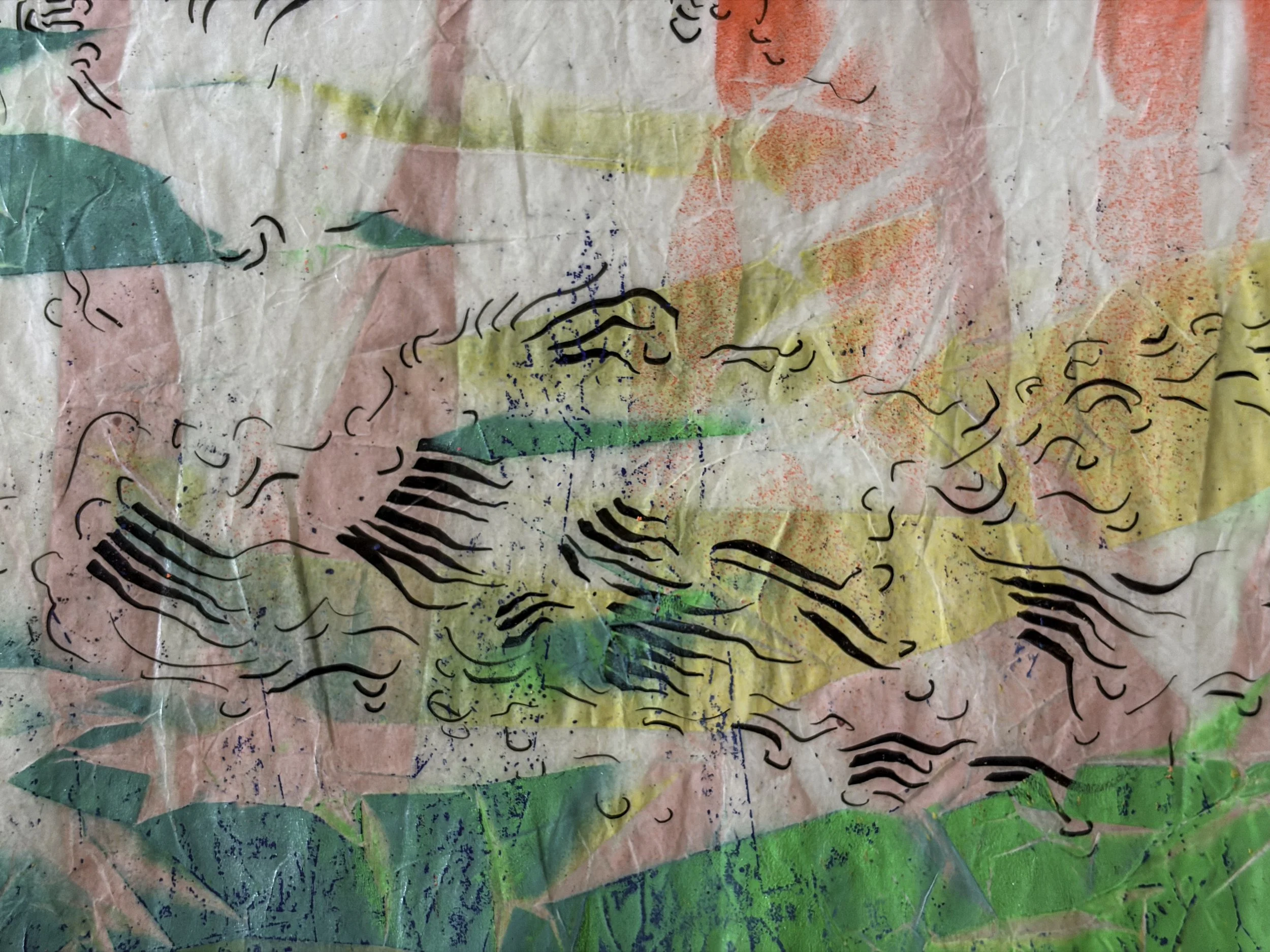
Below: The reverse surface reveals another relationship between organic form and the body. The linear structures begin to resemble stitches, fibers, hairs, or the delicate systems that connect living things together. The image moves between anatomy and ecology, suggesting that the patterns of growth repeat across radically different scales.
The hidden fluorescent passages add another layer of transformation, allowing subtle surfaces to become vivid under different conditions of light. Like the other works in Surprise, Surprise, the image changes depending on how it is encountered—revealing a different world rather than simply showing another side.
Reflection: Surprise, Surprise No. 6 draws from a lifelong fascination with small natural environments: creeks, streams, shorelines, and the countless forms of movement and growth that exist within them. As a child, I spent hours observing flowing water and the plants that moved within it, fascinated by how entire worlds could exist inside seemingly ordinary places.
The work explores how perception changes with scale. A tiny structure can become a landscape; a landscape can become a body; a body can become a geological monument. The folded and transferred process allows these possibilities to coexist, creating an image that feels simultaneously ancient and newly formed.
Like a dream fragment, the work does not settle into a single identity. It remains a living space where memory, nature, and imagination continue to transform one another.
Above: Surprise, Surprise No. 6 is one of the quieter and more intimate works in the series, where restrained color allows delicate structures to emerge slowly. Fine organic marks spread across the surface like follicles, coral growth, aquatic plants, or small ecosystems taking hold within a larger environment.
The work suggests places where life survives through subtle processes: grasses emerging through snow, plants moving gently beneath shallow water, or small organisms filtering nutrients from their surroundings. Warm peach tones and fluorescent greens create a sense of fertile growth, while the muted earth colors give the image the feeling of a hidden tropical environment observed from very close range.
At another scale, the forms shift dramatically. The darker areas begin to suggest a monumental head emerging from the landscape, recalling ancient carved forms weathered by time and surrounded by vegetation. What appears microscopic can suddenly become enormous; what seems alive can become geological.
Below: The reverse surface reveals another relationship between organic form and the body. The linear structures begin to resemble stitches, fibers, hairs, or the delicate systems that connect living things together. The image moves between anatomy and ecology, suggesting that the patterns of growth repeat across radically different scales.
The hidden fluorescent passages add another layer of transformation, allowing subtle surfaces to become vivid under different conditions of light. Like the other works in Surprise, Surprise, the image changes depending on how it is encountered—revealing a different world rather than simply showing another side.
Reflection: Surprise, Surprise No. 6 draws from a lifelong fascination with small natural environments: creeks, streams, shorelines, and the countless forms of movement and growth that exist within them. As a child, I spent hours observing flowing water and the plants that moved within it, fascinated by how entire worlds could exist inside seemingly ordinary places.
The work explores how perception changes with scale. A tiny structure can become a landscape; a landscape can become a body; a body can become a geological monument. The folded and transferred process allows these possibilities to coexist, creating an image that feels simultaneously ancient and newly formed.
Like a dream fragment, the work does not settle into a single identity. It remains a living space where memory, nature, and imagination continue to transform one another.