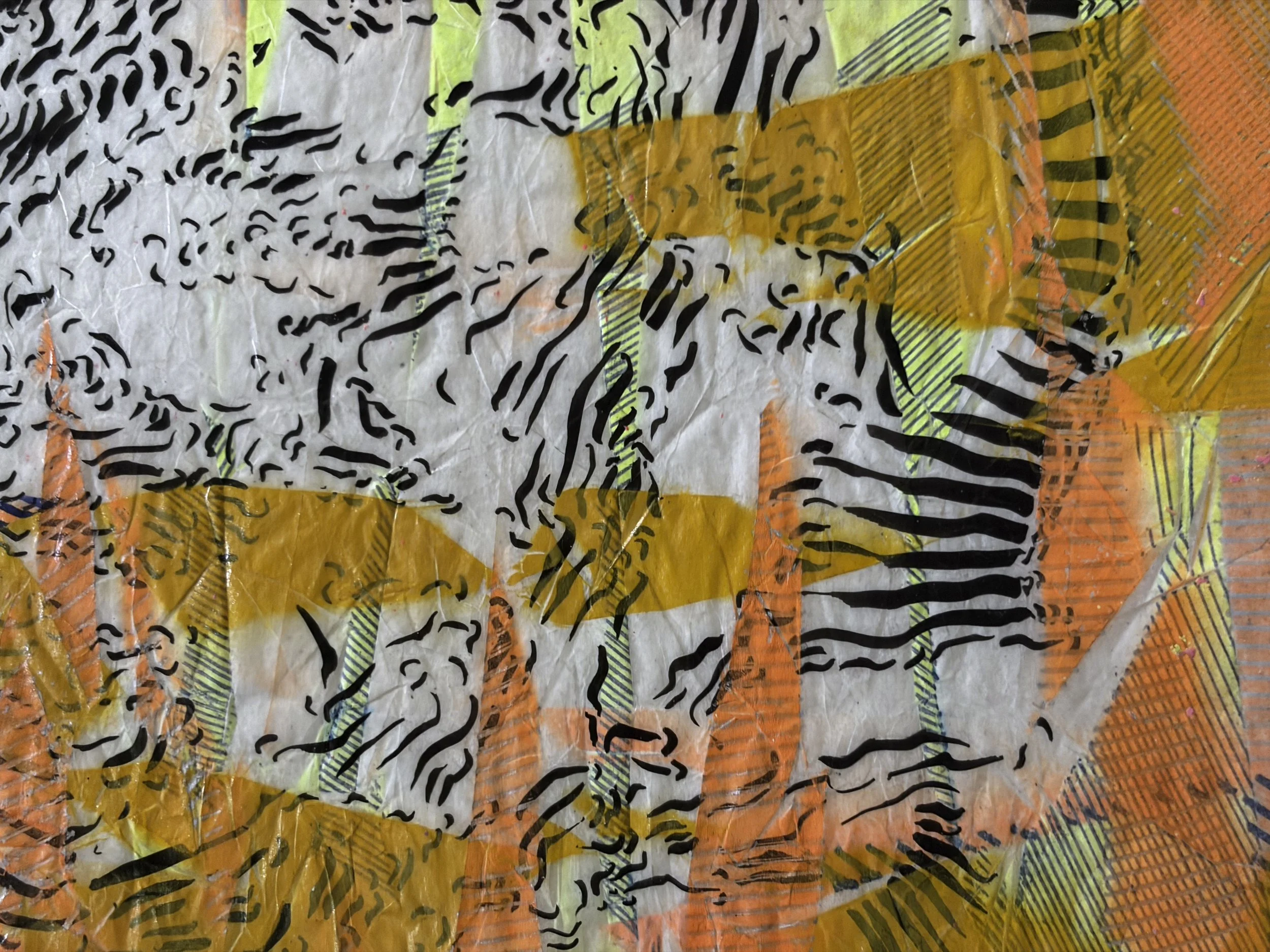
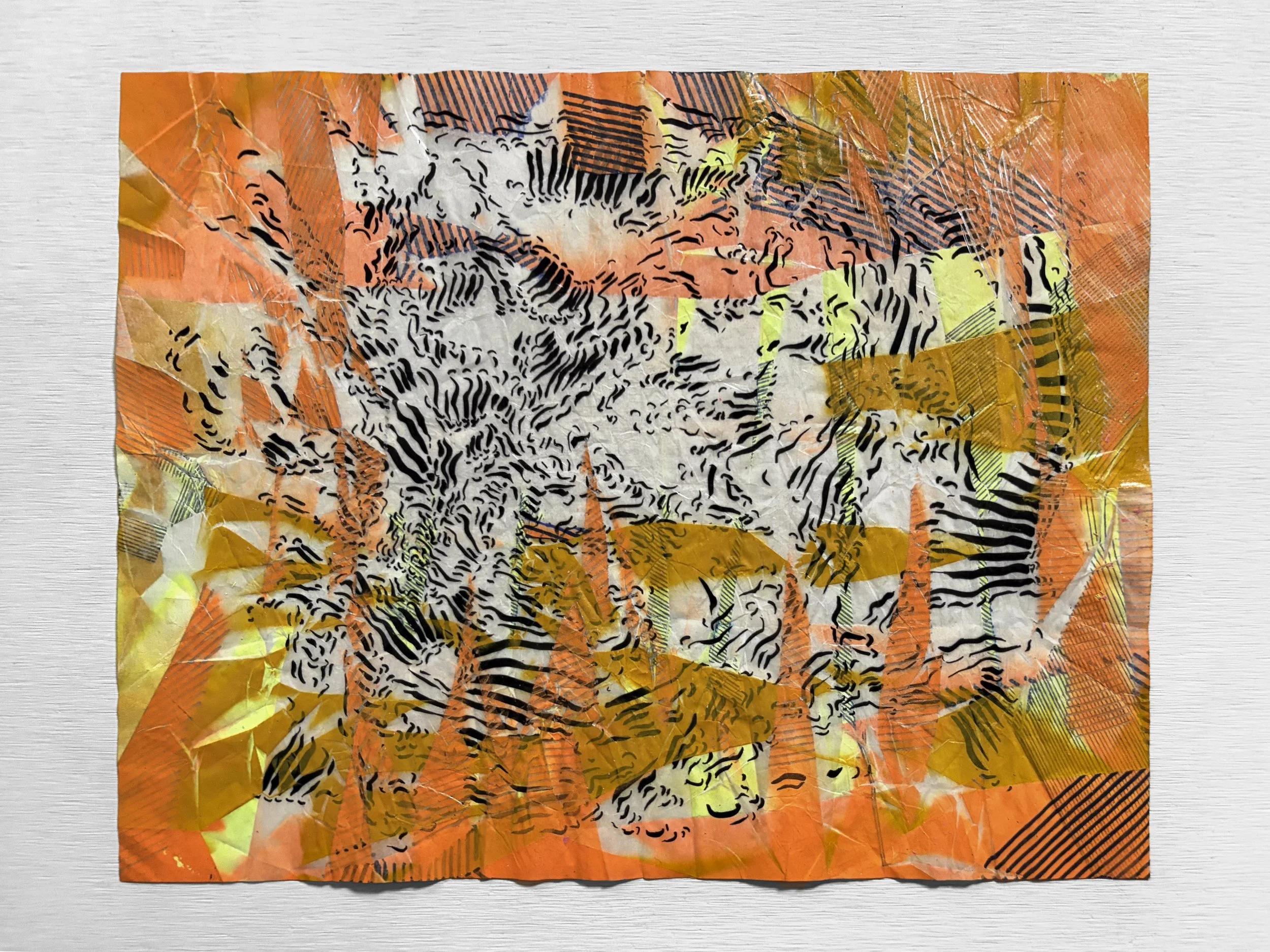
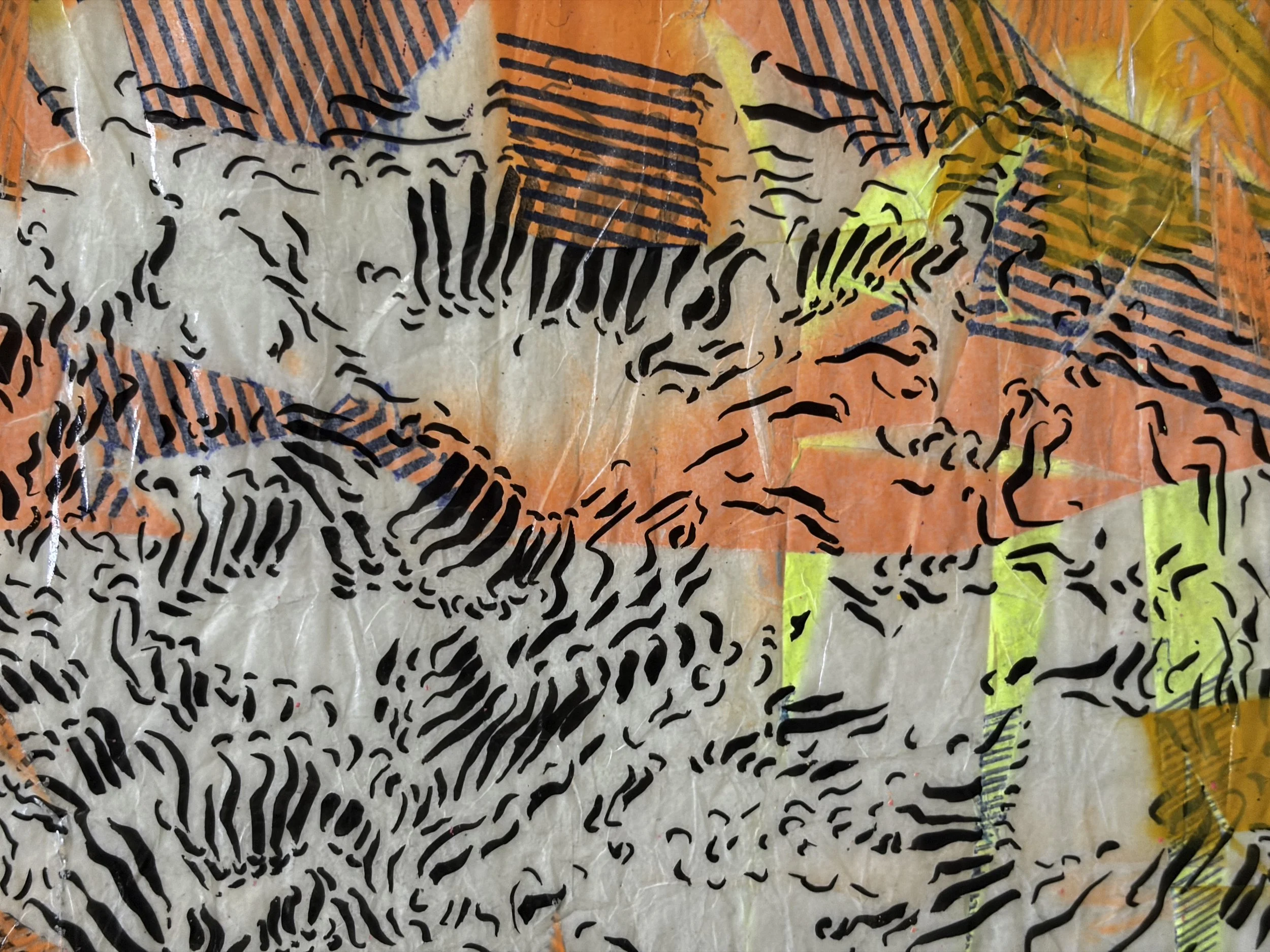
Above: Surprise, Surprise No. 5 has the feeling of a transformation caught mid-motion. A field of intense orange and layered warm color appears to open, rupture, or peel away as if something is emerging from behind the surface. The image suggests the presence of a powerful animal form: the forward movement of paws, the suggestion of a tiger or other apex predator, or the moment when a creature begins to reveal itself.
The work carries the visual energy of animation and dream imagery, where forms can shift between object, character, and environment. At one moment the viewer may see an animal breaking through a surface; at another, the close-up of a closed eye, eyelashes, fur, or an unknown organic structure. The image remains suspended between recognition and imagination.
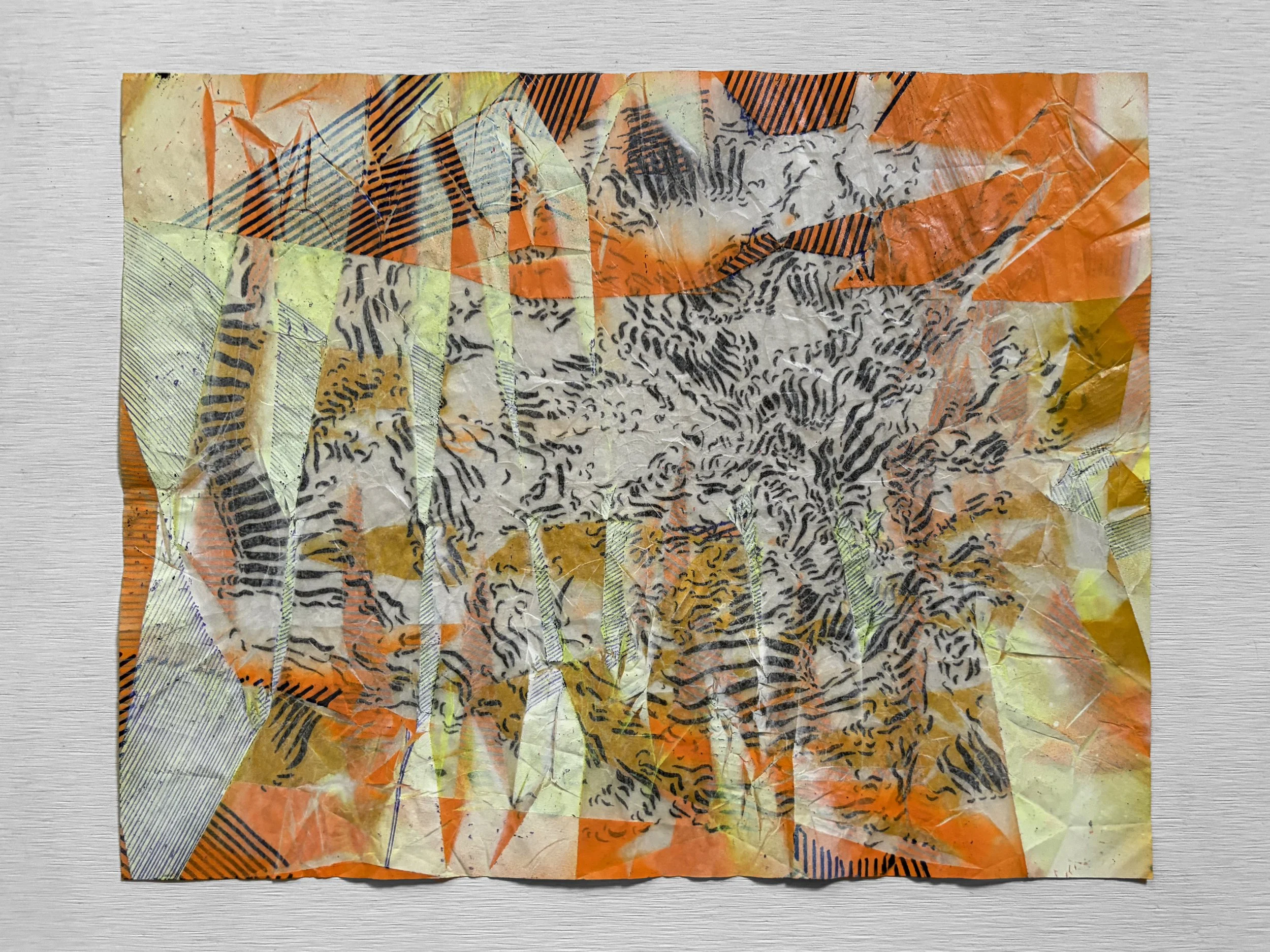
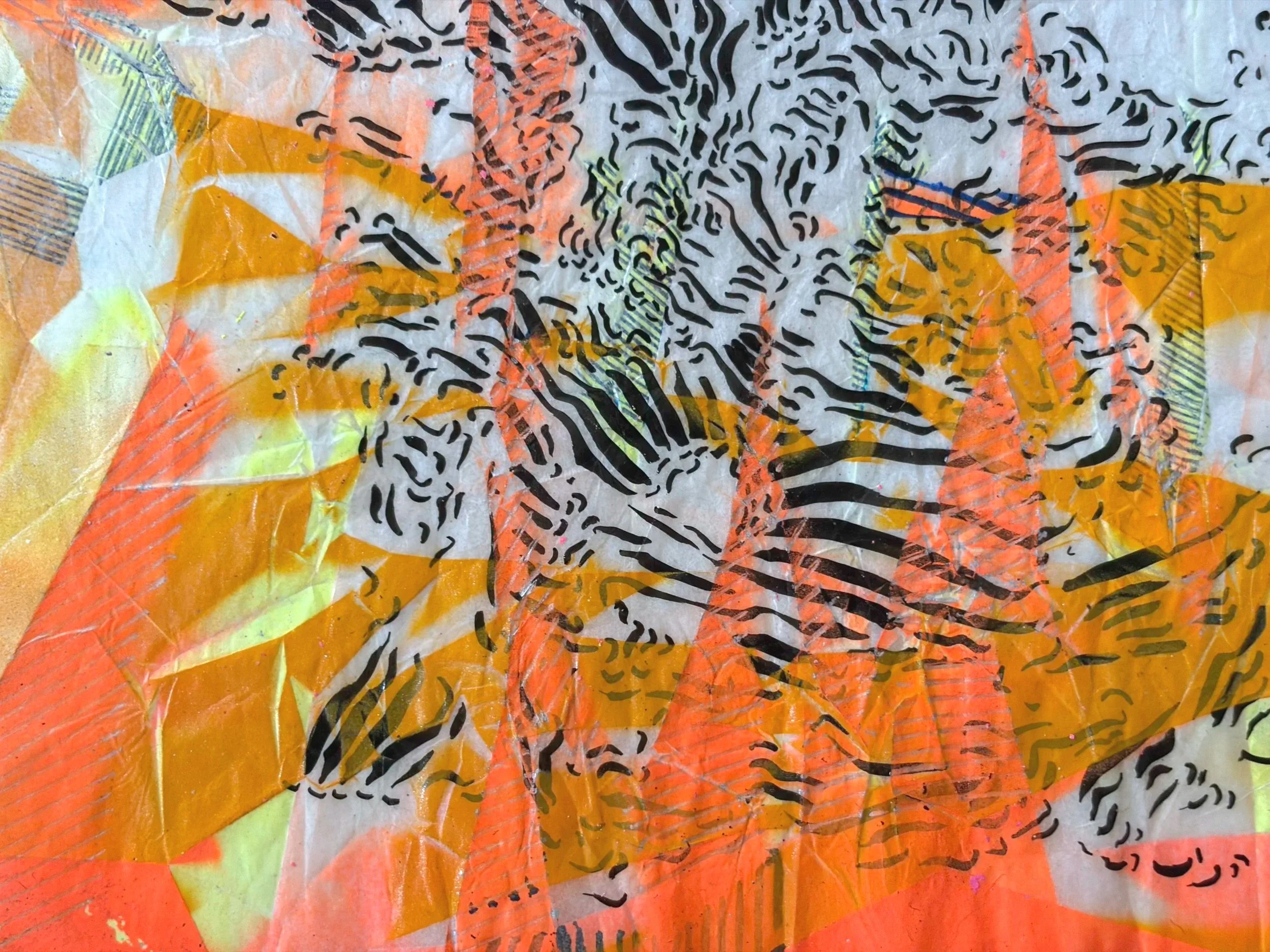
Below: The reverse surface intensifies the sense of emergence. Hidden layers of color become more exposed, and the relationship between translucent pigment, fluorescent passages, and warm mineral-like tones creates the sensation of looking into a material with its own internal glow.
The colors recall natural chalcedony and other stones where deep oranges, rusts, and translucent layers hold light within them. Flecks and passages of color suggest the shimmer of gold, not as decoration but as something embedded in the structure of the image—an unexpected flash that appears when the surface is encountered from another angle.
Reflection: Surprise, Surprise No. 5 explores one of the central questions running through the series: when does a pattern become a presence? The human eye is constantly searching for recognizable forms, finding faces, bodies, animals, and stories within complex surfaces. This work embraces that instinct without resolving it.
The process of folding, transferring, and reopening the tracing paper creates a visual world where images appear to emerge from hidden states. Like a frame from an unrealized animation, the work captures a moment of becoming—something between a landscape, a creature, and a memory of a dream.
The image also reflects the way dreams and visual memories often operate: a form can feel immediately familiar before it can be named. A predator, a face, a body, or a moving character may appear for a moment and then dissolve into something else. The work invites the viewer into that unstable space where perception becomes imagination, and imagination begins to create its own evidence.
In this way, Surprise, Surprise No. 5 is less about depicting a hidden creature than about exploring the human desire to discover one. The surface becomes a place where instinct, memory, and visual pattern recognition meet—where something seems to be breaking through, even if what is emerging exists only for the moment of looking.
Above: Surprise, Surprise No. 5 has the feeling of a transformation caught mid-motion. A field of intense orange and layered warm color appears to open, rupture, or peel away as if something is emerging from behind the surface. The image suggests the presence of a powerful animal form: the forward movement of paws, the suggestion of a tiger or other apex predator, or the moment when a creature begins to reveal itself.
The work carries the visual energy of animation and dream imagery, where forms can shift between object, character, and environment. At one moment the viewer may see an animal breaking through a surface; at another, the close-up of a closed eye, eyelashes, fur, or an unknown organic structure. The image remains suspended between recognition and imagination.
Below: The reverse surface intensifies the sense of emergence. Hidden layers of color become more exposed, and the relationship between translucent pigment, fluorescent passages, and warm mineral-like tones creates the sensation of looking into a material with its own internal glow.
The colors recall natural chalcedony and other stones where deep oranges, rusts, and translucent layers hold light within them. Flecks and passages of color suggest the shimmer of gold, not as decoration but as something embedded in the structure of the image—an unexpected flash that appears when the surface is encountered from another angle.
Reflection: Surprise, Surprise No. 5 explores one of the central questions running through the series: when does a pattern become a presence? The human eye is constantly searching for recognizable forms, finding faces, bodies, animals, and stories within complex surfaces. This work embraces that instinct without resolving it.
The process of folding, transferring, and reopening the tracing paper creates a visual world where images appear to emerge from hidden states. Like a frame from an unrealized animation, the work captures a moment of becoming—something between a landscape, a creature, and a memory of a dream.
The image also reflects the way dreams and visual memories often operate: a form can feel immediately familiar before it can be named. A predator, a face, a body, or a moving character may appear for a moment and then dissolve into something else. The work invites the viewer into that unstable space where perception becomes imagination, and imagination begins to create its own evidence.
In this way, Surprise, Surprise No. 5 is less about depicting a hidden creature than about exploring the human desire to discover one. The surface becomes a place where instinct, memory, and visual pattern recognition meet—where something seems to be breaking through, even if what is emerging exists only for the moment of looking.