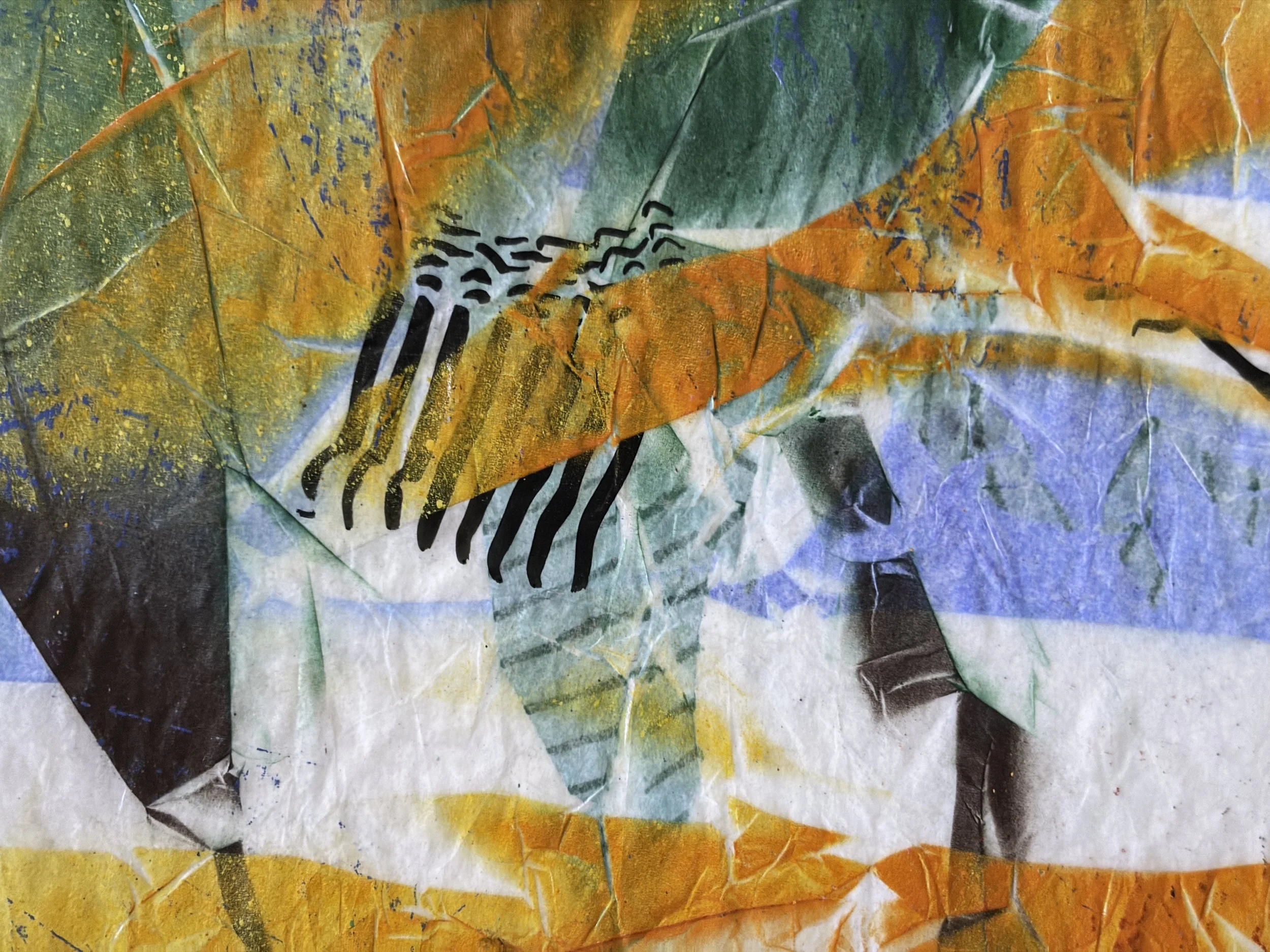
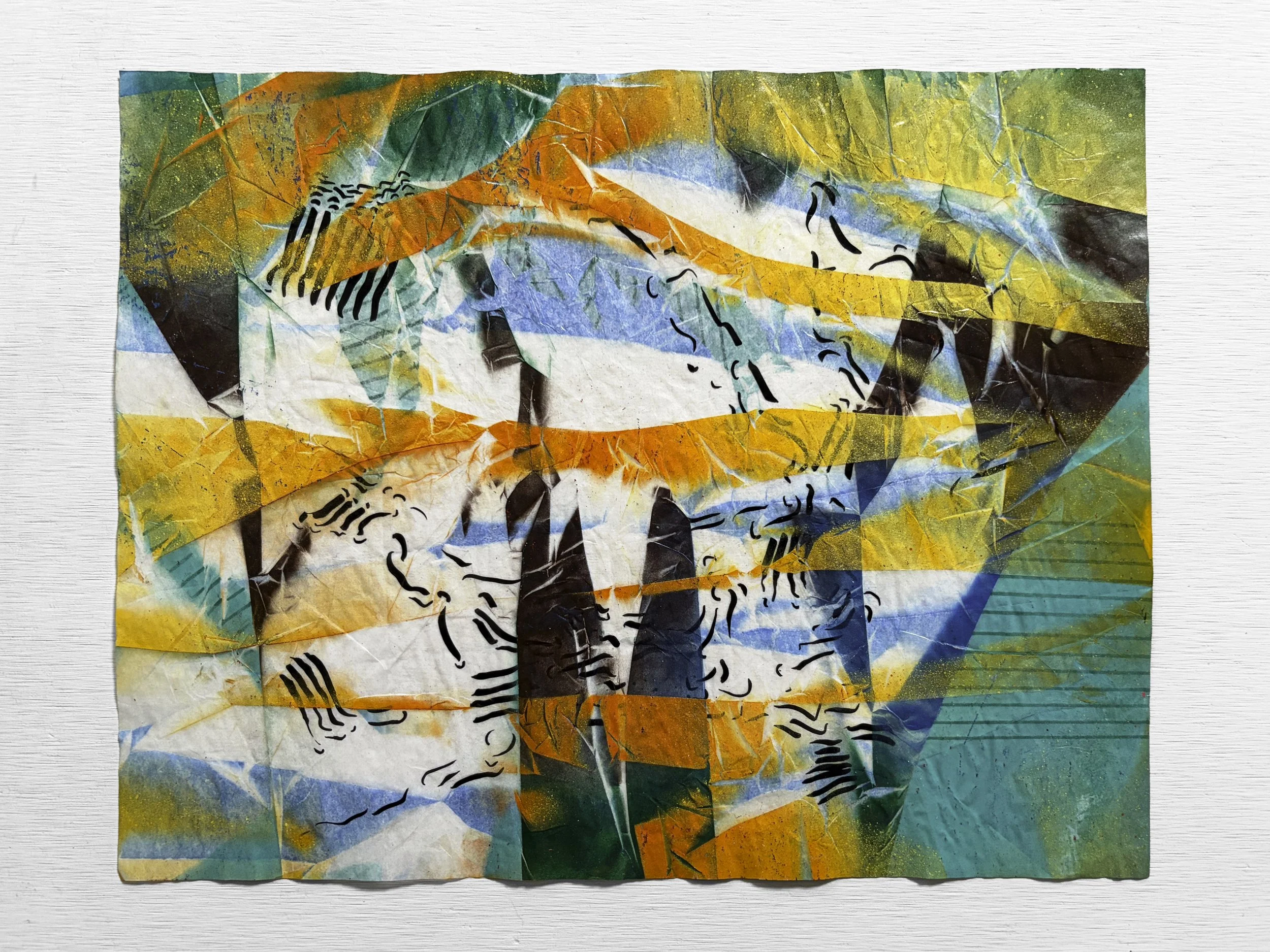
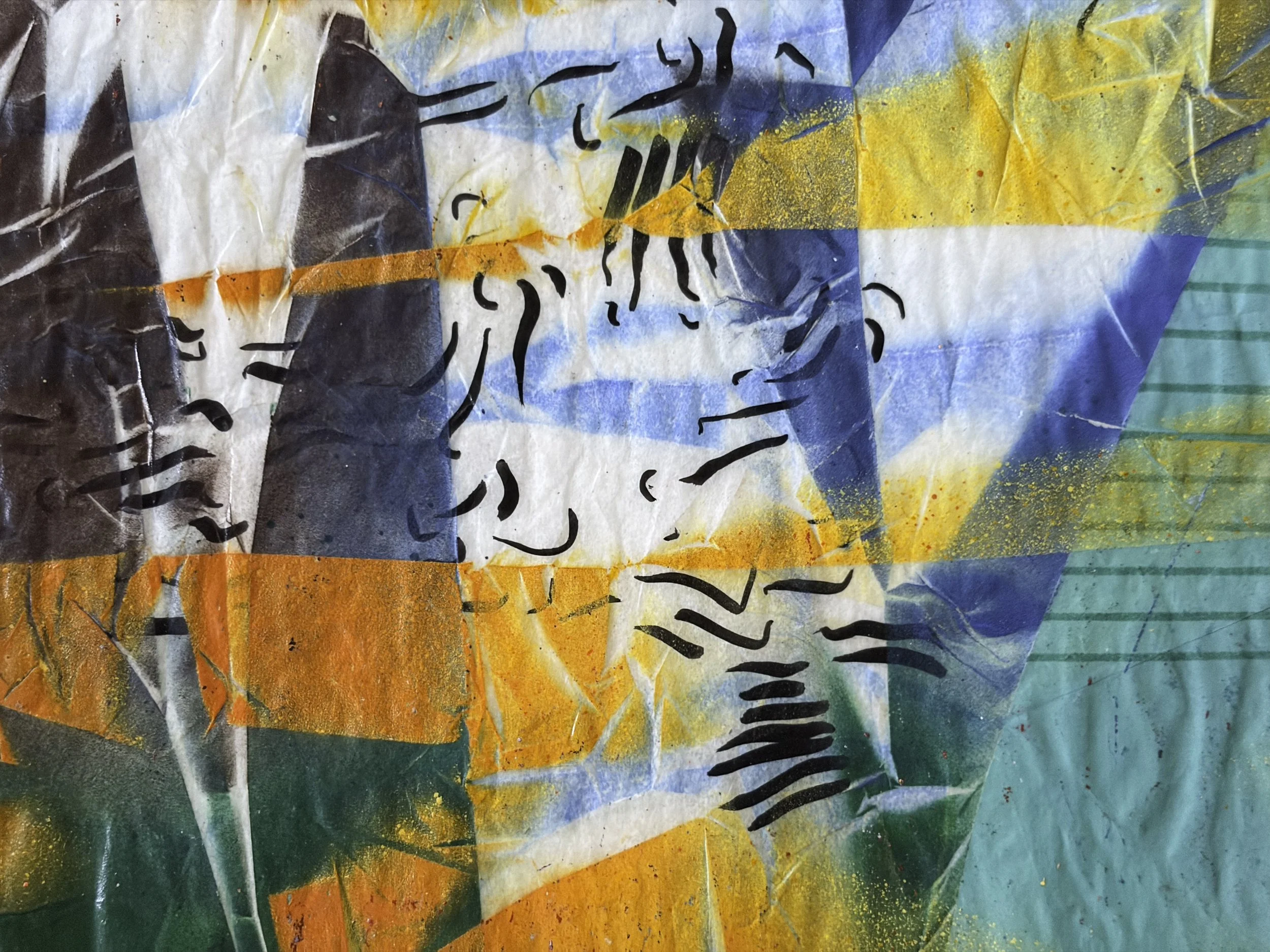
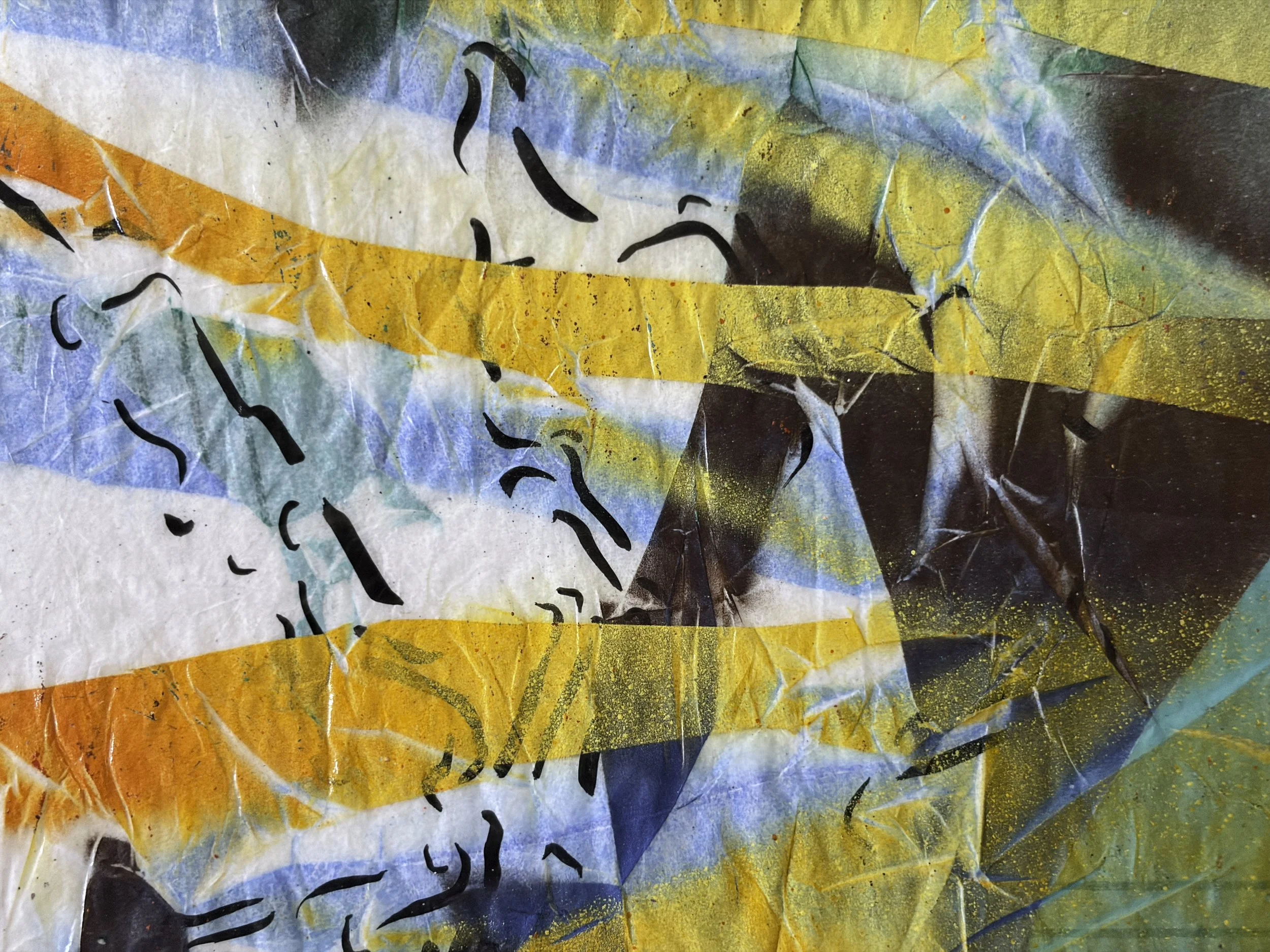
Above: Surprise, Surprise No. 4 carries the warmth of a coastal landscape remembered through changing light. Deep blues, glowing oranges, and layered translucent passages suggest tropical water, late afternoon sun, and the shifting reflections that appear along a shoreline as the day moves toward evening.
The dark linear forms create a sense of vegetation and movement—palms, ferns, branches, or other organic structures framing the view. The image feels like a place encountered while walking: a coastline unfolding slowly, where water, trees, and sky continually exchange their colors. There is a quality of looking at a familiar place through the filter of memory, where details remain vivid but no longer belong to a single moment.
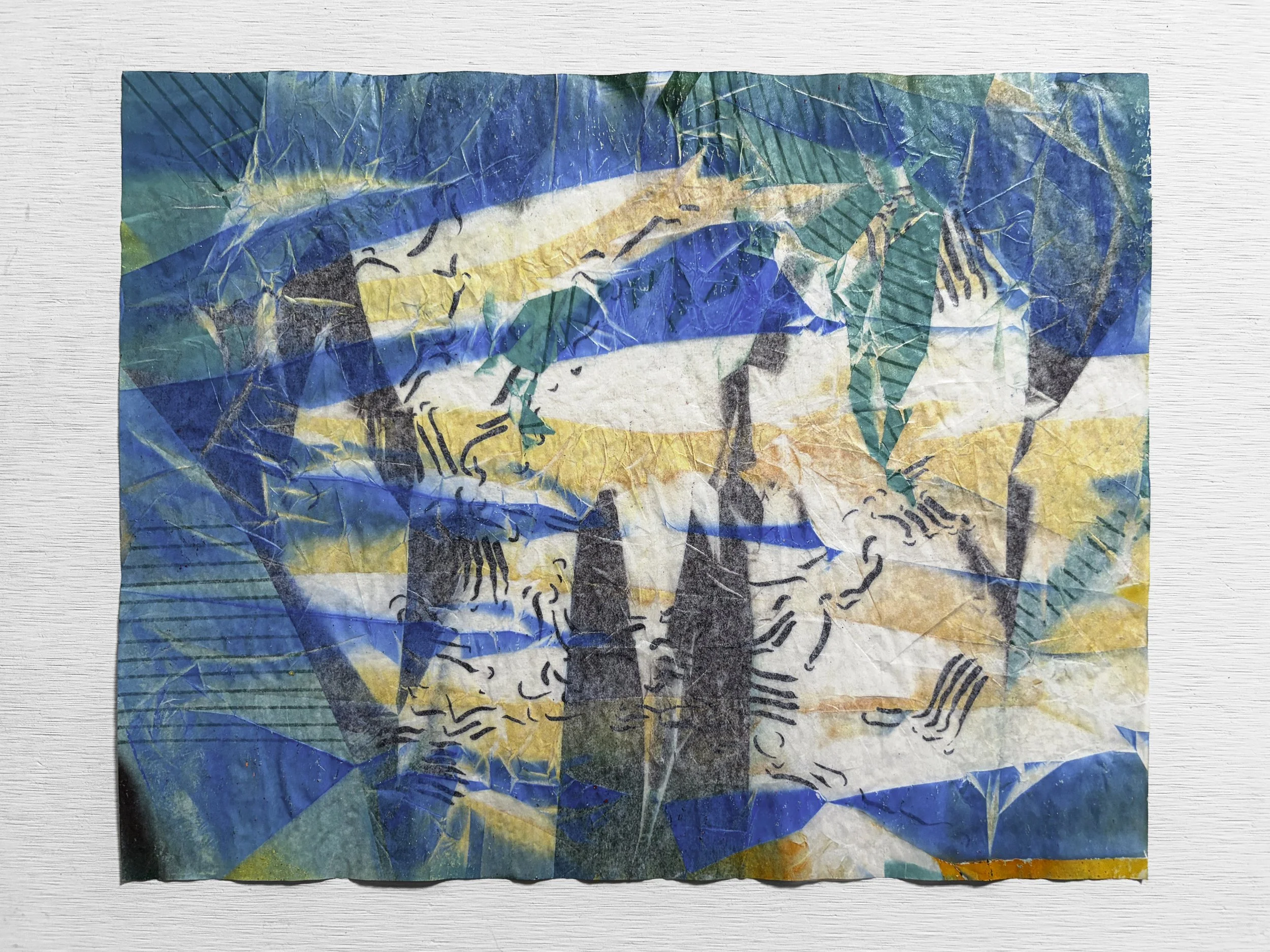
Below: The reverse surface transforms the image into another version of the same world. The composition becomes more architectural, with forms suggesting structures, shelters, or temporary spaces built near the water. The relationship between the two sides feels almost photographic, like looking at the same coastline from opposite directions or under entirely different conditions of light.
Fluorescent blue emerges strongly from this side, revealing a hidden intensity beneath the more natural colors of the surface. The work shifts between tropical water, illuminated memory, and imagined space, showing how a single image can contain multiple realities depending on how it is encountered.
Reflection: Surprise, Surprise No. 4 draws from memories of walking coastal landscapes in the Philippines, especially the experience of moving through places where trees, water, sunlight, and human activity exist in constant conversation. The work holds the sensation of being near the ocean at the edge of day: warm air, shifting currents, bright water, and the feeling of a landscape that continues beyond what can immediately be seen.
The image also carries the uncertainty of dreams and memory, where a place may be recognizable while its details rearrange themselves. A shoreline becomes a pathway, a pattern becomes vegetation, and a reflection becomes another world. Like the process that created it, the work exists between observation and transformation—between a place that was experienced and the image that remains afterward.
Above: Surprise, Surprise No. 4 carries the warmth of a coastal landscape remembered through changing light. Deep blues, glowing oranges, and layered translucent passages suggest tropical water, late afternoon sun, and the shifting reflections that appear along a shoreline as the day moves toward evening.
The dark linear forms create a sense of vegetation and movement—palms, ferns, branches, or other organic structures framing the view. The image feels like a place encountered while walking: a coastline unfolding slowly, where water, trees, and sky continually exchange their colors. There is a quality of looking at a familiar place through the filter of memory, where details remain vivid but no longer belong to a single moment.
Below: The reverse surface transforms the image into another version of the same world. The composition becomes more architectural, with forms suggesting structures, shelters, or temporary spaces built near the water. The relationship between the two sides feels almost photographic, like looking at the same coastline from opposite directions or under entirely different conditions of light.
Fluorescent blue emerges strongly from this side, revealing a hidden intensity beneath the more natural colors of the surface. The work shifts between tropical water, illuminated memory, and imagined space, showing how a single image can contain multiple realities depending on how it is encountered.
Reflection: Surprise, Surprise No. 4 draws from memories of walking coastal landscapes in the Philippines, especially the experience of moving through places where trees, water, sunlight, and human activity exist in constant conversation. The work holds the sensation of being near the ocean at the edge of day: warm air, shifting currents, bright water, and the feeling of a landscape that continues beyond what can immediately be seen.
The image also carries the uncertainty of dreams and memory, where a place may be recognizable while its details rearrange themselves. A shoreline becomes a pathway, a pattern becomes vegetation, and a reflection becomes another world. Like the process that created it, the work exists between observation and transformation—between a place that was experienced and the image that remains afterward.