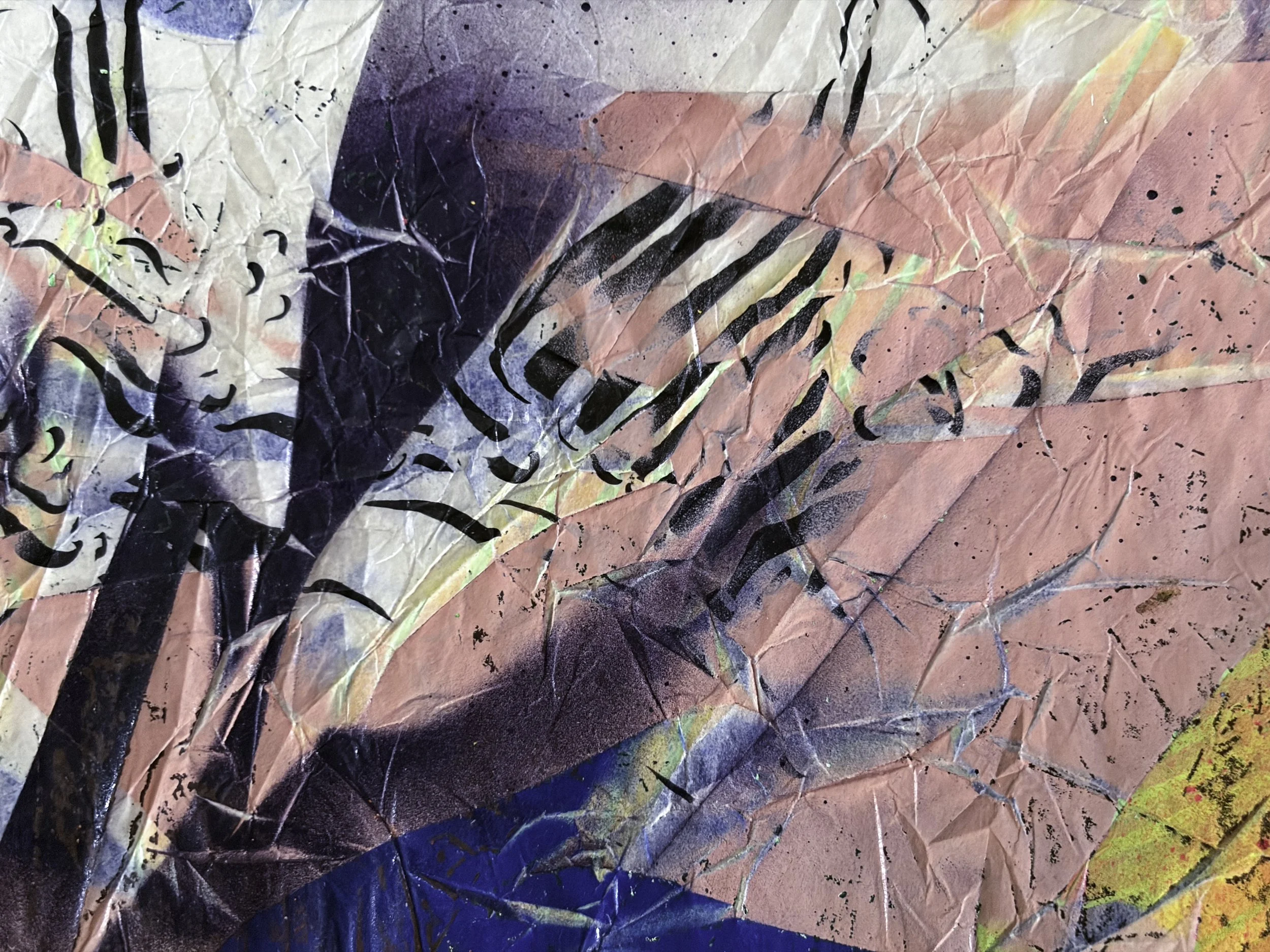
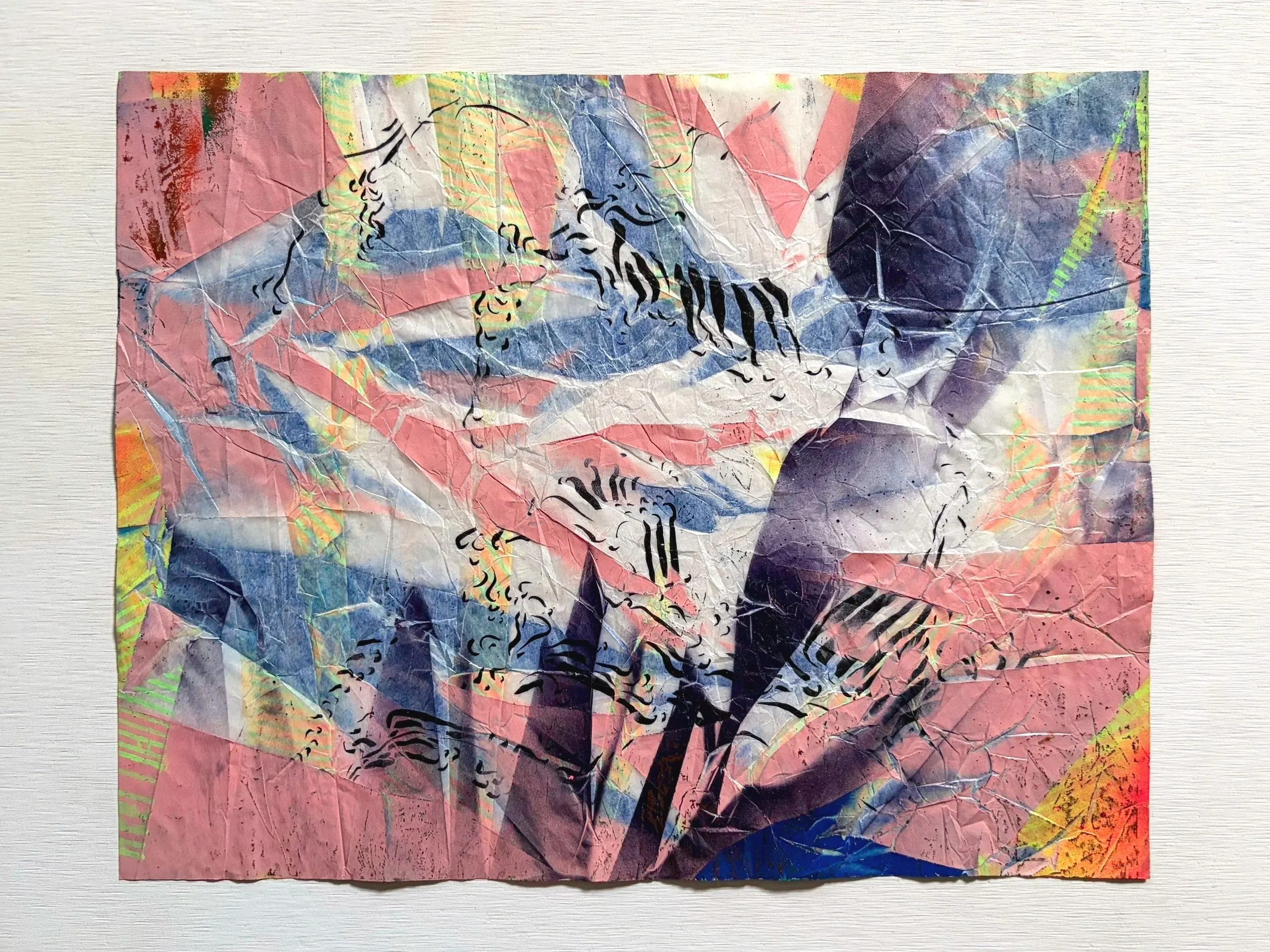
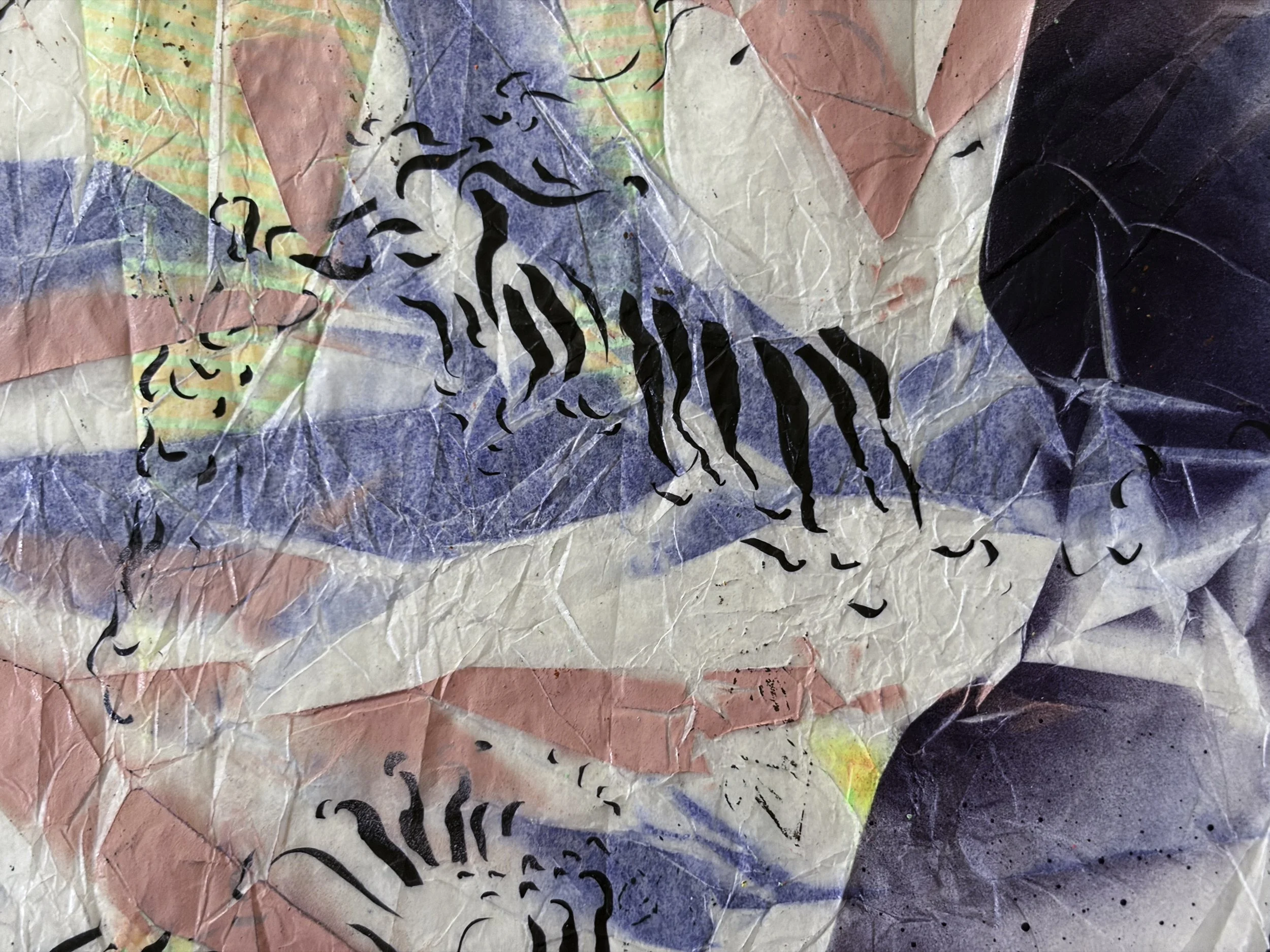
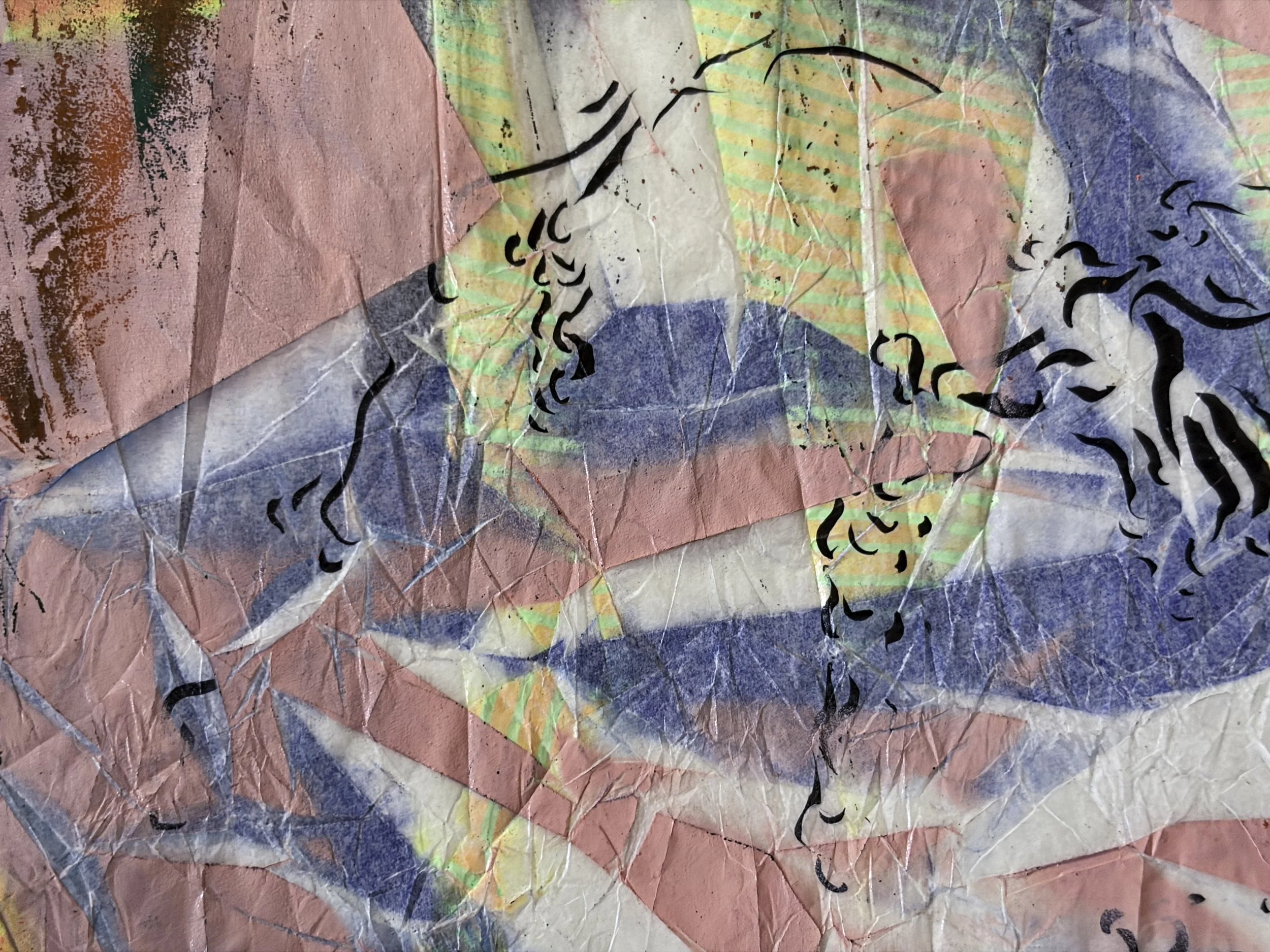
Above: Surprise, Surprise No. 21 carries the feeling of a small object holding the evidence of a much larger event. The soft peach and muted tones create a quiet, almost milky surface, while dark painted marks fracture across the image like an impact pattern in glass or a structure interrupted by sudden force.
The work balances intimacy and drama. The black forms can suggest lightning striking through a landscape, a storm breaking open the sky, or the remains of a moment frozen immediately after transformation. At other times, the marks become architectural, resembling a distorted photograph of a facade, a long row of structures, or a space viewed through an altered lens.
The surface feels delicate and almost translucent, yet the image carries the weight of something solid—like a fragment of stone, ice, or a preserved trace of an event.
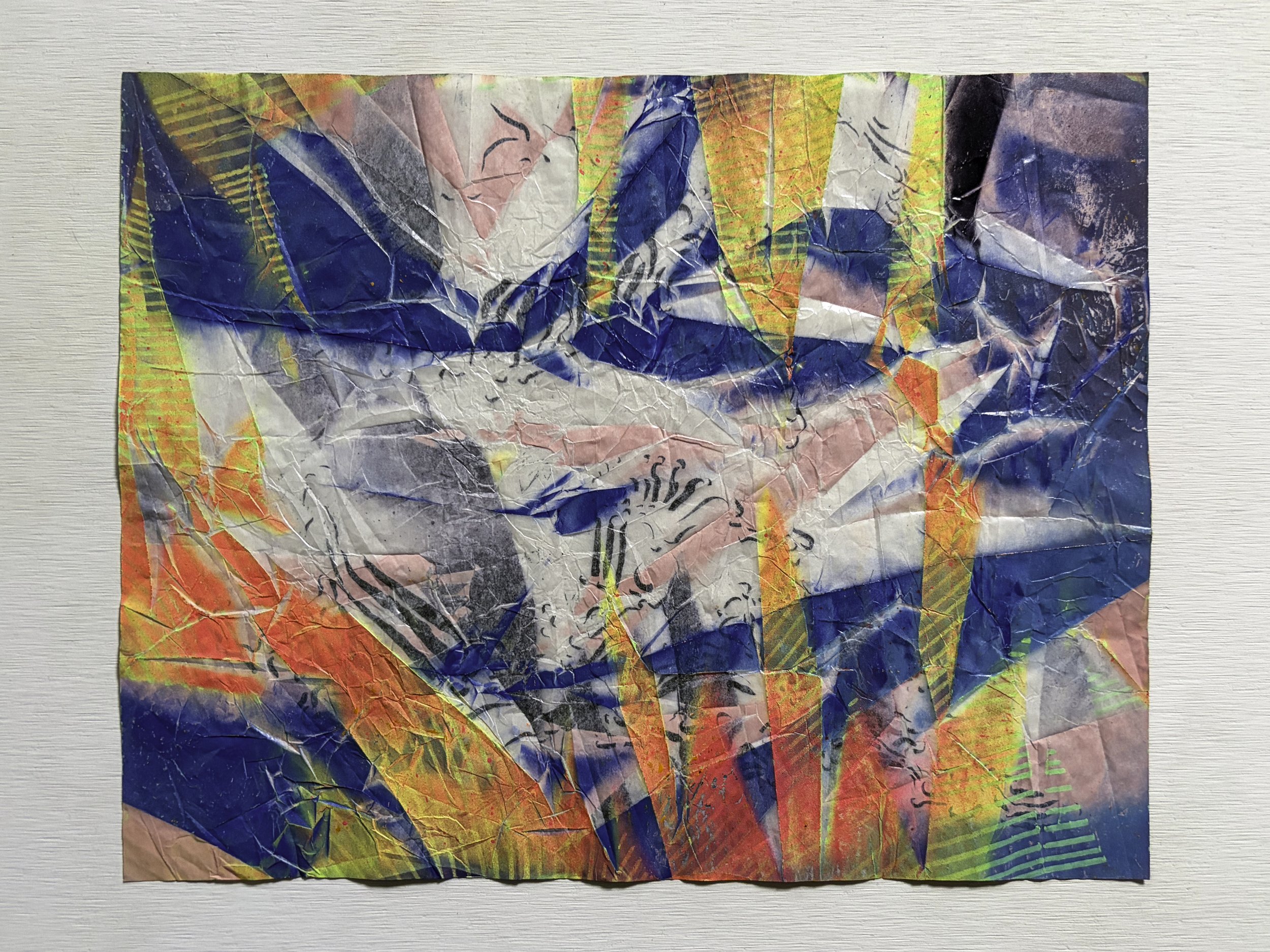
Below: The reverse surface reveals a more dramatic atmosphere, with deep blues spreading across the image like sky overhead, water seen from below, or shadows trapped beneath ice. Fluorescent yellow and red passages emerge quietly through the structure, adding hidden warmth and energy without overwhelming the restrained quality of the work.
The relationship between the two sides creates an unusual balance: the Below view intensifies the drama, while the Above view becomes more mysterious and contemplative. The hidden colors do not simply reveal another image; they deepen the sense that something larger exists beneath the surface.
Reflection: Surprise, Surprise No. 21 explores the beauty of fragments, traces, and incomplete information. The work feels less like a depiction of a specific place or object and more like a record of something that happened—an imprint left behind by pressure, movement, and transformation.
The process of folding, transferring, and reopening the tracing paper allows the image to accumulate evidence of its own history. Marks shift, colors migrate, and earlier moments remain embedded within later ones, creating an object that feels discovered rather than manufactured.
Like a small specimen, a piece of weathered material, or a fragment recovered from an unknown environment, the work invites close attention. Its power comes from restraint: a quiet object containing the memory of forces much larger than itself.
Above: Surprise, Surprise No. 21 carries the feeling of a small object holding the evidence of a much larger event. The soft peach and muted tones create a quiet, almost milky surface, while dark painted marks fracture across the image like an impact pattern in glass or a structure interrupted by sudden force.
The work balances intimacy and drama. The black forms can suggest lightning striking through a landscape, a storm breaking open the sky, or the remains of a moment frozen immediately after transformation. At other times, the marks become architectural, resembling a distorted photograph of a facade, a long row of structures, or a space viewed through an altered lens.
The surface feels delicate and almost translucent, yet the image carries the weight of something solid—like a fragment of stone, ice, or a preserved trace of an event.
Below: The reverse surface reveals a more dramatic atmosphere, with deep blues spreading across the image like sky overhead, water seen from below, or shadows trapped beneath ice. Fluorescent yellow and red passages emerge quietly through the structure, adding hidden warmth and energy without overwhelming the restrained quality of the work.
The relationship between the two sides creates an unusual balance: the Below view intensifies the drama, while the Above view becomes more mysterious and contemplative. The hidden colors do not simply reveal another image; they deepen the sense that something larger exists beneath the surface.
Reflection: Surprise, Surprise No. 21 explores the beauty of fragments, traces, and incomplete information. The work feels less like a depiction of a specific place or object and more like a record of something that happened—an imprint left behind by pressure, movement, and transformation.
The process of folding, transferring, and reopening the tracing paper allows the image to accumulate evidence of its own history. Marks shift, colors migrate, and earlier moments remain embedded within later ones, creating an object that feels discovered rather than manufactured.
Like a small specimen, a piece of weathered material, or a fragment recovered from an unknown environment, the work invites close attention. Its power comes from restraint: a quiet object containing the memory of forces much larger than itself.