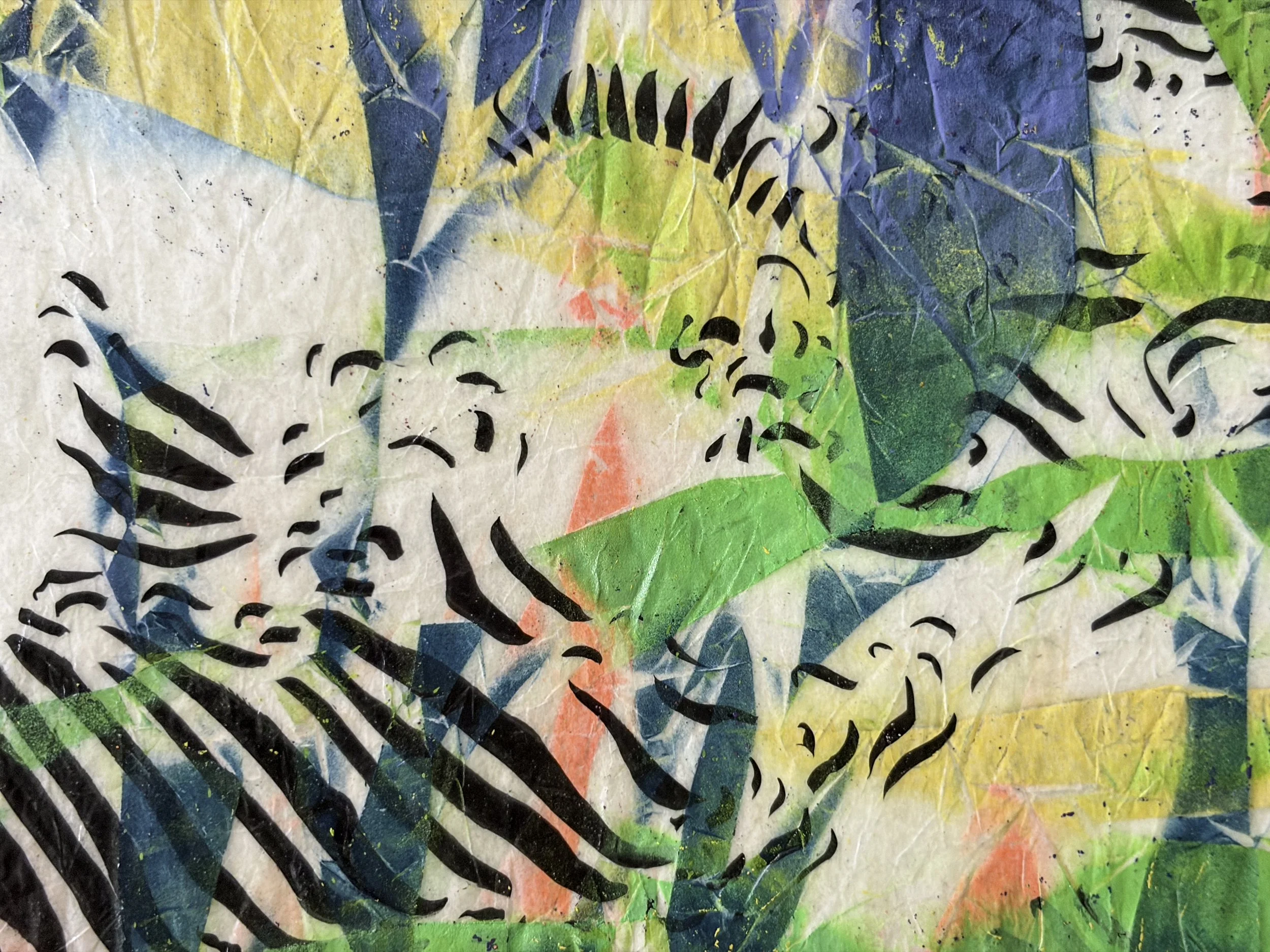
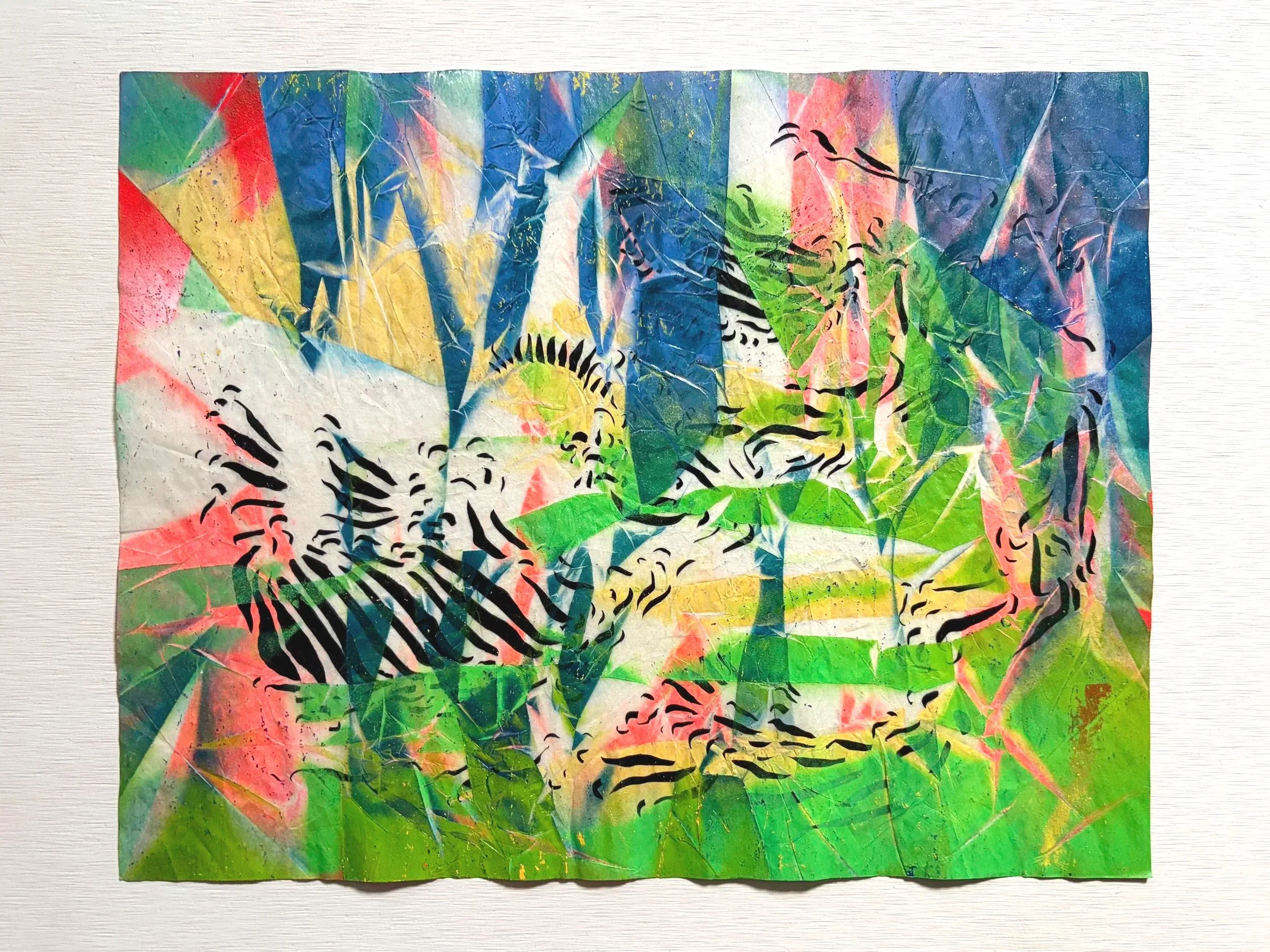
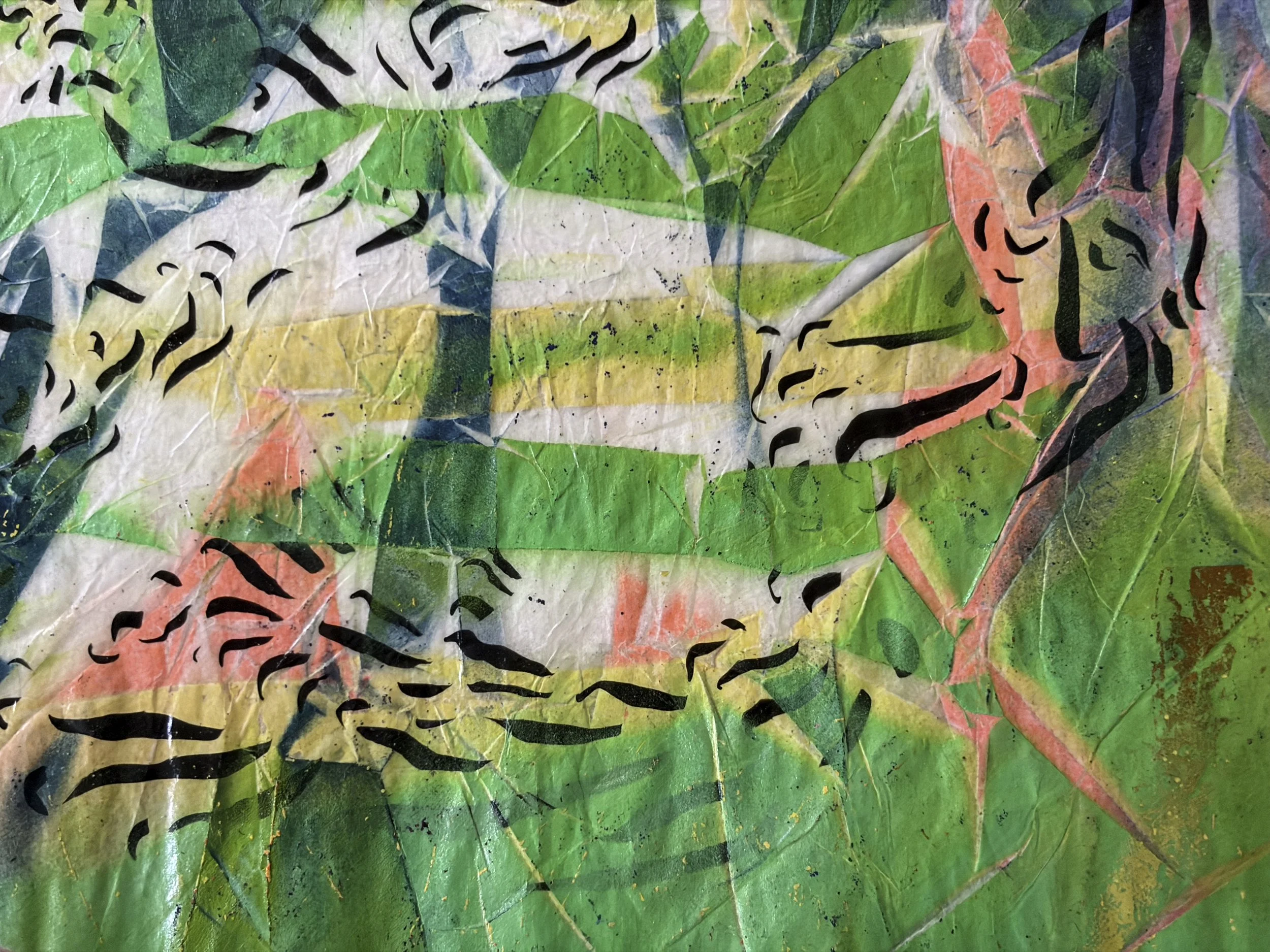
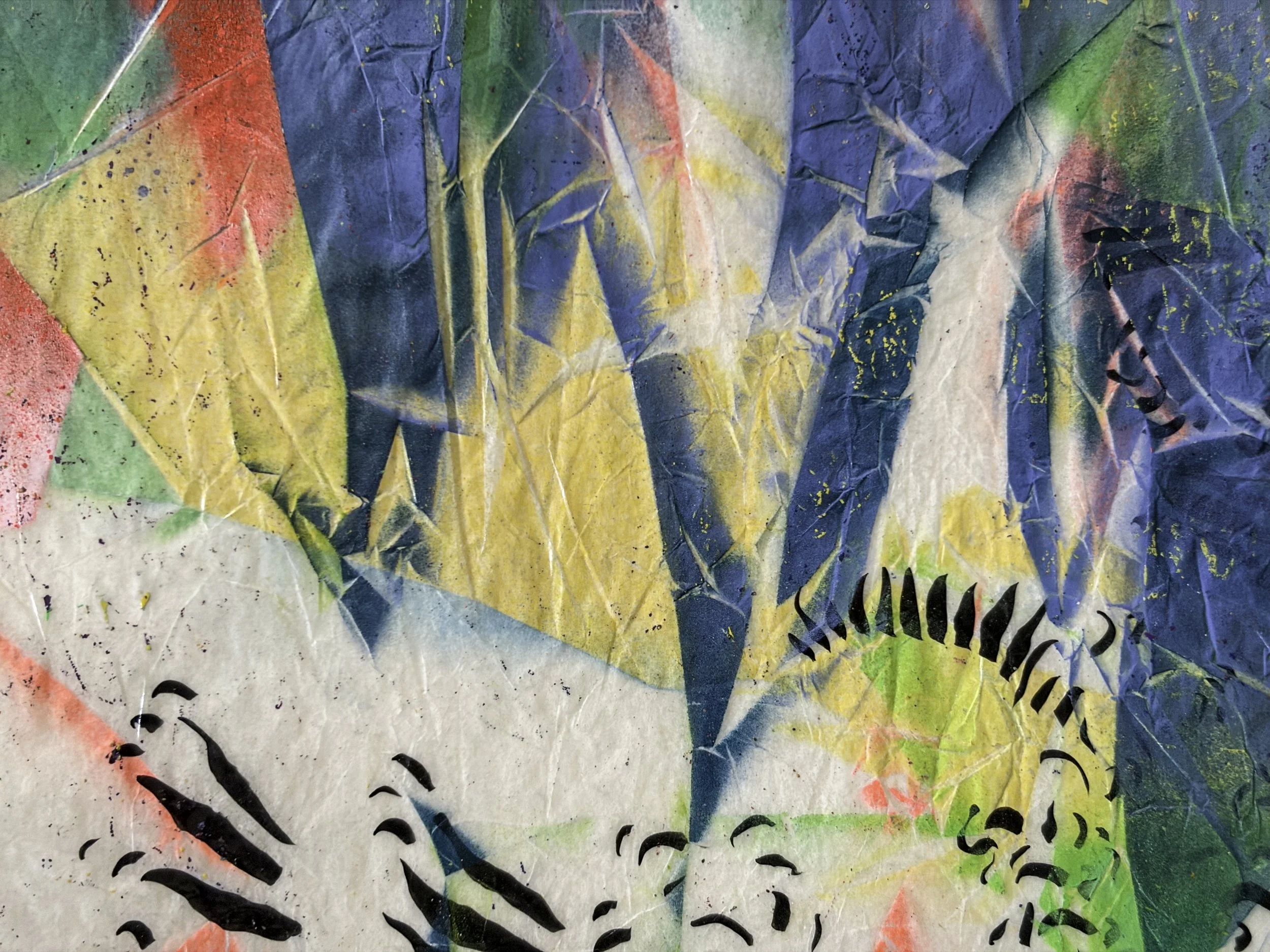
Above: Surprise, Surprise No. 20 creates a powerful sense of suspended structure, where organic, geological, and artificial forms appear to exist together. The bold drawing moves between skeletal frameworks, delicate bones, and the suggestion of a small ecosystem frozen at the moment of transformation.
The composition also recalls the instant after impact: a stone entering water and creating a splash that has been stopped in time, or a force meeting a surface and leaving behind a permanent record of motion. A central oval form remains mysterious, suggesting an opening, indentation, recess, or hidden chamber within the image.
The surrounding colors create a tension between permanence and life. Deep blue passages bring the feeling of steel, shadow, or cold mineral surfaces, while vivid greens create a sense of moss, vegetation, and organic growth. The image feels both immovable and strangely delicate, as if held together by an invisible structure.
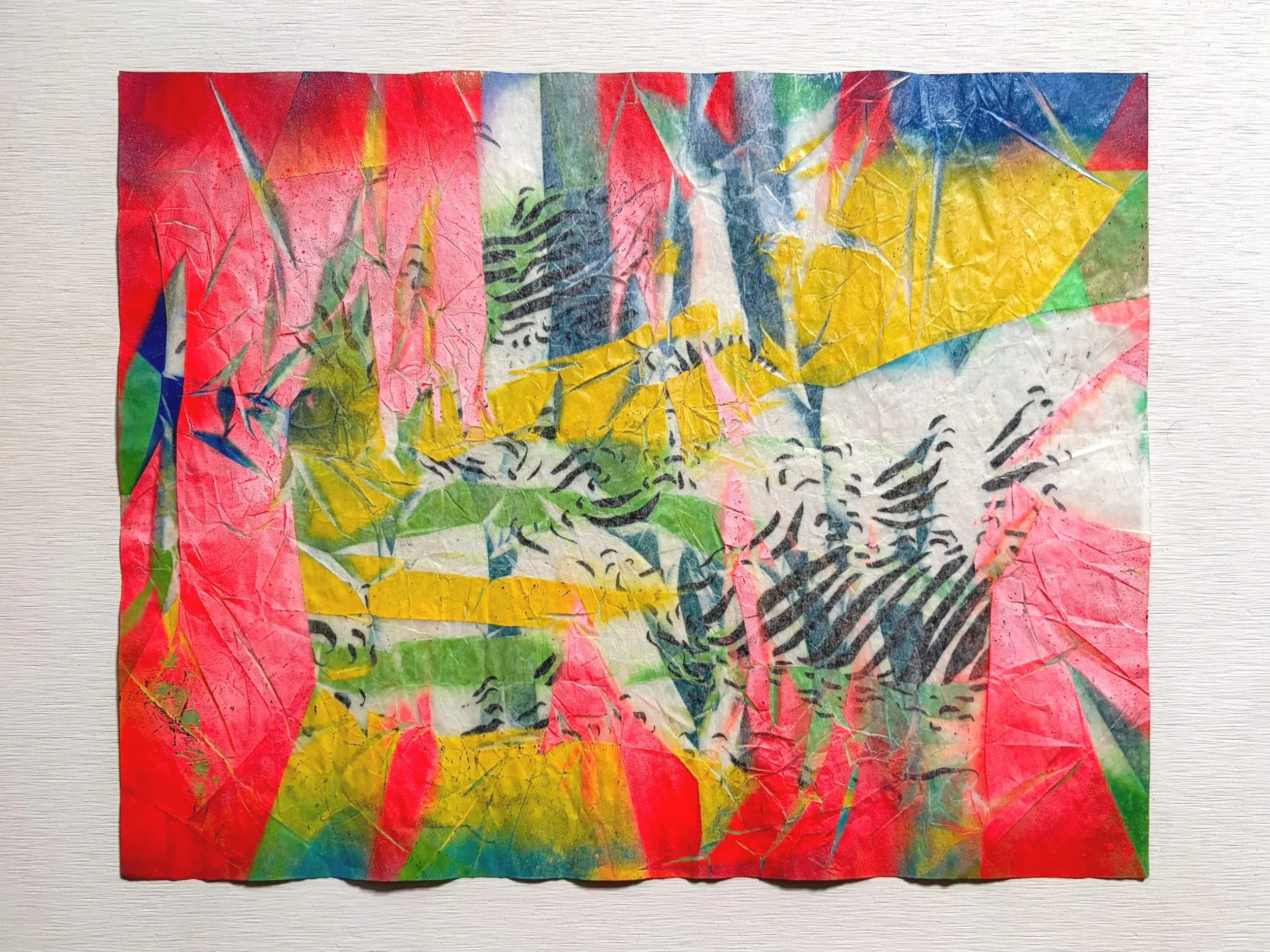
Below: The reverse surface reveals how much of the visible image depends on hidden layers and transmitted color. Vibrant reds, pinks, and ochre yellows emerge with new intensity, showing that much of the energy perceived from the Above view originates on the opposite side of the paper.
The drawing shifts again, becoming more fragmented and displaced. Areas that appeared solid from one direction become transparent and layered from another, revealing the complexity of the tracing paper itself. The work becomes an optical puzzle where the viewer begins to question what belongs to each surface and what exists between them.
The surrounding conditions also become part of the image. The color and intensity of the work change depending on what sits behind it, whether a lighter or darker surface, making the transparency of the material an active participant in the viewing experience.
Reflection: Surprise, Surprise No. 20 explores the pleasure of visual investigation. The work invites the viewer not only to look, but to reconstruct—to wonder how the image was made, which layers came first, how colors moved between surfaces, and how hidden decisions remain visible within the final object.
The process of folding, transferring, reopening, and accumulating layers creates something closer to a visual archive than a single image. Earlier moments remain embedded within later ones, allowing the work to function like a puzzle whose solution is never completely revealed.
Like a natural specimen, a dream fragment, or a scientific observation, the image rewards close attention. Its meaning emerges through repeated looking, where each discovery changes the relationship between what is seen and what is hidden.
Above: Surprise, Surprise No. 20 creates a powerful sense of suspended structure, where organic, geological, and artificial forms appear to exist together. The bold drawing moves between skeletal frameworks, delicate bones, and the suggestion of a small ecosystem frozen at the moment of transformation.
The composition also recalls the instant after impact: a stone entering water and creating a splash that has been stopped in time, or a force meeting a surface and leaving behind a permanent record of motion. A central oval form remains mysterious, suggesting an opening, indentation, recess, or hidden chamber within the image.
The surrounding colors create a tension between permanence and life. Deep blue passages bring the feeling of steel, shadow, or cold mineral surfaces, while vivid greens create a sense of moss, vegetation, and organic growth. The image feels both immovable and strangely delicate, as if held together by an invisible structure.
Below: The reverse surface reveals how much of the visible image depends on hidden layers and transmitted color. Vibrant reds, pinks, and ochre yellows emerge with new intensity, showing that much of the energy perceived from the Above view originates on the opposite side of the paper.
The drawing shifts again, becoming more fragmented and displaced. Areas that appeared solid from one direction become transparent and layered from another, revealing the complexity of the tracing paper itself. The work becomes an optical puzzle where the viewer begins to question what belongs to each surface and what exists between them.
The surrounding conditions also become part of the image. The color and intensity of the work change depending on what sits behind it, whether a lighter or darker surface, making the transparency of the material an active participant in the viewing experience.
Reflection: Surprise, Surprise No. 20 explores the pleasure of visual investigation. The work invites the viewer not only to look, but to reconstruct—to wonder how the image was made, which layers came first, how colors moved between surfaces, and how hidden decisions remain visible within the final object.
The process of folding, transferring, reopening, and accumulating layers creates something closer to a visual archive than a single image. Earlier moments remain embedded within later ones, allowing the work to function like a puzzle whose solution is never completely revealed.
Like a natural specimen, a dream fragment, or a scientific observation, the image rewards close attention. Its meaning emerges through repeated looking, where each discovery changes the relationship between what is seen and what is hidden.