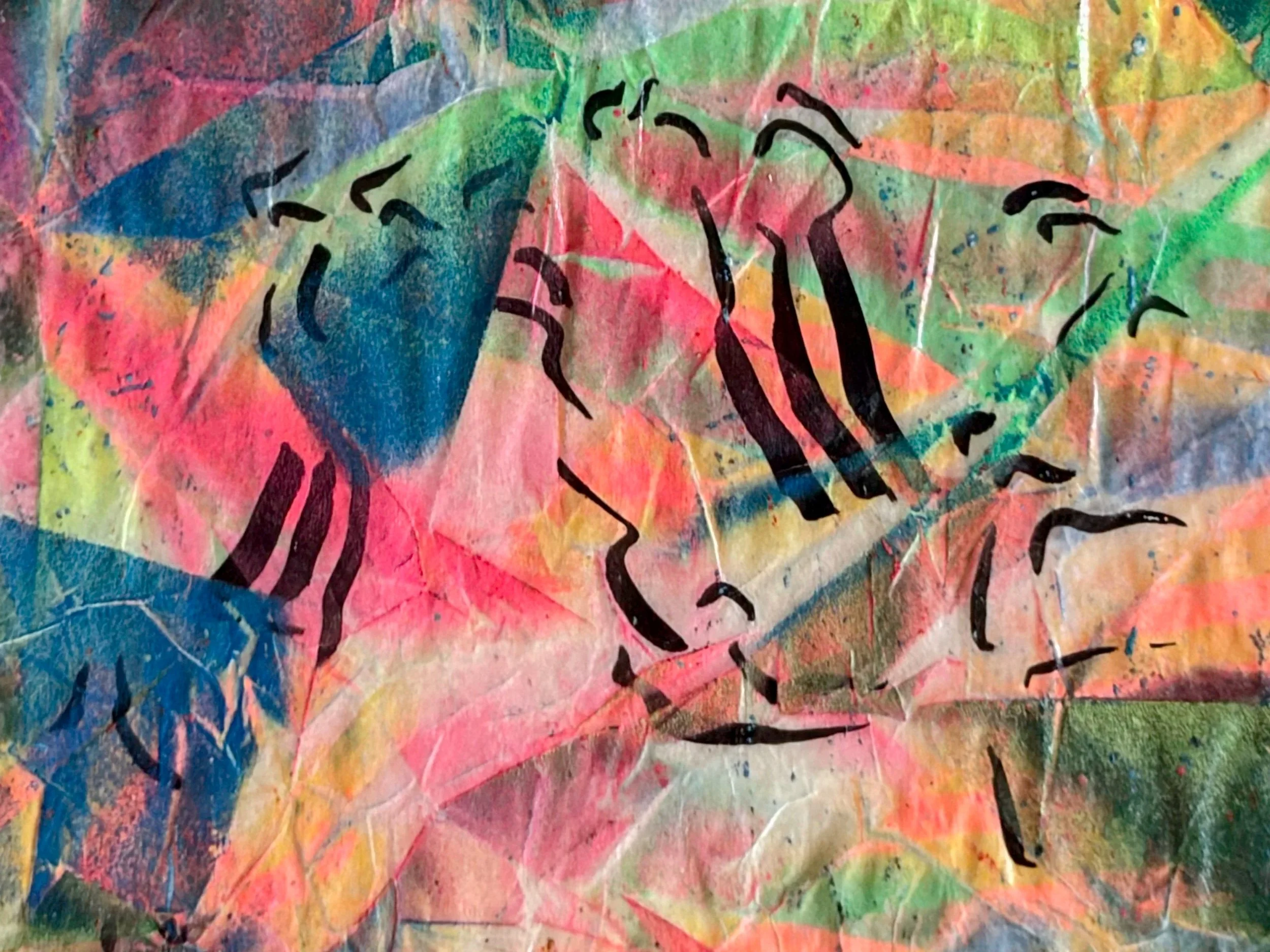
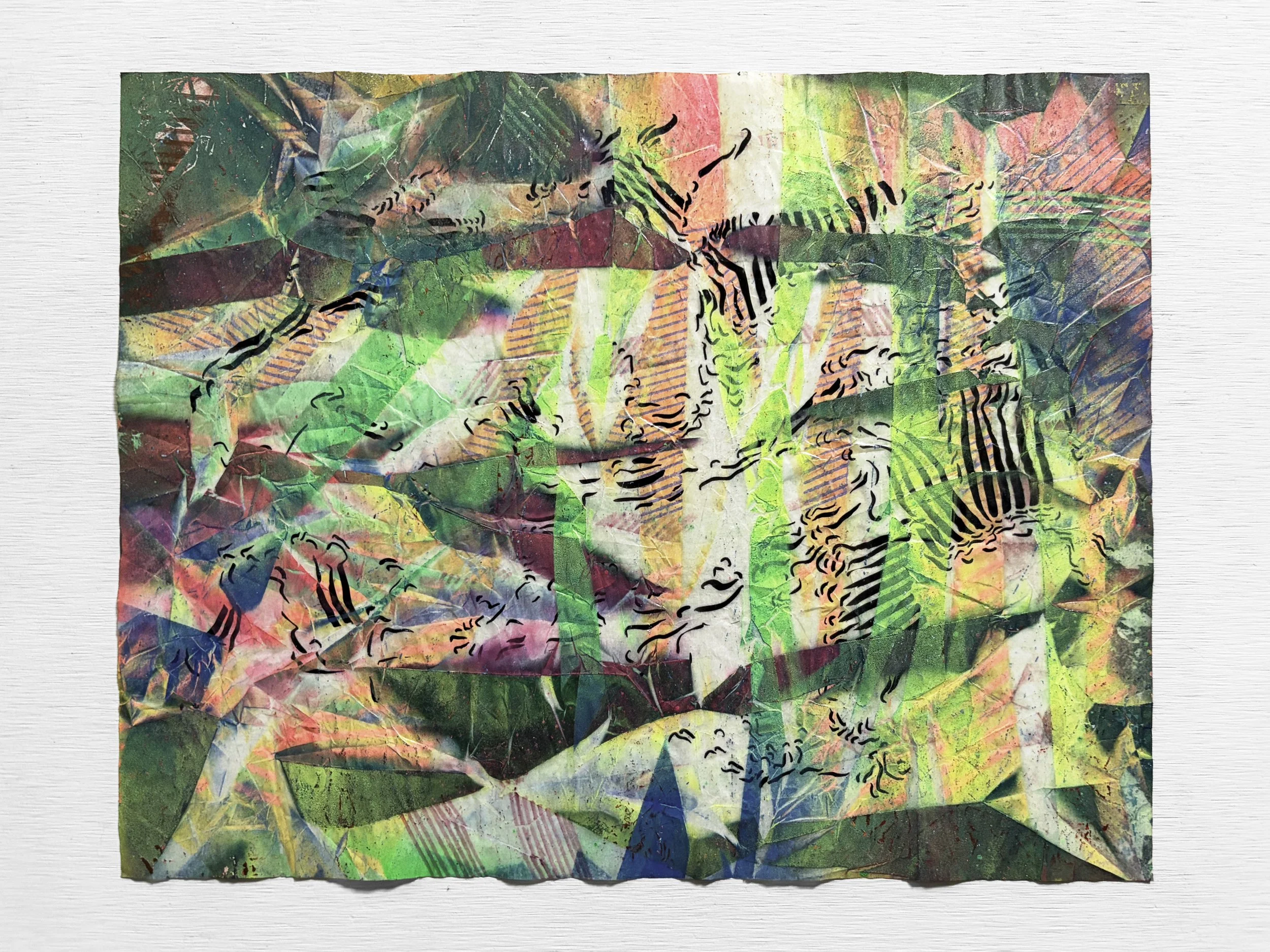
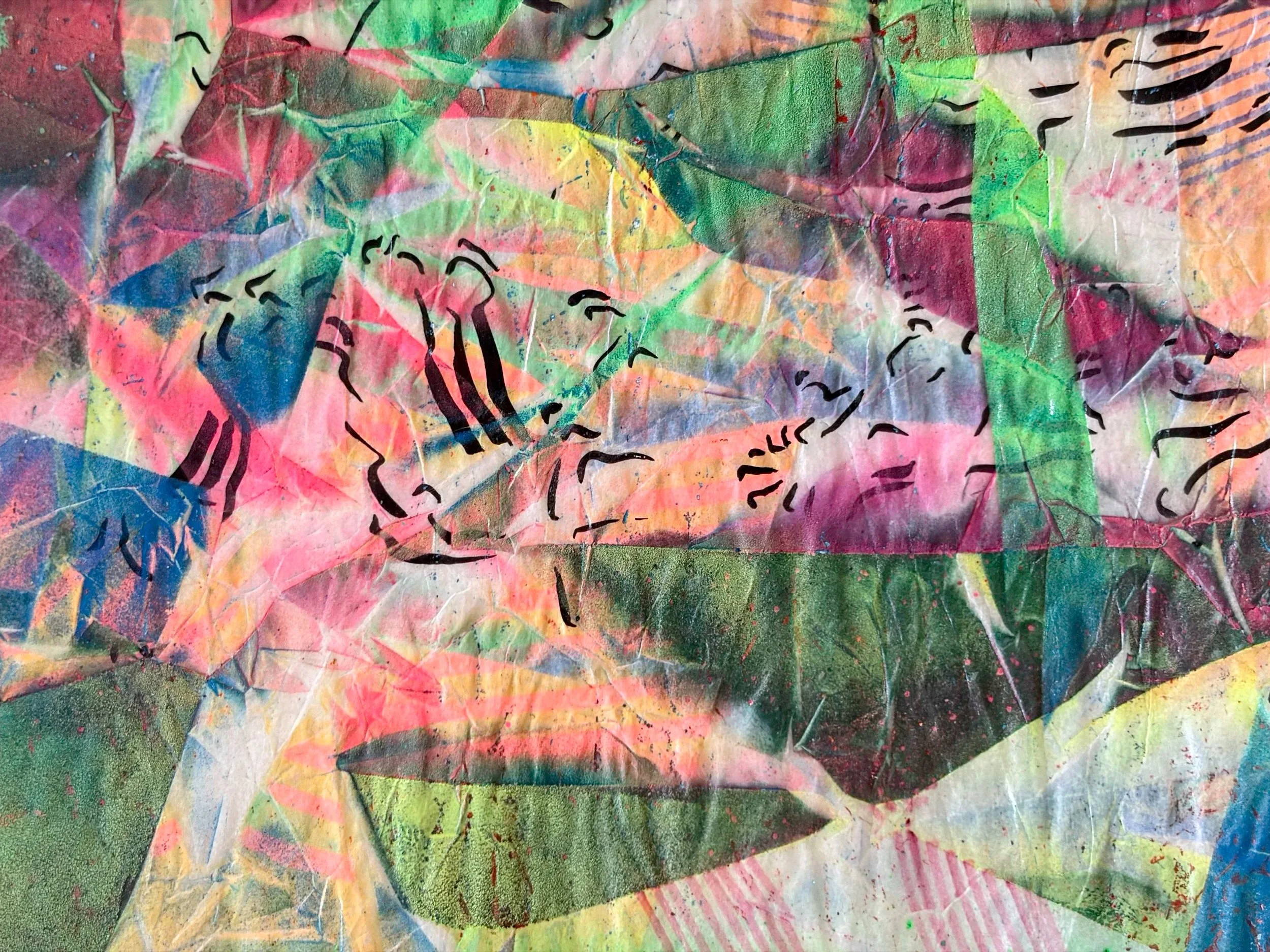
Above: Surprise, Surprise No. 2 presents a dense, atmospheric field where color seems to exist within the surface rather than simply upon it. From a distance, the work can appear restrained and naturalistic—deep greens, earth tones, and softened neutrals—but extended looking reveals layers of fluorescent yellow, pink, orange, red, and green shifting beneath and through those apparent colors.
The effect recalls the optical depth of fire opal, where internal flashes of color emerge only when light reaches the material in a particular way. The work feels less painted than grown, like a landscape formed through accumulated layers of weather, mineral, water, and time. Its colors suggest late autumn fields, snow patches, wet earth, grasses, and old vegetation catching the final intense light of day.
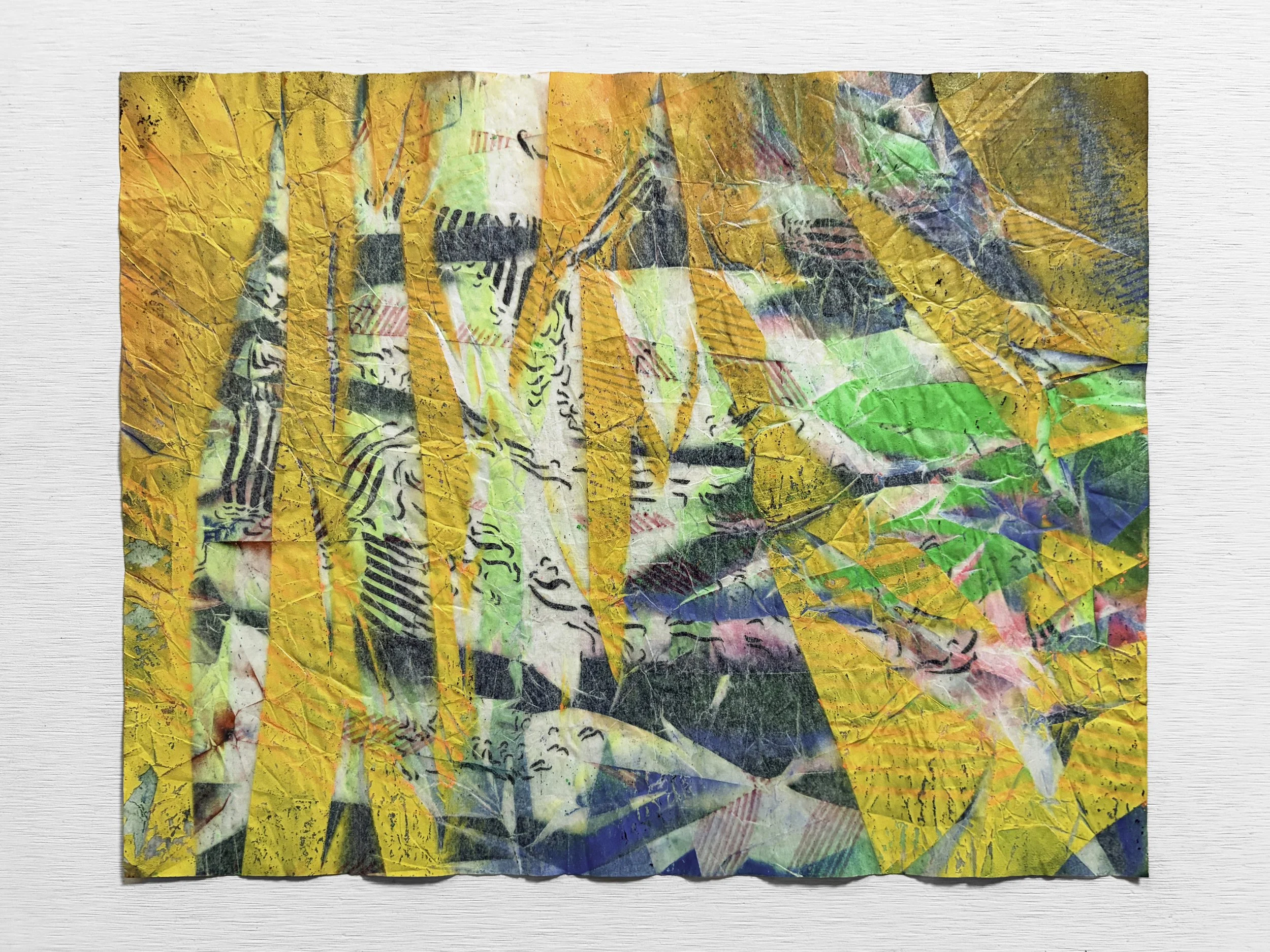
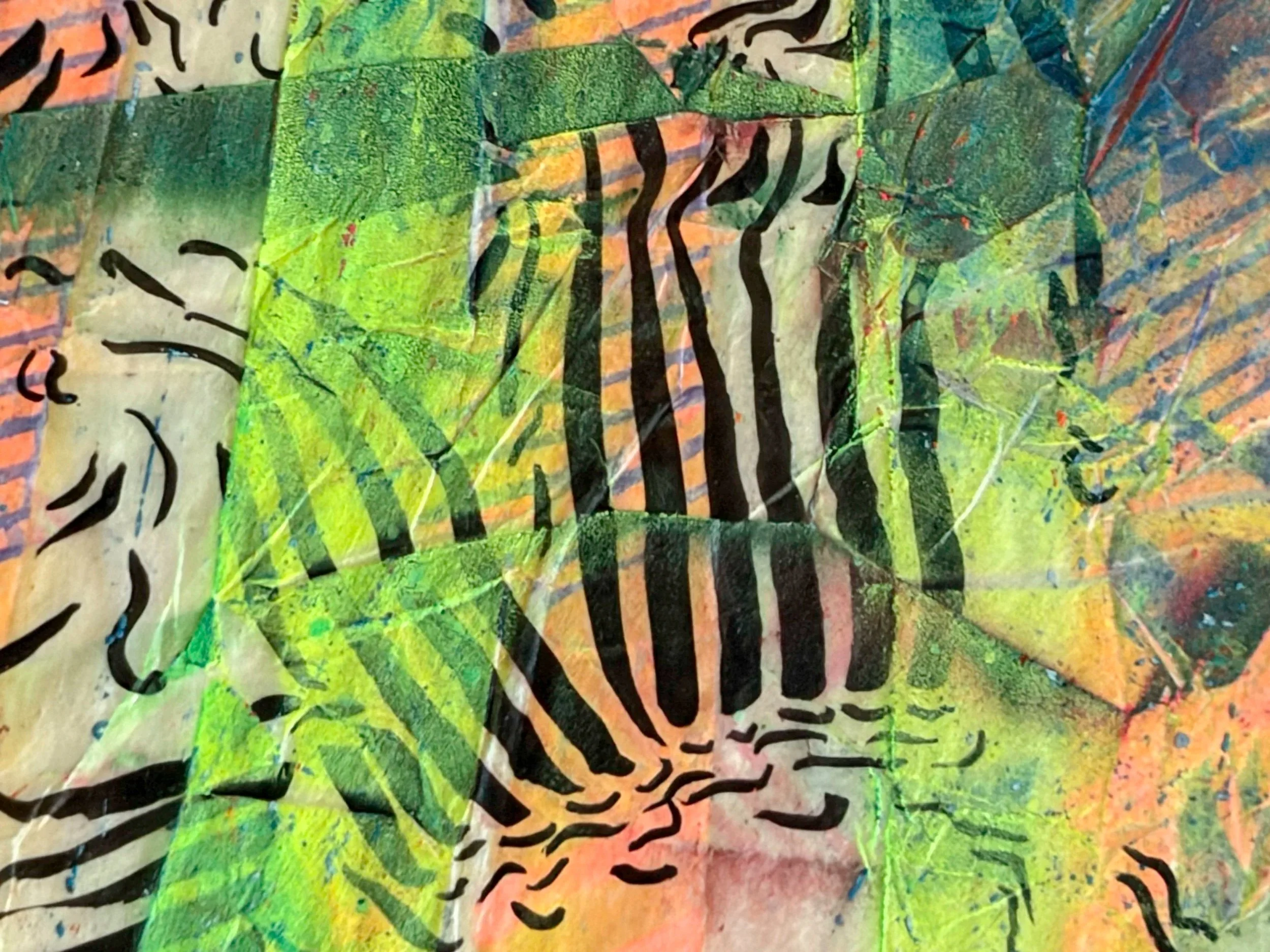
Below: The reverse surface reveals the intensity hidden within the quieter exterior. Fluorescent passages become more direct and saturated, exposing the color relationships that combine to create the more muted atmosphere above. Like squinting toward sunlight through trees and seeing unexpected rainbow flares created by the eye itself, the work plays with the space between what is present and what is revealed.
The shifting patterns suggest many possible worlds: rippling water, moss-covered wetlands, animal markings, frozen landscapes, or a place where a hidden creature might suddenly emerge. The image remains suspended between natural observation and dream memory, familiar but never fully identifiable.
Reflection: Surprise, Surprise No. 2 connects to a lifelong practice of looking closely at the natural world: walking through woods, fields, and shorelines while searching for compositions that reveal themselves through light, weather, and chance. Memories of rural landscapes from childhood—woods, lake environments, snow, vegetation, and changing seasons—inform the work’s atmosphere without defining it.
The repeated folding, pressing, and transfer process creates a surface that carries its own history. Marks appear weathered, layered, and aged, yet the completed work is protected beneath UV varnish, preserving these accumulated states as a suspended moment in time. The work becomes a kind of artificial specimen: not a record of a single landscape, but a compressed memory of many encounters with the natural world.
Above: Surprise, Surprise No. 2 presents a dense, atmospheric field where color seems to exist within the surface rather than simply upon it. From a distance, the work can appear restrained and naturalistic—deep greens, earth tones, and softened neutrals—but extended looking reveals layers of fluorescent yellow, pink, orange, red, and green shifting beneath and through those apparent colors.
The effect recalls the optical depth of fire opal, where internal flashes of color emerge only when light reaches the material in a particular way. The work feels less painted than grown, like a landscape formed through accumulated layers of weather, mineral, water, and time. Its colors suggest late autumn fields, snow patches, wet earth, grasses, and old vegetation catching the final intense light of day.
Below: The reverse surface reveals the intensity hidden within the quieter exterior. Fluorescent passages become more direct and saturated, exposing the color relationships that combine to create the more muted atmosphere above. Like squinting toward sunlight through trees and seeing unexpected rainbow flares created by the eye itself, the work plays with the space between what is present and what is revealed.
The shifting patterns suggest many possible worlds: rippling water, moss-covered wetlands, animal markings, frozen landscapes, or a place where a hidden creature might suddenly emerge. The image remains suspended between natural observation and dream memory, familiar but never fully identifiable.
Reflection: Surprise, Surprise No. 2 connects to a lifelong practice of looking closely at the natural world: walking through woods, fields, and shorelines while searching for compositions that reveal themselves through light, weather, and chance. Memories of rural landscapes from childhood—woods, lake environments, snow, vegetation, and changing seasons—inform the work’s atmosphere without defining it.
The repeated folding, pressing, and transfer process creates a surface that carries its own history. Marks appear weathered, layered, and aged, yet the completed work is protected beneath UV varnish, preserving these accumulated states as a suspended moment in time. The work becomes a kind of artificial specimen: not a record of a single landscape, but a compressed memory of many encounters with the natural world.