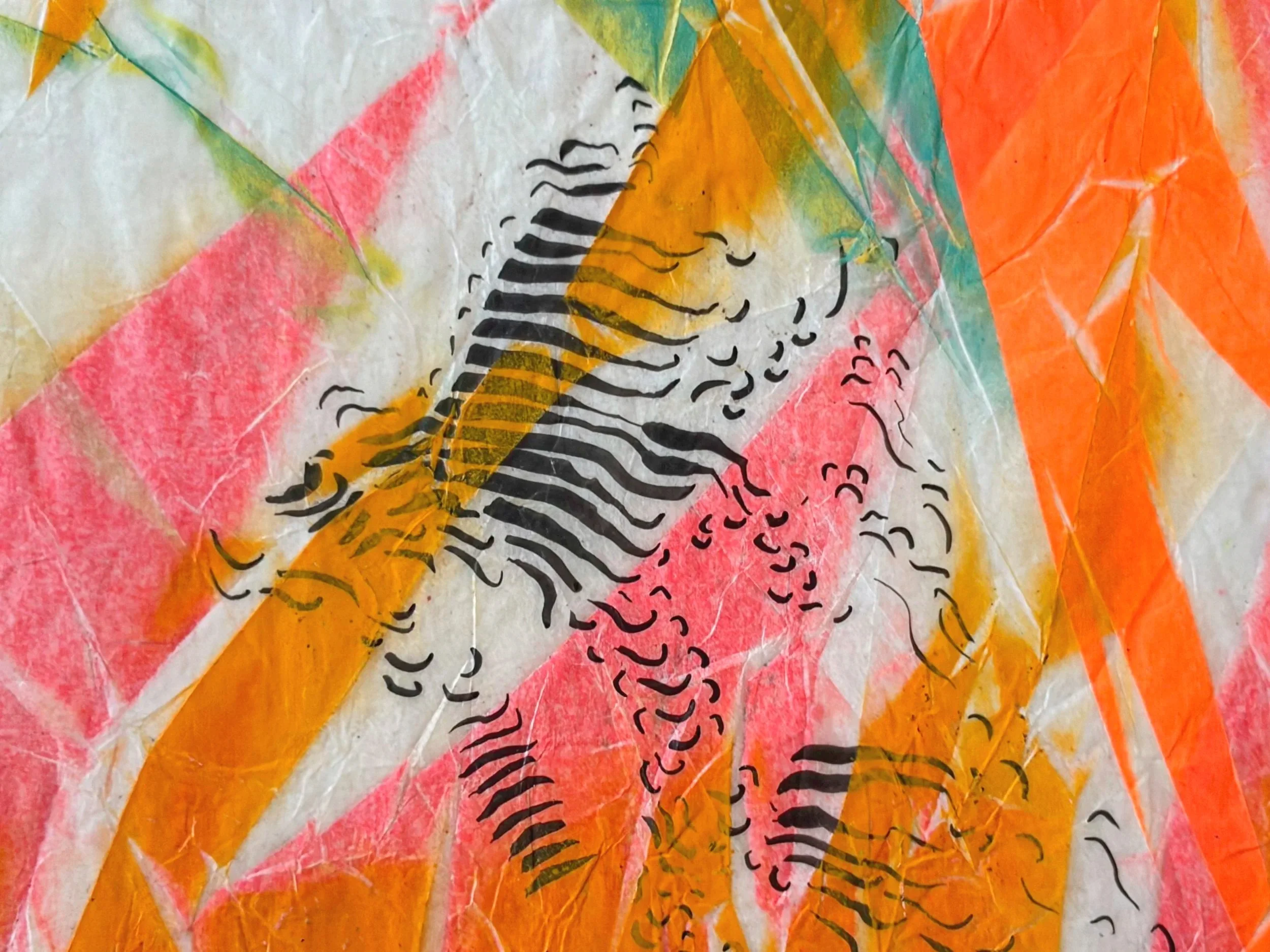
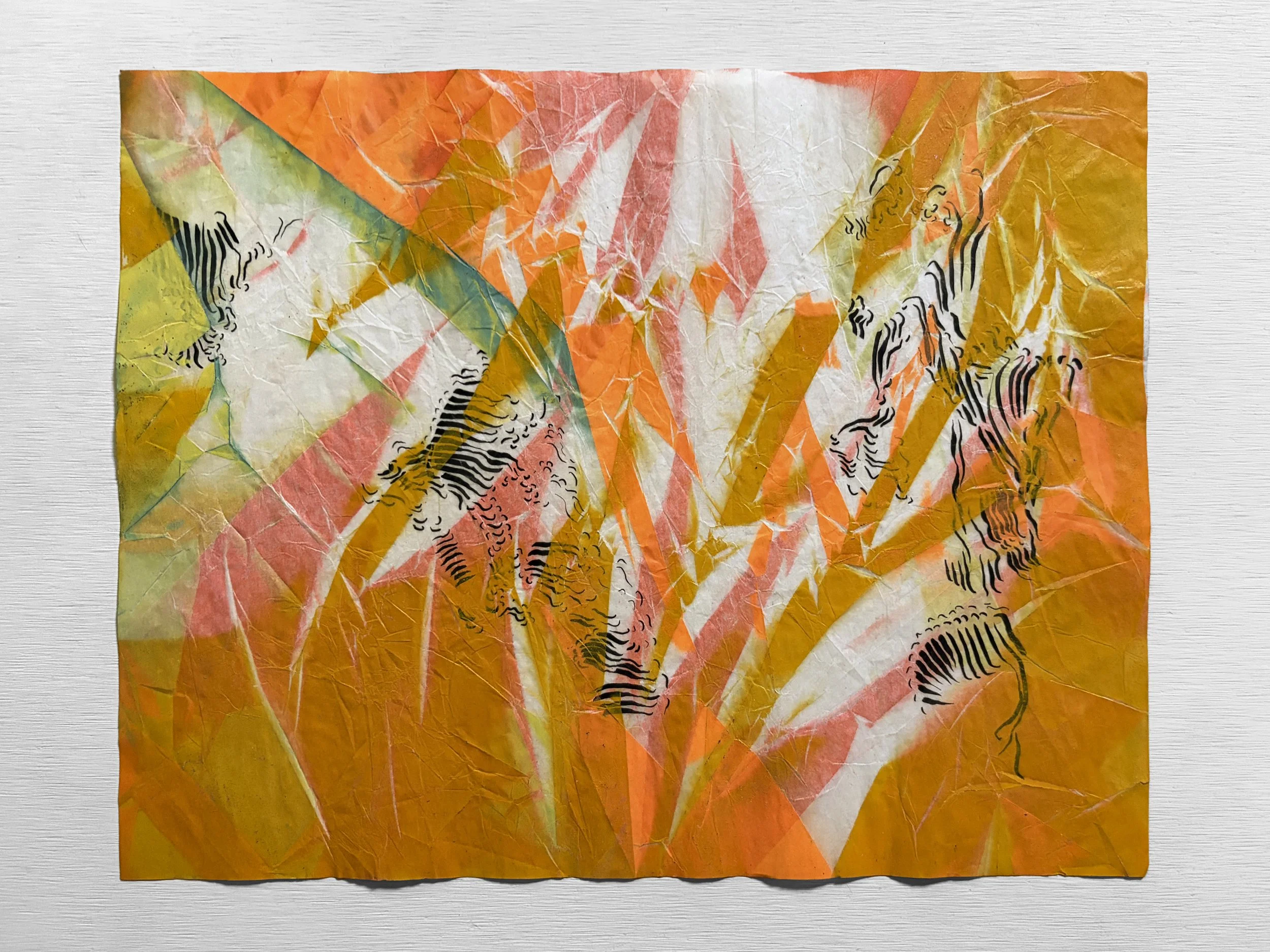
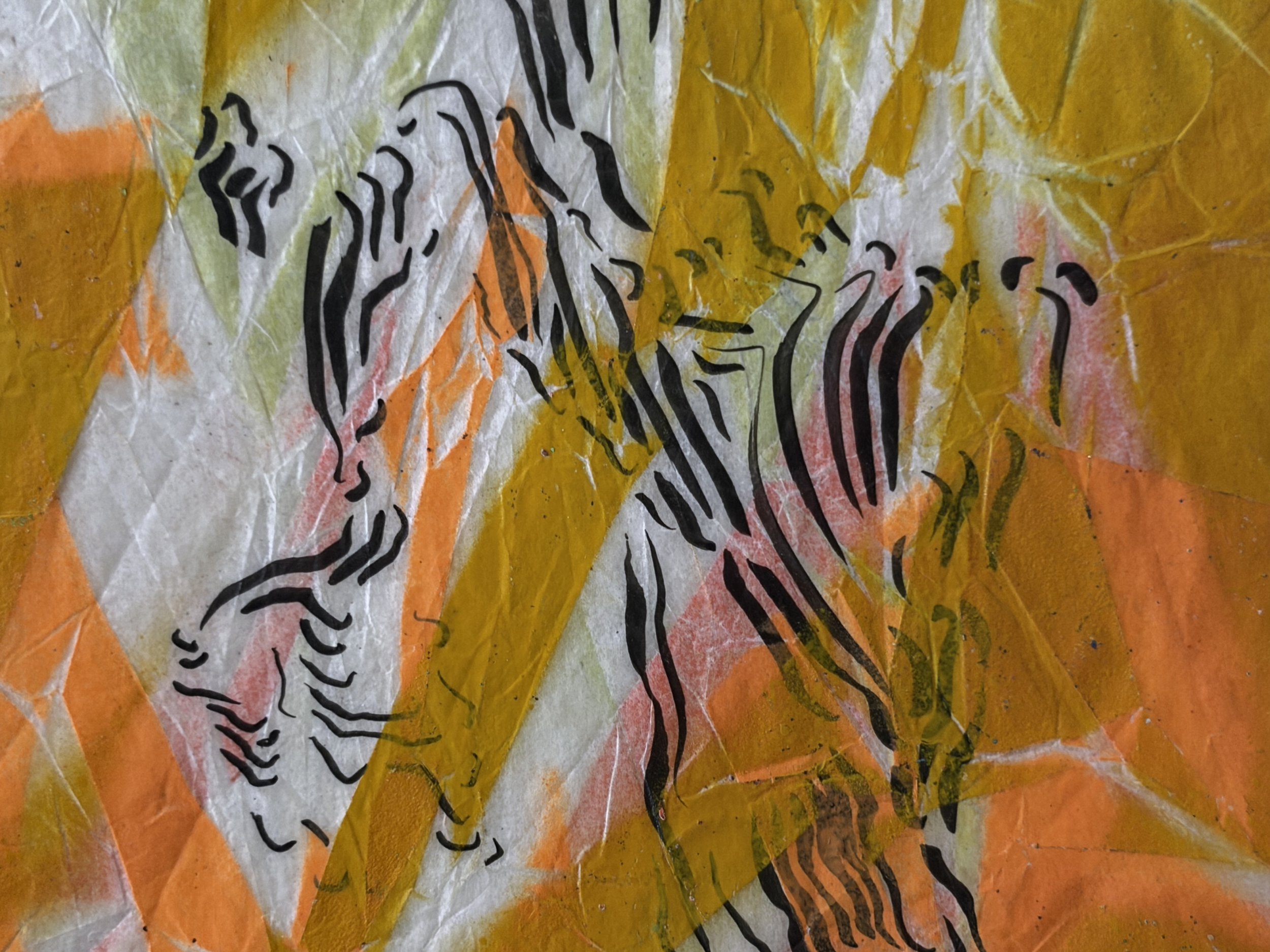
Above: Surprise, Surprise No. 19 presents a harmonious composition where warm organic colors flow across the surface like firelight, moving water, or sunlight reflecting through a shallow stream. The drawing feels especially resolved here, creating a sense of balance and rhythm within the layered field of color.
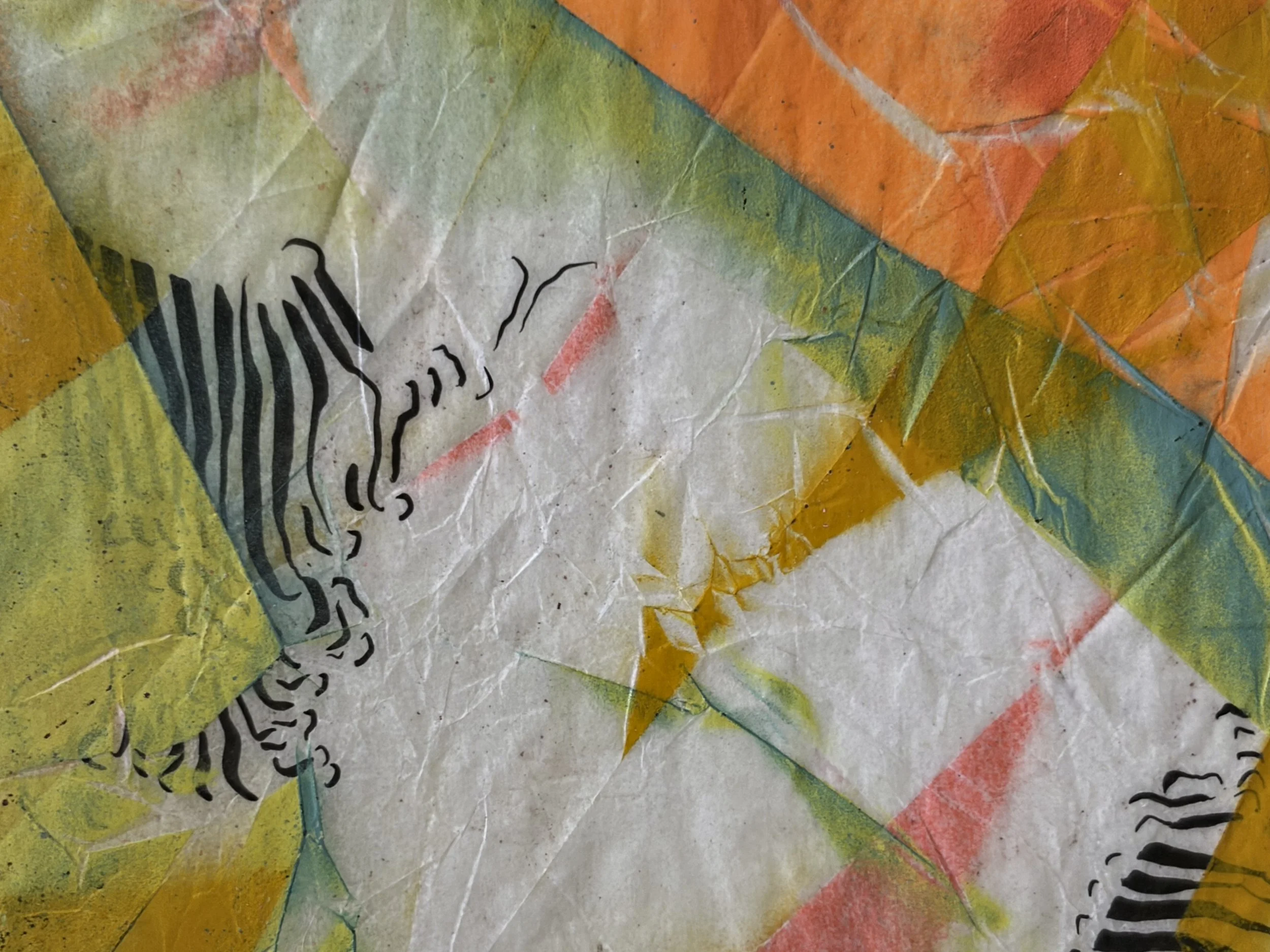
The surface appears relatively restrained at first: oranges, soft reds, and subtle natural tones create an atmosphere of warmth and calm. Small passages of blue and green introduce unexpected shifts, suggesting reflections, vegetation, or a form suspended within the image. A shape in the upper left can momentarily suggest a pear-like form, a cut surface revealing its interior, or another familiar object emerging from abstraction.
The white spaces become active areas of possibility—not empty, but dimensional spaces where forms seem to float, move, or exist within another environment.
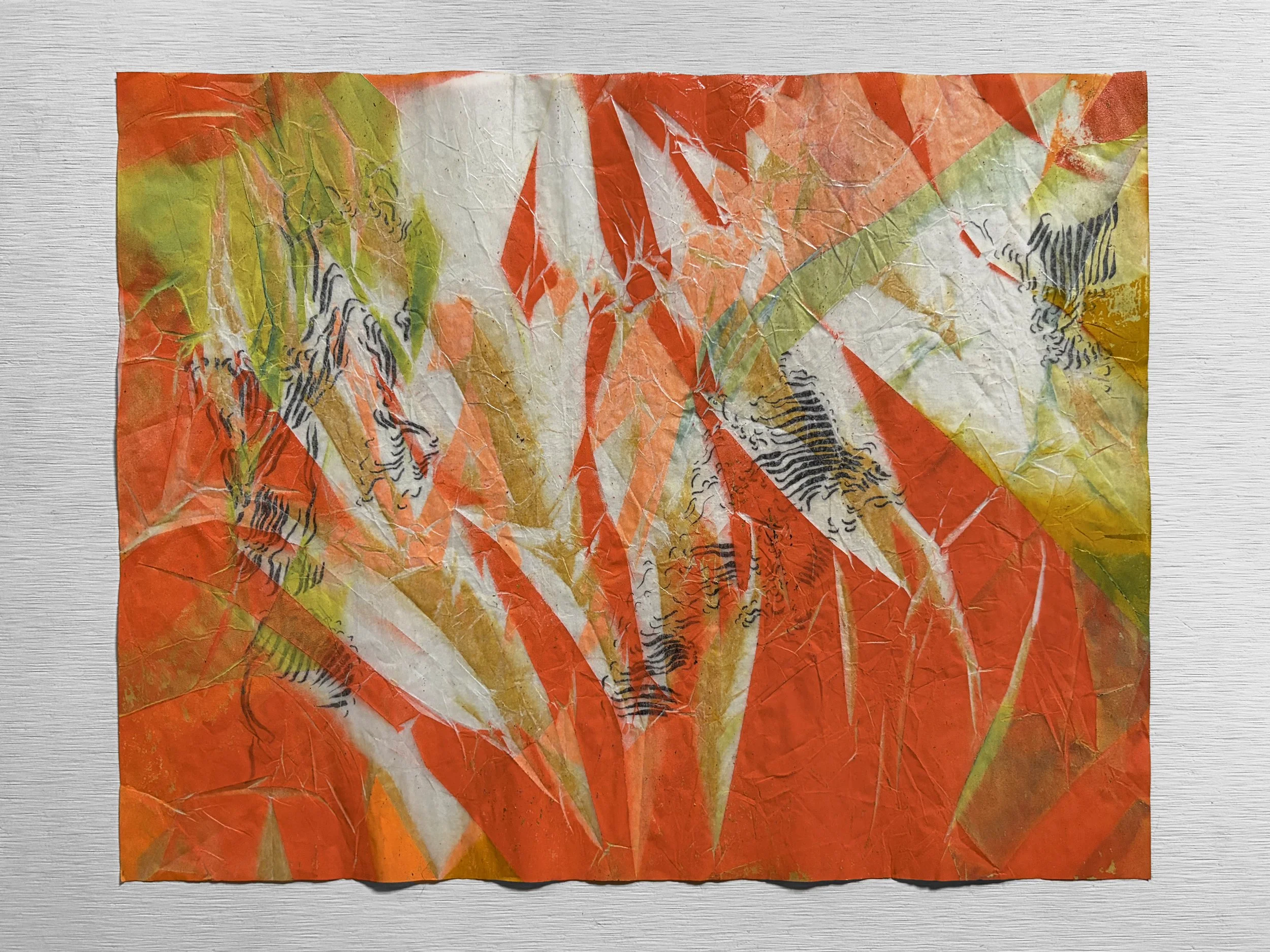
Below: The reverse surface transforms the emotional intensity of the work. Colors that appear soft and orange from the Above view reveal themselves as much more saturated fluorescent reds beneath the surface. The image becomes a glowing internal world, like a molten core burning beneath a cooler exterior.
The hidden fluorescence changes how the Above view is understood. What first appears gentle and natural is revealed to contain a deeper energy and intensity. The two sides become inseparable: the calm surface exists because of the force underneath it.
Reflection: Surprise, Surprise No. 19 explores the relationship between appearance and hidden information. The work asks how perception changes when we discover that something we thought we understood contains another level of intensity beneath the surface.
The process of layering, folding, transferring, and reopening creates this tension between what is visible and what remains concealed. The fluorescent pigments do not simply add brightness; they alter the entire experience of the image by existing in one state and appearing as another.
Like a dream, a memory, or a moment of recognition, the work shifts after new information is revealed. Once the hidden color is known, the viewer cannot return to seeing the surface in quite the same way. Surprise, Surprise No. 19 becomes a conversation between the visible world and the invisible forces that shape it.
Above: Surprise, Surprise No. 19 presents a harmonious composition where warm organic colors flow across the surface like firelight, moving water, or sunlight reflecting through a shallow stream. The drawing feels especially resolved here, creating a sense of balance and rhythm within the layered field of color.
The surface appears relatively restrained at first: oranges, soft reds, and subtle natural tones create an atmosphere of warmth and calm. Small passages of blue and green introduce unexpected shifts, suggesting reflections, vegetation, or a form suspended within the image. A shape in the upper left can momentarily suggest a pear-like form, a cut surface revealing its interior, or another familiar object emerging from abstraction.
The white spaces become active areas of possibility—not empty, but dimensional spaces where forms seem to float, move, or exist within another environment.
Below: The reverse surface transforms the emotional intensity of the work. Colors that appear soft and orange from the Above view reveal themselves as much more saturated fluorescent reds beneath the surface. The image becomes a glowing internal world, like a molten core burning beneath a cooler exterior.
The hidden fluorescence changes how the Above view is understood. What first appears gentle and natural is revealed to contain a deeper energy and intensity. The two sides become inseparable: the calm surface exists because of the force underneath it.
Reflection: Surprise, Surprise No. 19 explores the relationship between appearance and hidden information. The work asks how perception changes when we discover that something we thought we understood contains another level of intensity beneath the surface.
The process of layering, folding, transferring, and reopening creates this tension between what is visible and what remains concealed. The fluorescent pigments do not simply add brightness; they alter the entire experience of the image by existing in one state and appearing as another.
Like a dream, a memory, or a moment of recognition, the work shifts after new information is revealed. Once the hidden color is known, the viewer cannot return to seeing the surface in quite the same way. Surprise, Surprise No. 19 becomes a conversation between the visible world and the invisible forces that shape it.