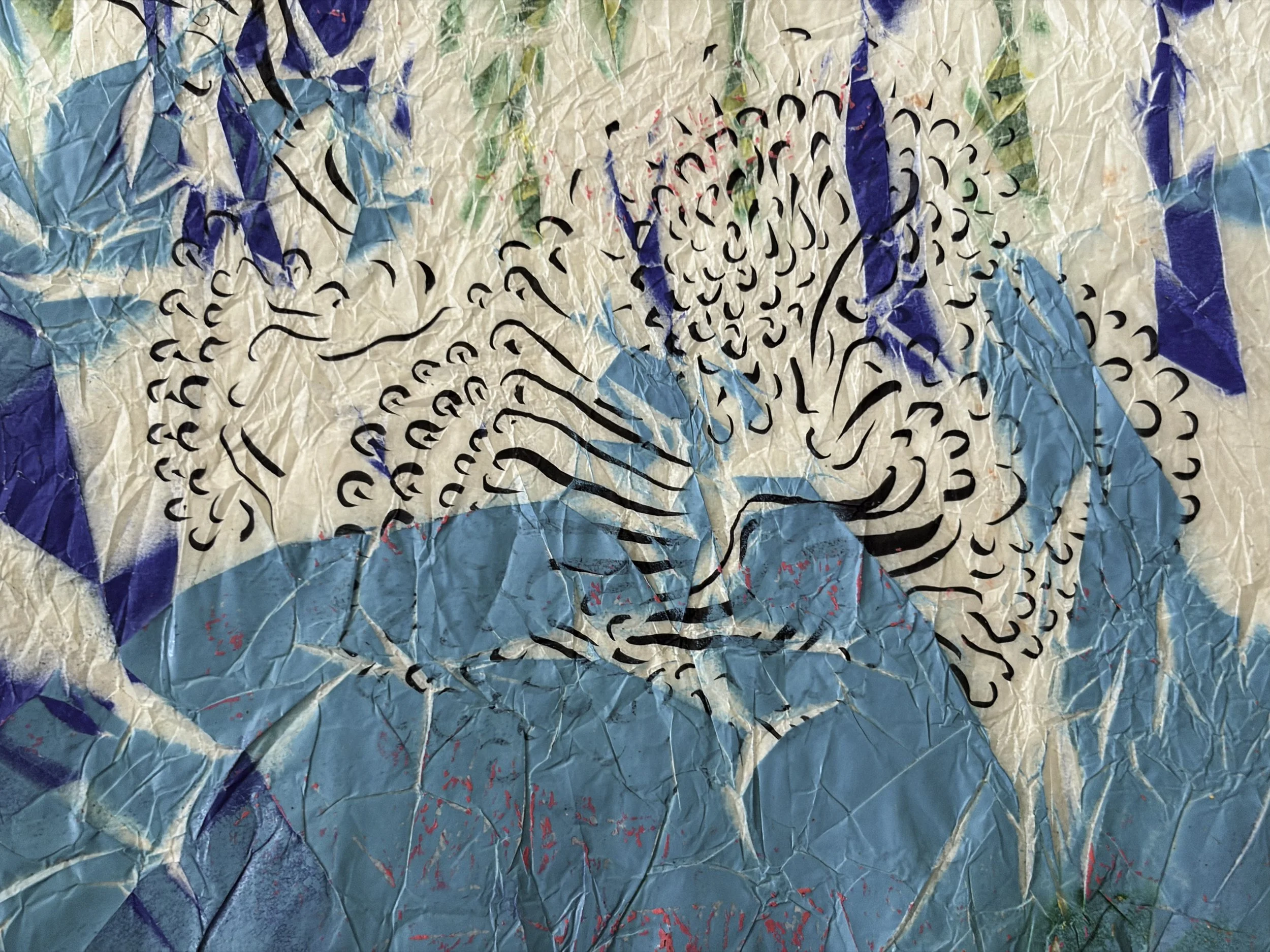
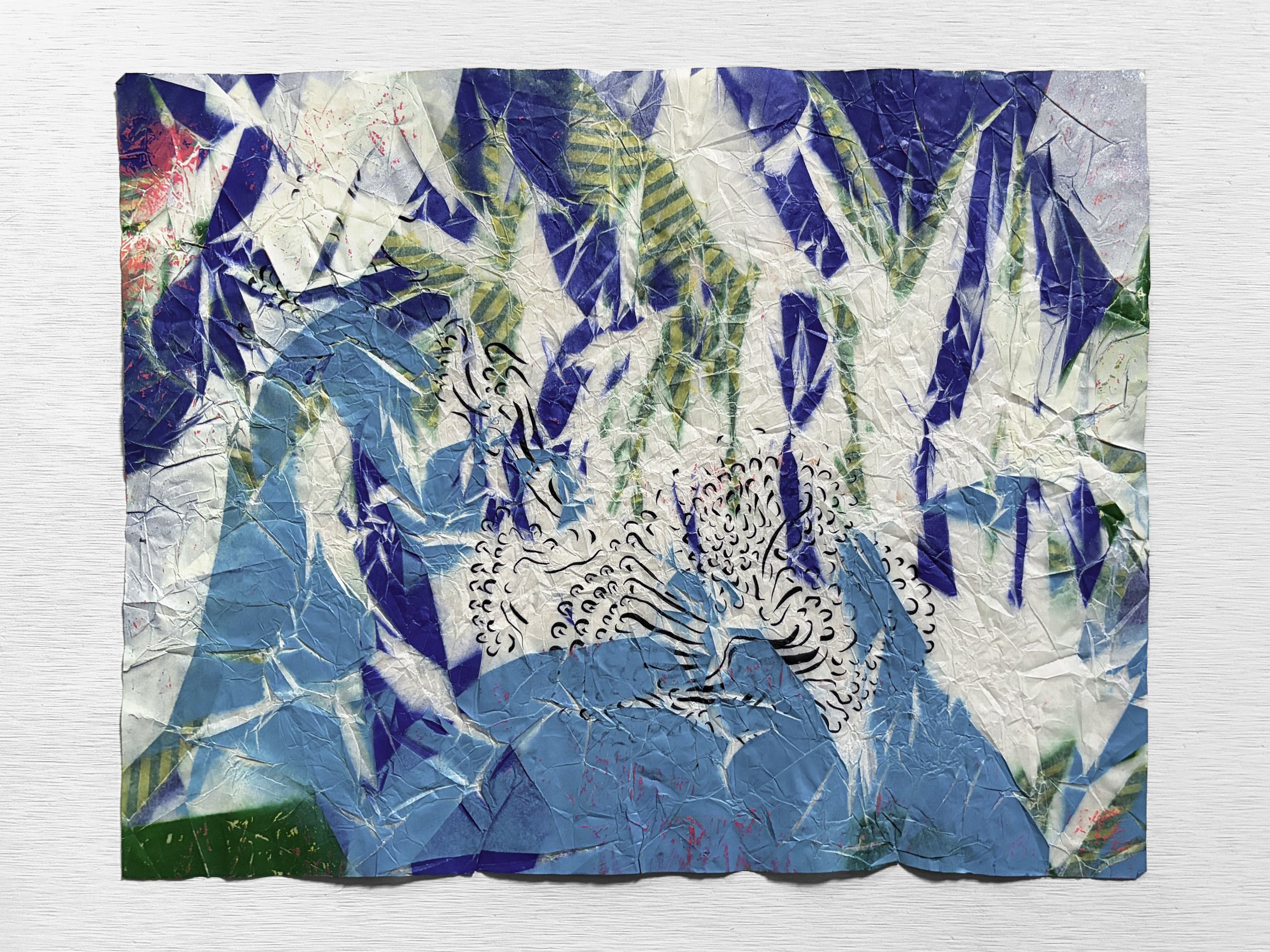
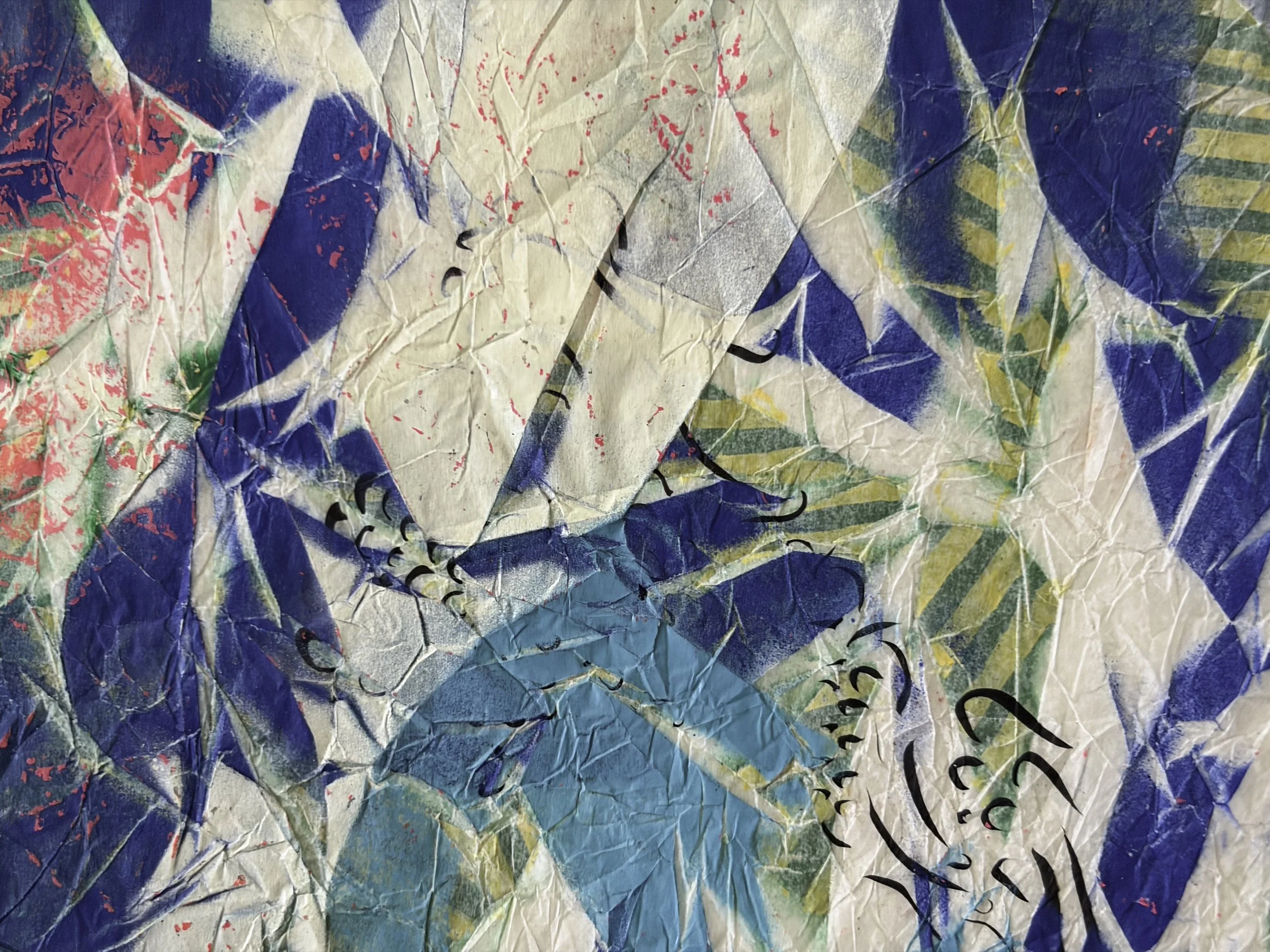
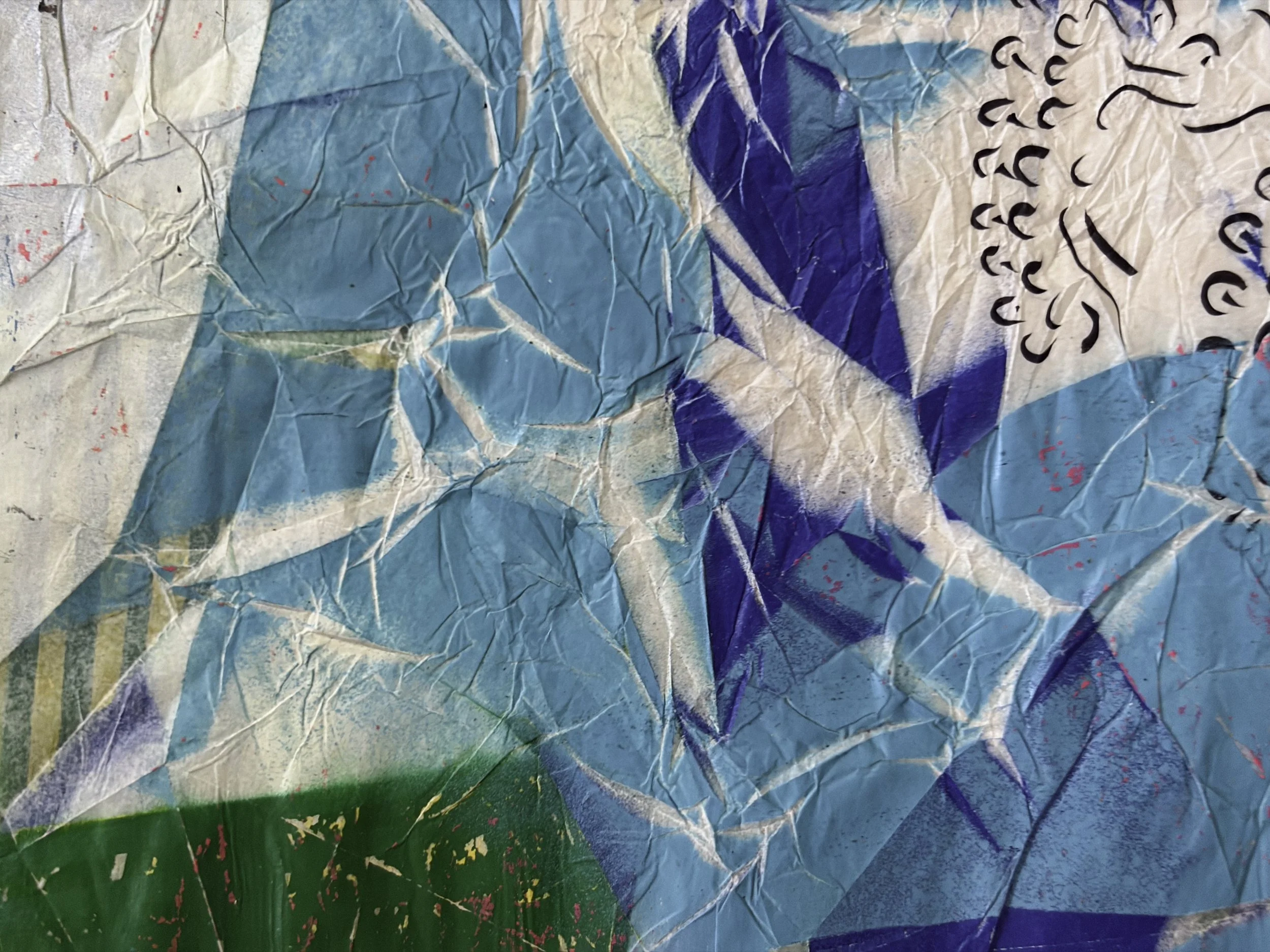
Above: Surprise, Surprise No. 18 explores the strange territory between transparency and concealment. Unlike many works in the series that rely on intense fluorescent passages, this image builds its atmosphere through subtle layers of color and the unusual presence of transparent white. The surface begins to feel less like paper and more like a thin translucent membrane—a plastic bag, a wrapped object, or a surface altered by contact with the world around it.
Colors appear embedded within the material rather than simply painted upon it. Some areas feel stained, others printed, and others seem like fragments trapped beneath a surface. The effect creates a sense of an everyday object transformed into something mysterious and unfamiliar.
A vivid blue passage emerging from the lower area creates a moment of unexpected recognition. It can suggest a face, a small animal, or a hidden figure appearing within the abstraction. Like many dream images, the viewer briefly recognizes something and then questions whether it was ever actually there.
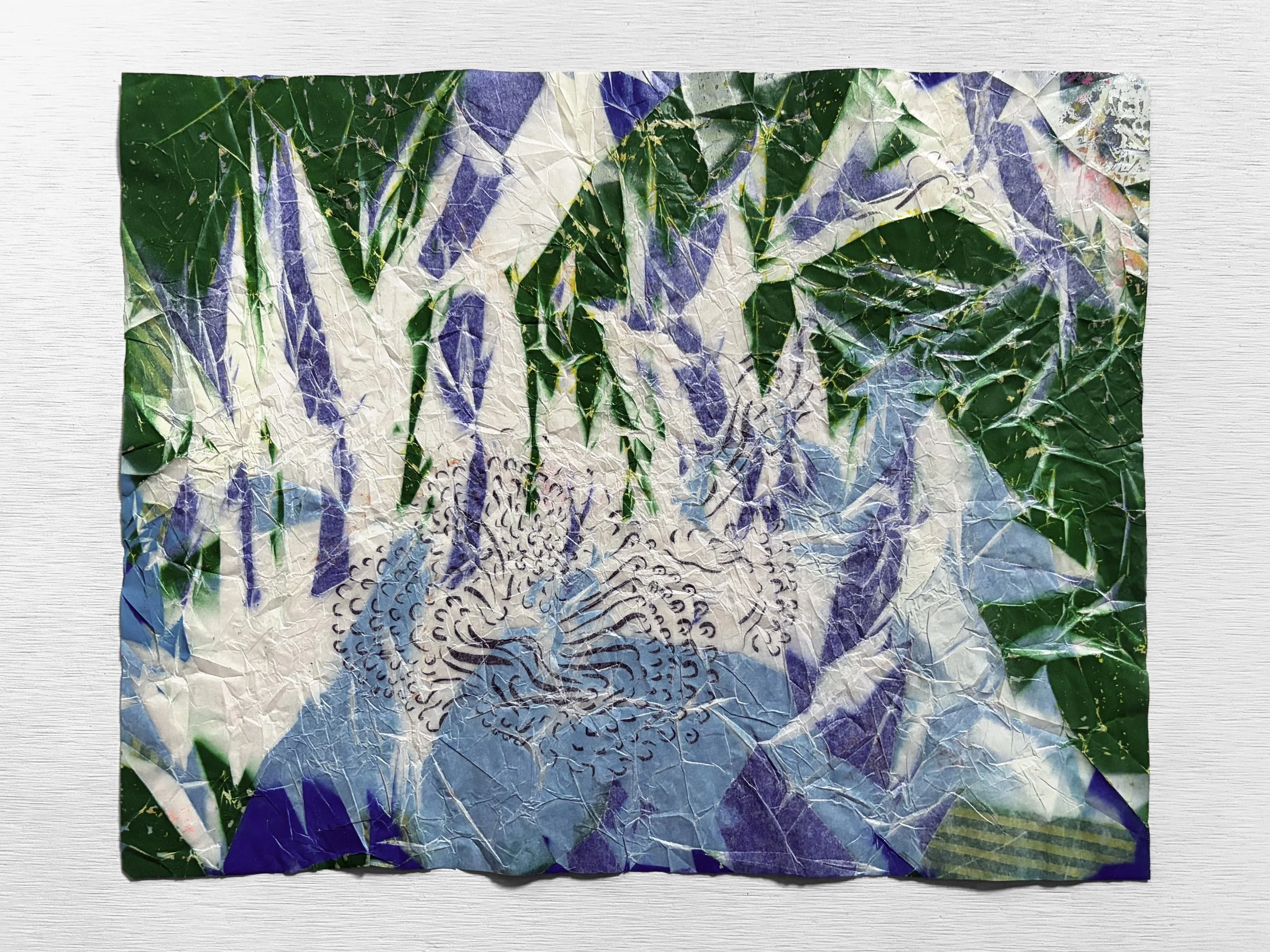
Below: The reverse surface reveals a quieter and more muted relationship between the same colors. What appears bright and exposed from the Above view becomes more concealed, showing how much of the image depends on layers interacting through the translucent material.
The darker colors and transferred marks create a sense of depth behind the pale surface. The work feels almost photographic, like a negative image or a partially developed print where information is present but difficult to fully interpret.
Reflection: Surprise, Surprise No. 18 explores how materials can disguise and reveal at the same time. The added layers of transparent white transform the tracing paper into something with its own physical character, creating a surface that feels both fragile and manufactured.
The image asks the viewer to reconsider ordinary materials and the visual information they carry. A plastic bag, a reflection, a stain, or a fragment of a printed surface can become unexpectedly complex when attention is given to it.
The work also returns to one of the central questions of the series: why do we search for meaning within ambiguous forms? A blue shape becomes a face; a mark becomes an object; a surface becomes a world. Surprise, Surprise No. 18 embraces that moment when recognition appears and disappears at the same time.
Above: Surprise, Surprise No. 18 explores the strange territory between transparency and concealment. Unlike many works in the series that rely on intense fluorescent passages, this image builds its atmosphere through subtle layers of color and the unusual presence of transparent white. The surface begins to feel less like paper and more like a thin translucent membrane—a plastic bag, a wrapped object, or a surface altered by contact with the world around it.
Colors appear embedded within the material rather than simply painted upon it. Some areas feel stained, others printed, and others seem like fragments trapped beneath a surface. The effect creates a sense of an everyday object transformed into something mysterious and unfamiliar.
A vivid blue passage emerging from the lower area creates a moment of unexpected recognition. It can suggest a face, a small animal, or a hidden figure appearing within the abstraction. Like many dream images, the viewer briefly recognizes something and then questions whether it was ever actually there.
Below: The reverse surface reveals a quieter and more muted relationship between the same colors. What appears bright and exposed from the Above view becomes more concealed, showing how much of the image depends on layers interacting through the translucent material.
The darker colors and transferred marks create a sense of depth behind the pale surface. The work feels almost photographic, like a negative image or a partially developed print where information is present but difficult to fully interpret.
Reflection: Surprise, Surprise No. 18 explores how materials can disguise and reveal at the same time. The added layers of transparent white transform the tracing paper into something with its own physical character, creating a surface that feels both fragile and manufactured.
The image asks the viewer to reconsider ordinary materials and the visual information they carry. A plastic bag, a reflection, a stain, or a fragment of a printed surface can become unexpectedly complex when attention is given to it.
The work also returns to one of the central questions of the series: why do we search for meaning within ambiguous forms? A blue shape becomes a face; a mark becomes an object; a surface becomes a world. Surprise, Surprise No. 18 embraces that moment when recognition appears and disappears at the same time.