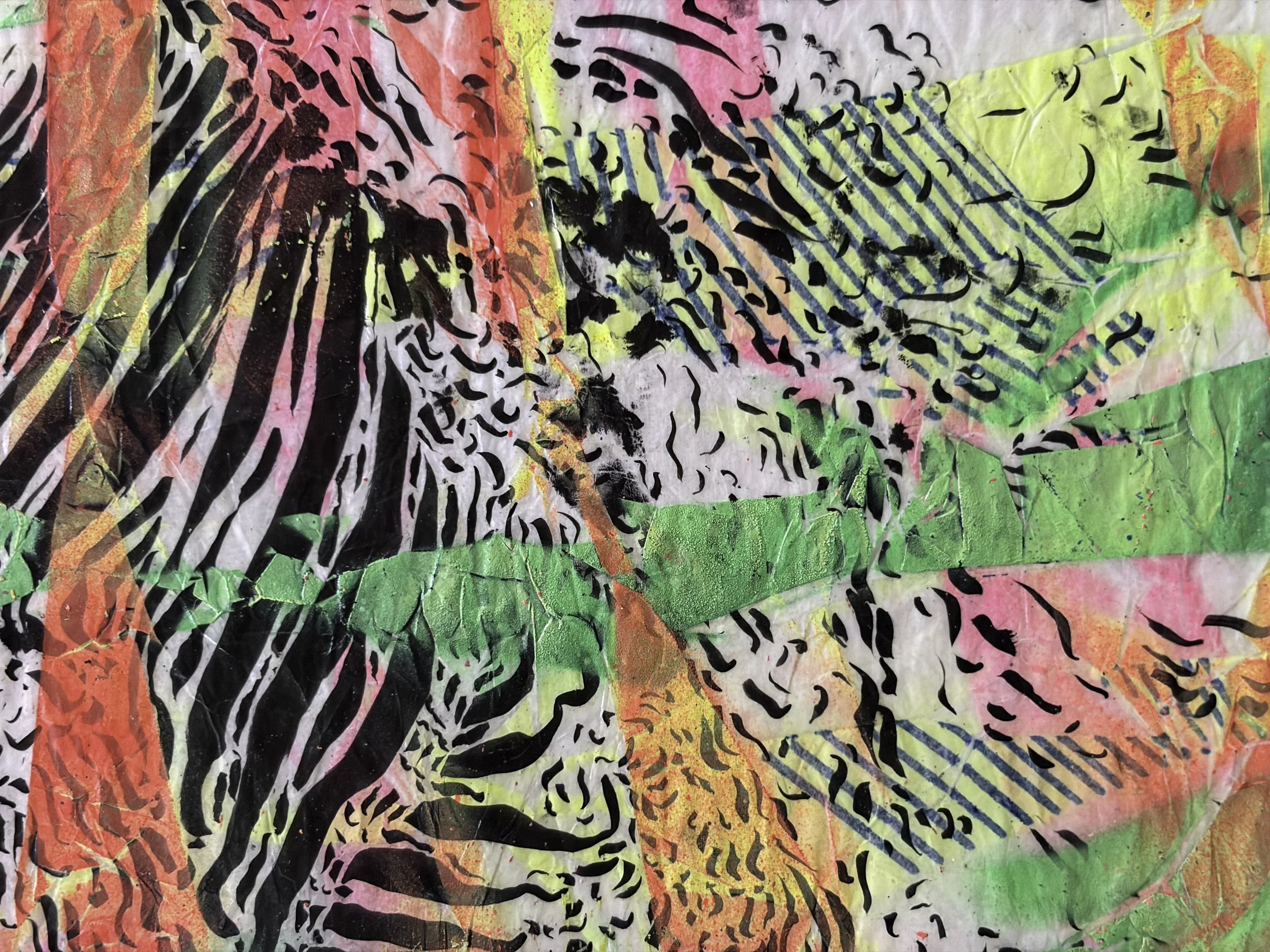
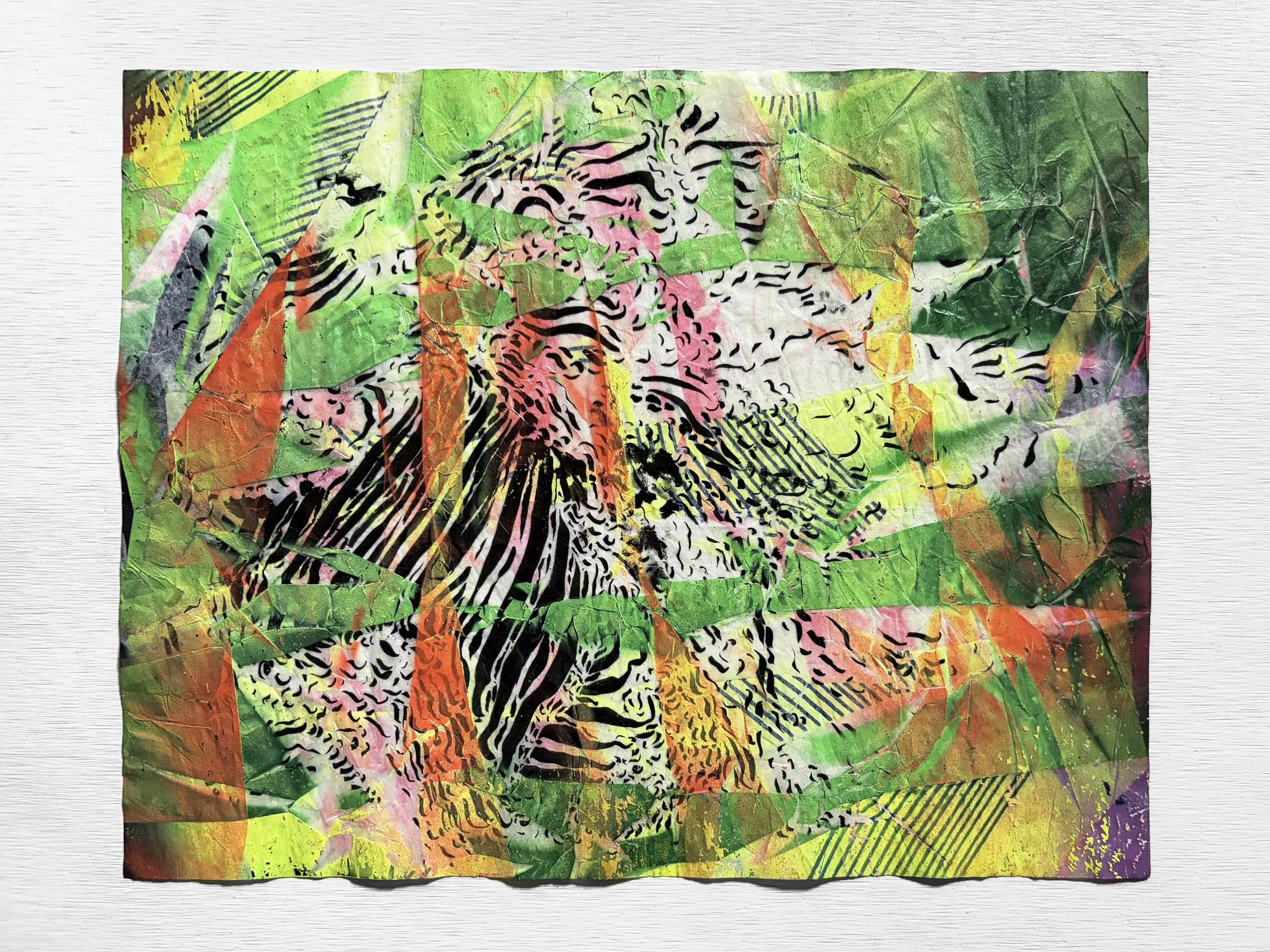
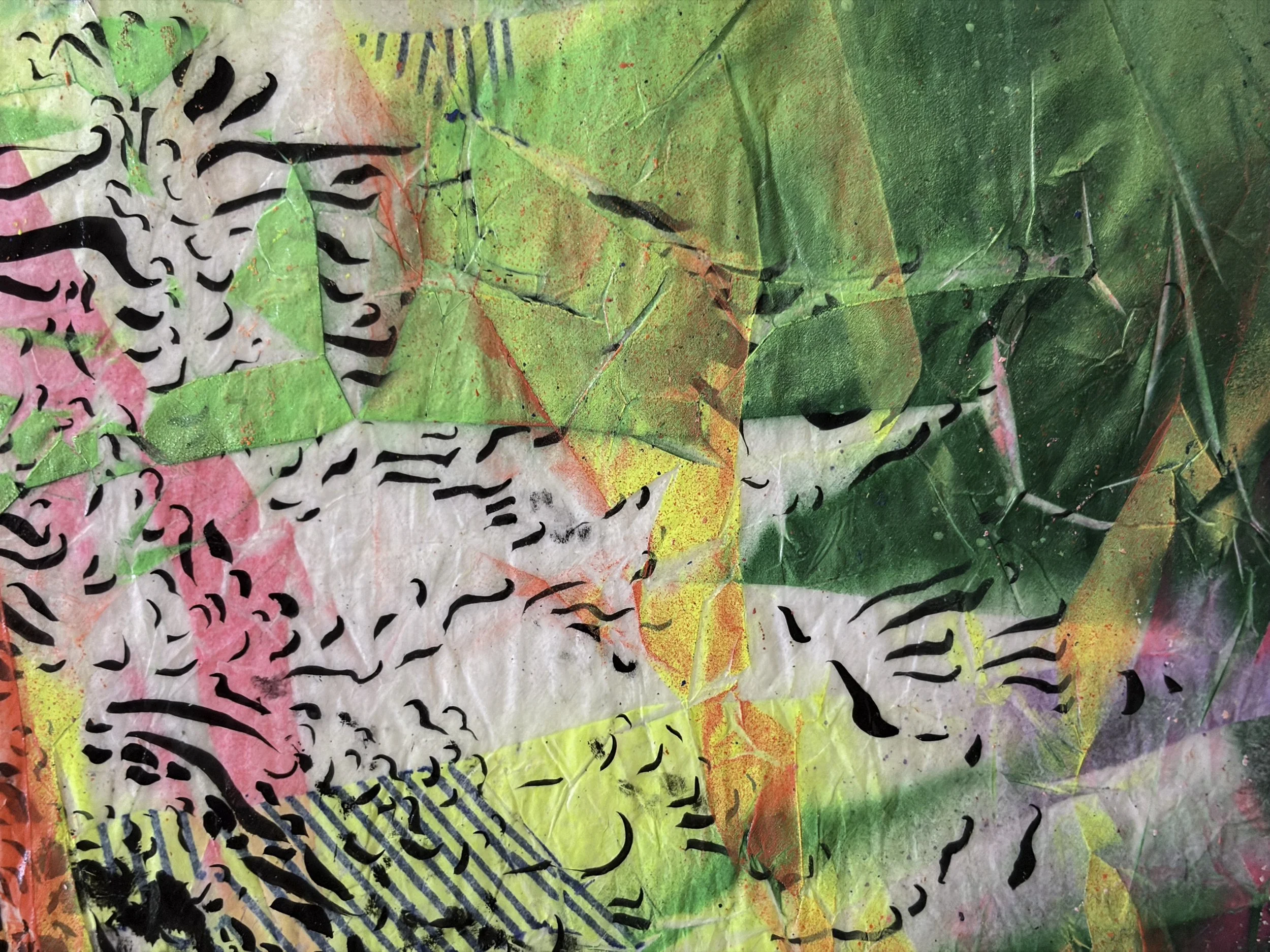
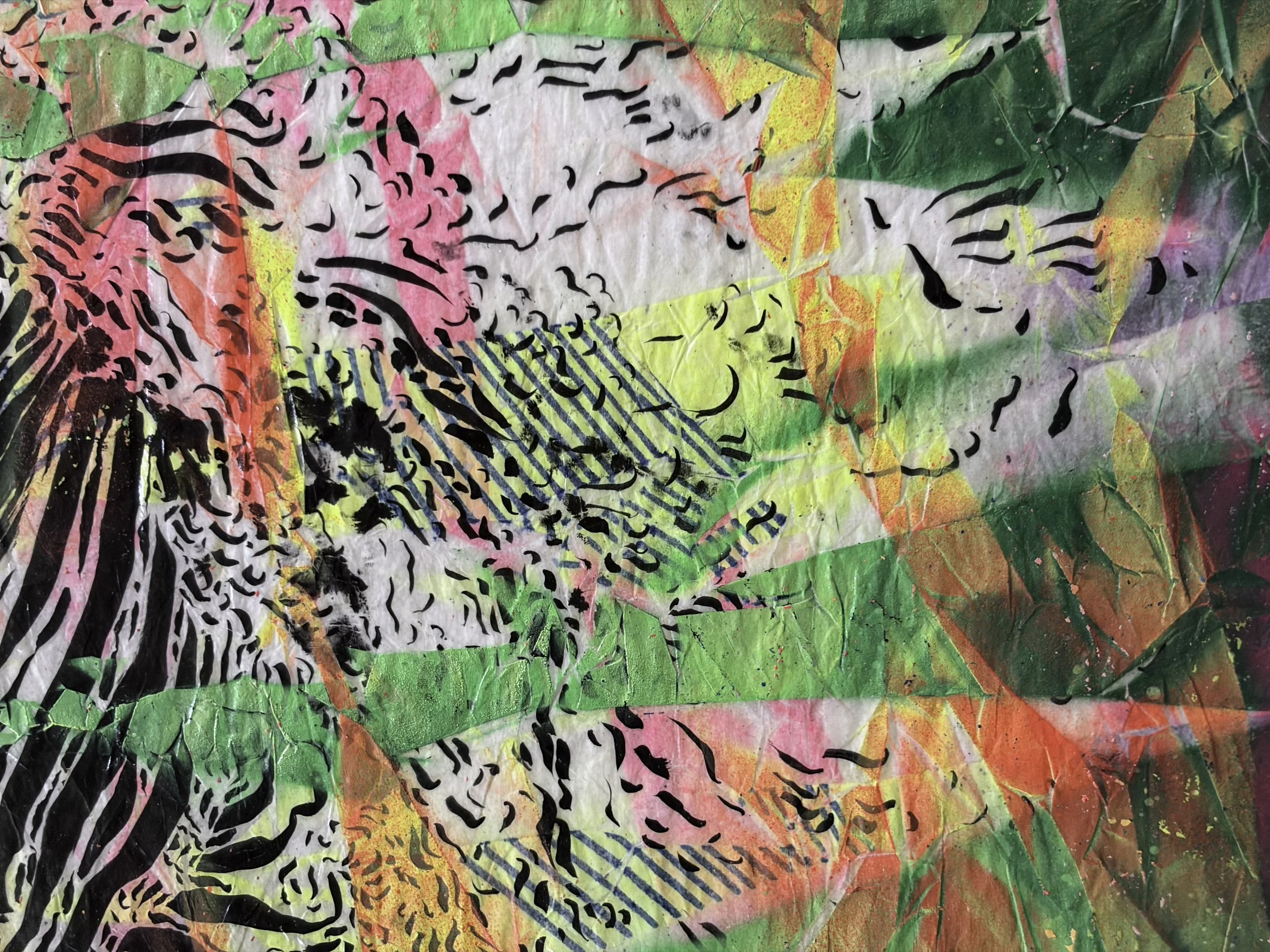
Above: Surprise, Surprise No. 17 creates the sensation of looking into a dense, living environment where layers of vegetation, light, and shadow continually reveal new possibilities. Rich greens, warm natural tones, and flashes of brighter color suggest a tropical landscape filled with overlapping growth: palms, ferns, flowers, and dense plant life illuminated by scattered openings of sunlight.
The image feels simultaneously expansive and intimate, like standing within a jungle and looking across layers of foliage toward distant patches of brightness. The drawing moves between plant forms, reflections, and animal markings, allowing the viewer to wonder whether something alive is moving through the landscape or whether the landscape itself has become the living presence.
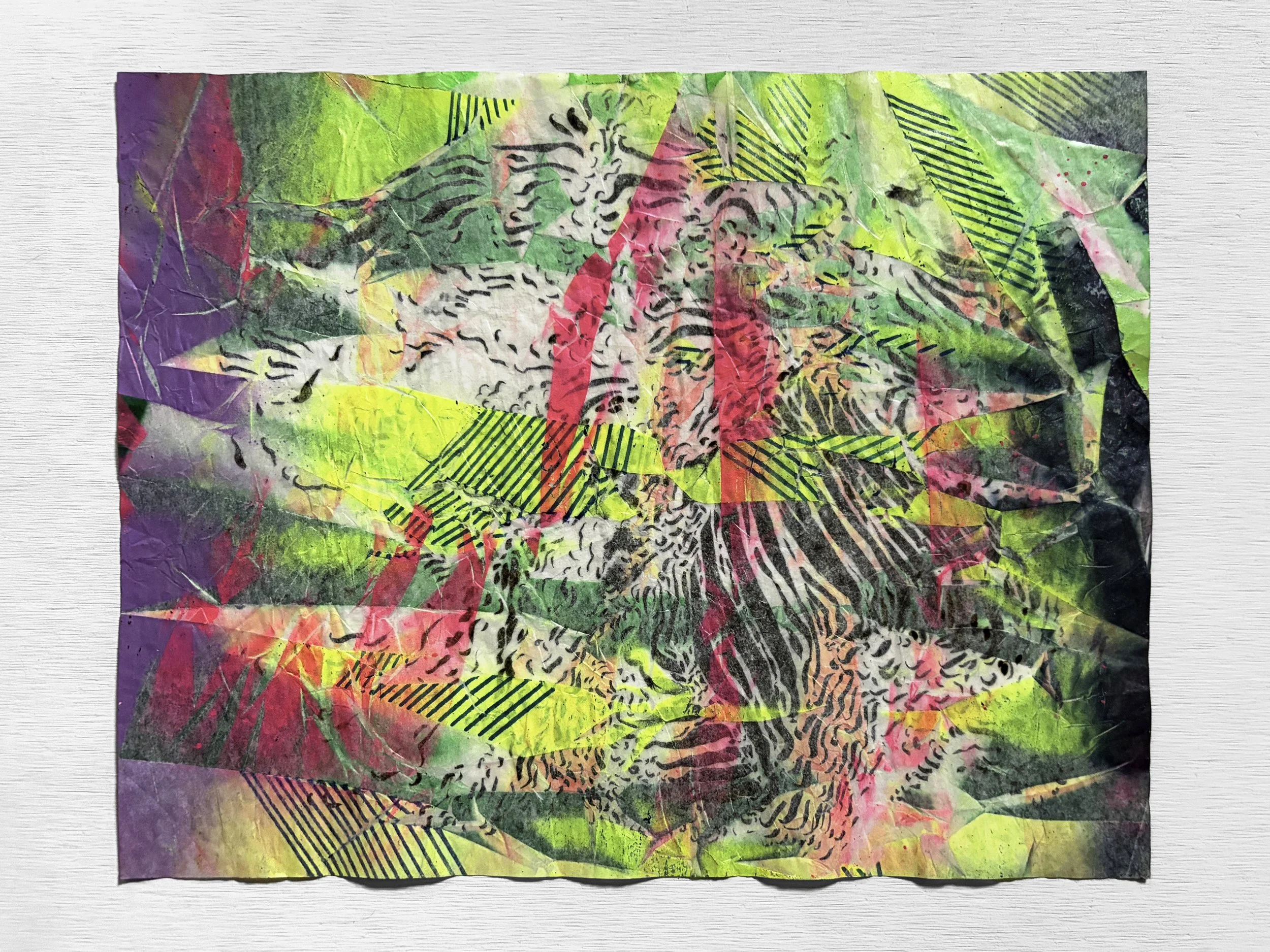
Below: The reverse surface reveals another atmospheric layer within the same environment. Darker passages, including deep purples and shadowed colors, create a greater sense of depth and distance, as if looking further into the landscape or beneath the surface of water.
The hidden colors transform the image from a dense field of vegetation into something more dreamlike. Light, reflection, and pattern merge together, creating the feeling of a world where the boundaries between plant, animal, water, and atmosphere are constantly shifting.
Reflection: Surprise, Surprise No. 17 explores the experience of being immersed in a landscape where perception is continually changing. The natural world often presents patterns that seem intentional: the markings of animals resemble vegetation, water reflects plant forms, and leaves create structures that echo other living systems.
The layered process behind the work mirrors this complexity. Colors accumulate until a seemingly natural palette emerges from many individual decisions, while the folding and transfer process allows unexpected relationships to form between marks and surfaces.
Like a memory of a place visited long ago or a dream landscape assembled from fragments, the work does not describe a specific location. Instead, it recreates the sensation of entering another environment—one that feels familiar, alive, and impossible to fully explain.
Above: Surprise, Surprise No. 17 creates the sensation of looking into a dense, living environment where layers of vegetation, light, and shadow continually reveal new possibilities. Rich greens, warm natural tones, and flashes of brighter color suggest a tropical landscape filled with overlapping growth: palms, ferns, flowers, and dense plant life illuminated by scattered openings of sunlight.
The image feels simultaneously expansive and intimate, like standing within a jungle and looking across layers of foliage toward distant patches of brightness. The drawing moves between plant forms, reflections, and animal markings, allowing the viewer to wonder whether something alive is moving through the landscape or whether the landscape itself has become the living presence.
Below: The reverse surface reveals another atmospheric layer within the same environment. Darker passages, including deep purples and shadowed colors, create a greater sense of depth and distance, as if looking further into the landscape or beneath the surface of water.
The hidden colors transform the image from a dense field of vegetation into something more dreamlike. Light, reflection, and pattern merge together, creating the feeling of a world where the boundaries between plant, animal, water, and atmosphere are constantly shifting.
Reflection: Surprise, Surprise No. 17 explores the experience of being immersed in a landscape where perception is continually changing. The natural world often presents patterns that seem intentional: the markings of animals resemble vegetation, water reflects plant forms, and leaves create structures that echo other living systems.
The layered process behind the work mirrors this complexity. Colors accumulate until a seemingly natural palette emerges from many individual decisions, while the folding and transfer process allows unexpected relationships to form between marks and surfaces.
Like a memory of a place visited long ago or a dream landscape assembled from fragments, the work does not describe a specific location. Instead, it recreates the sensation of entering another environment—one that feels familiar, alive, and impossible to fully explain.