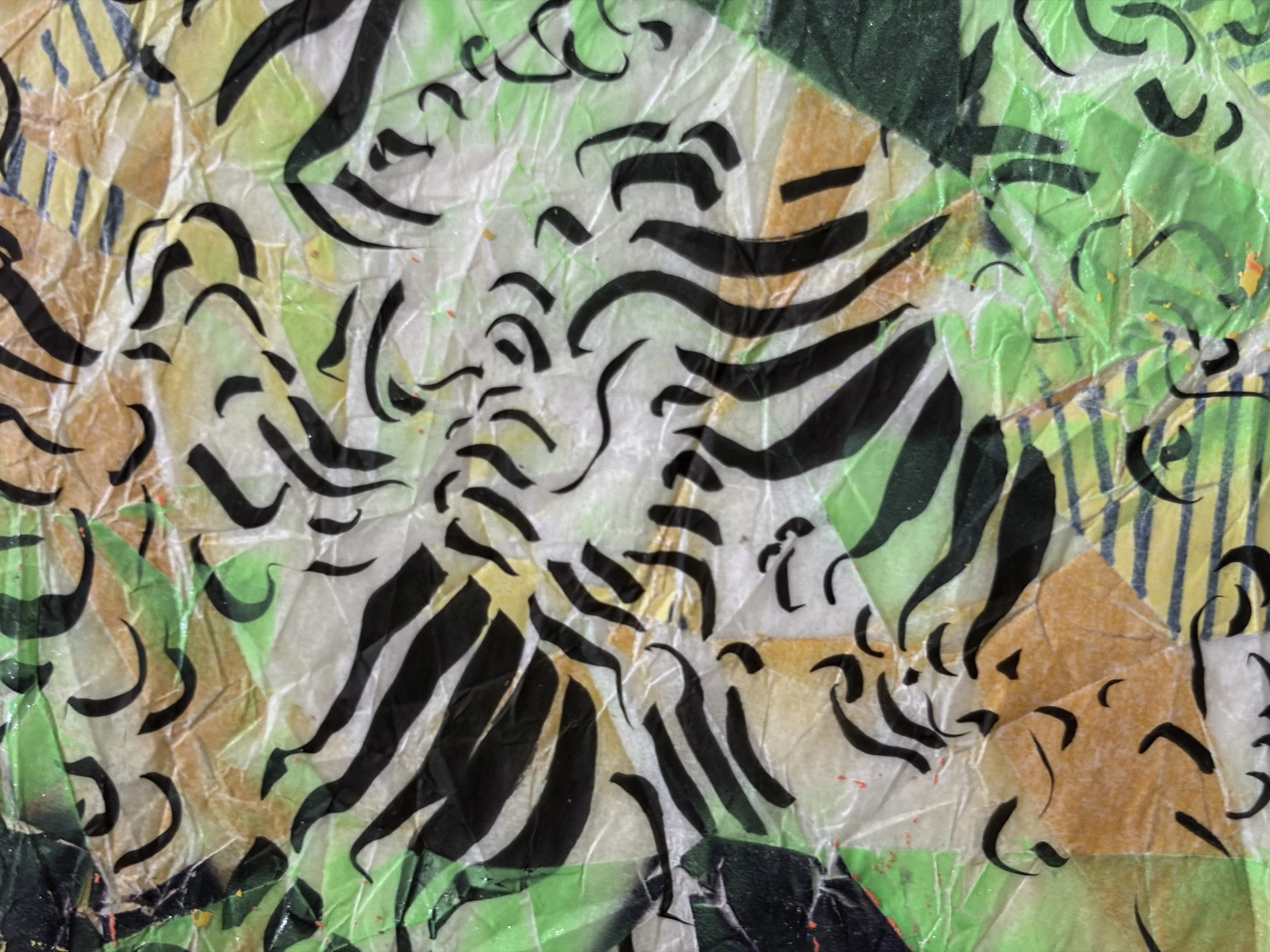
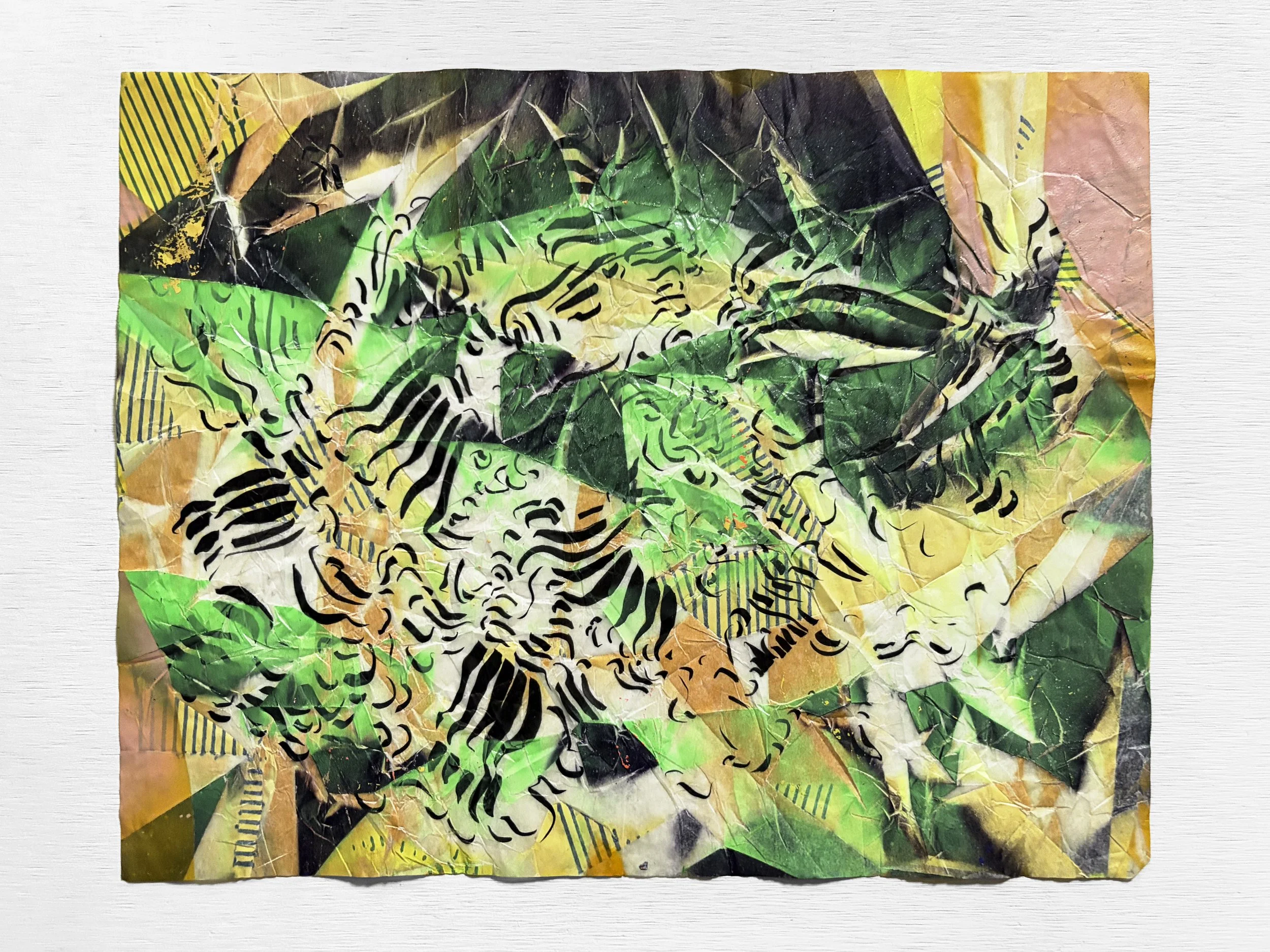
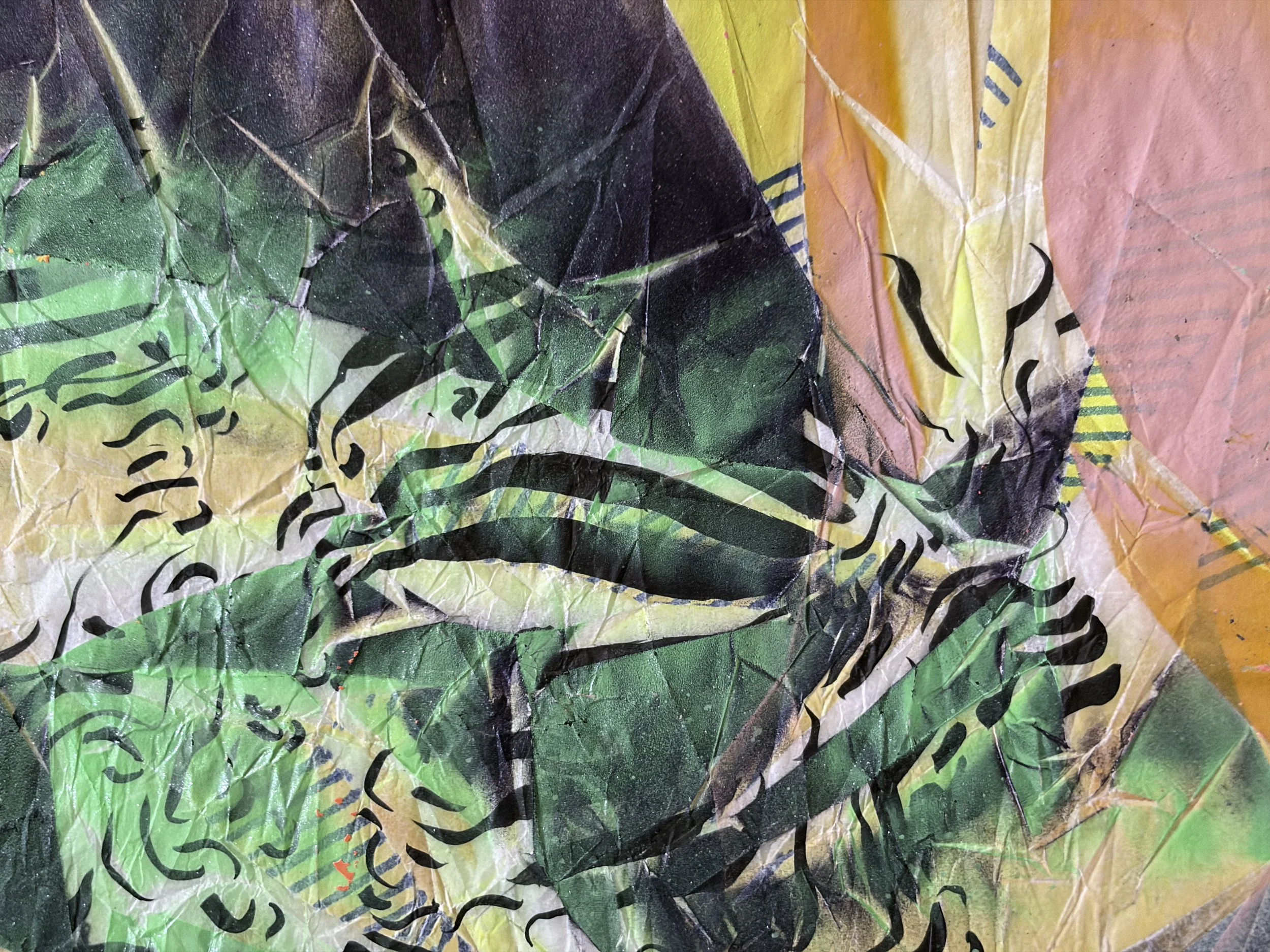
Above: Surprise, Surprise No. 16 carries the energy of a landscape viewed through multiple scales at once. A luminous green glow moves across the surface like reflected light, colored glass, or a strange atmospheric presence entering the image. The larger drawing marks create a feeling of fractured material—broken glass, translucent plastic, or reflective surfaces catching light from unexpected angles.
Warm oranges, golds, and yellows bring the feeling of summer fields and late-season vegetation, while blue linear passages suggest aerial views of agricultural landscapes: rows of crops, planted fields, and patterns created through human organization of the land.
The image shifts between natural and manufactured environments. It can feel like a walk through dry leaves, a field seen from above, or a collection of fragments gathered from everyday life and transformed into a new visual ecosystem.
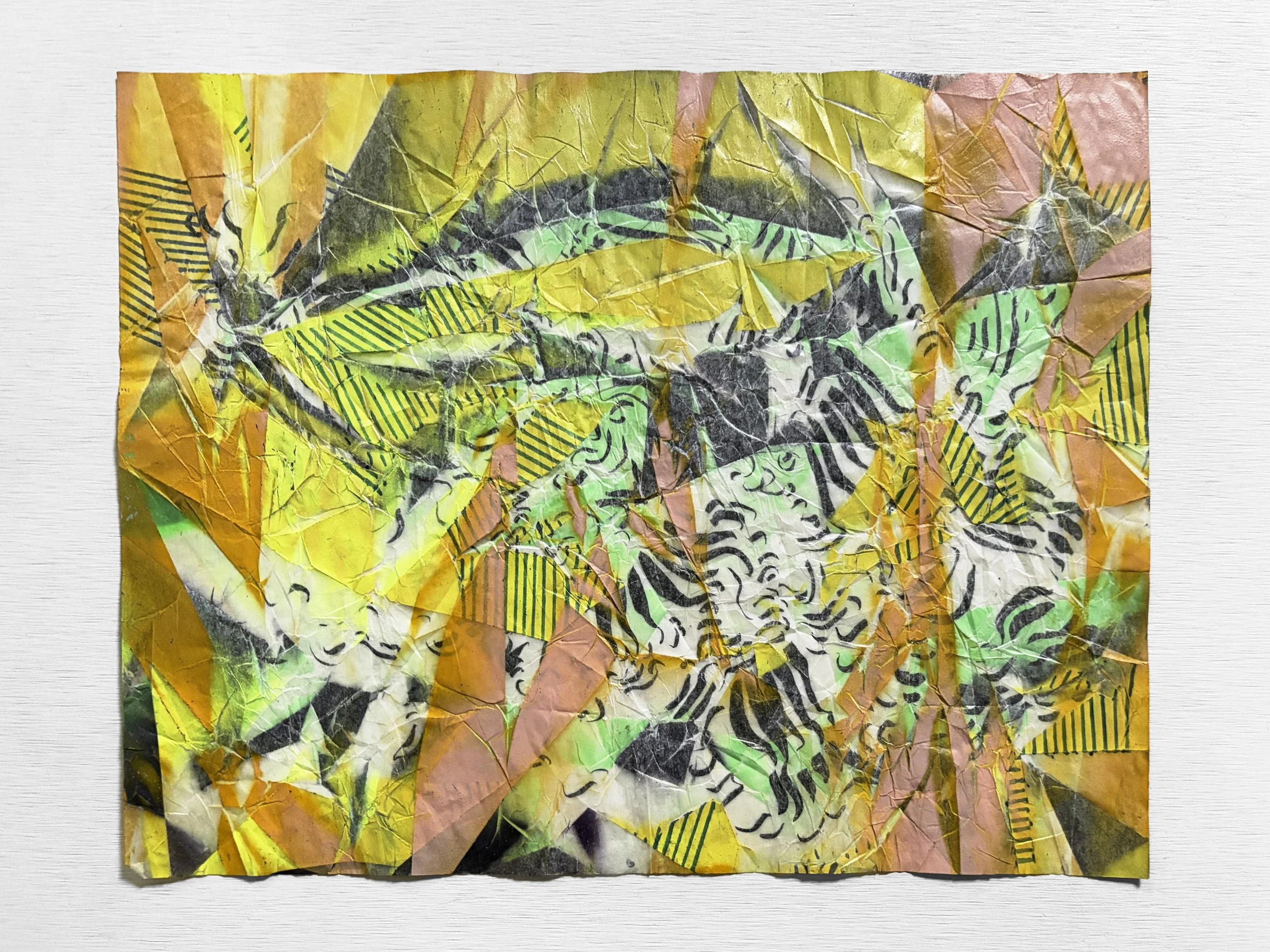
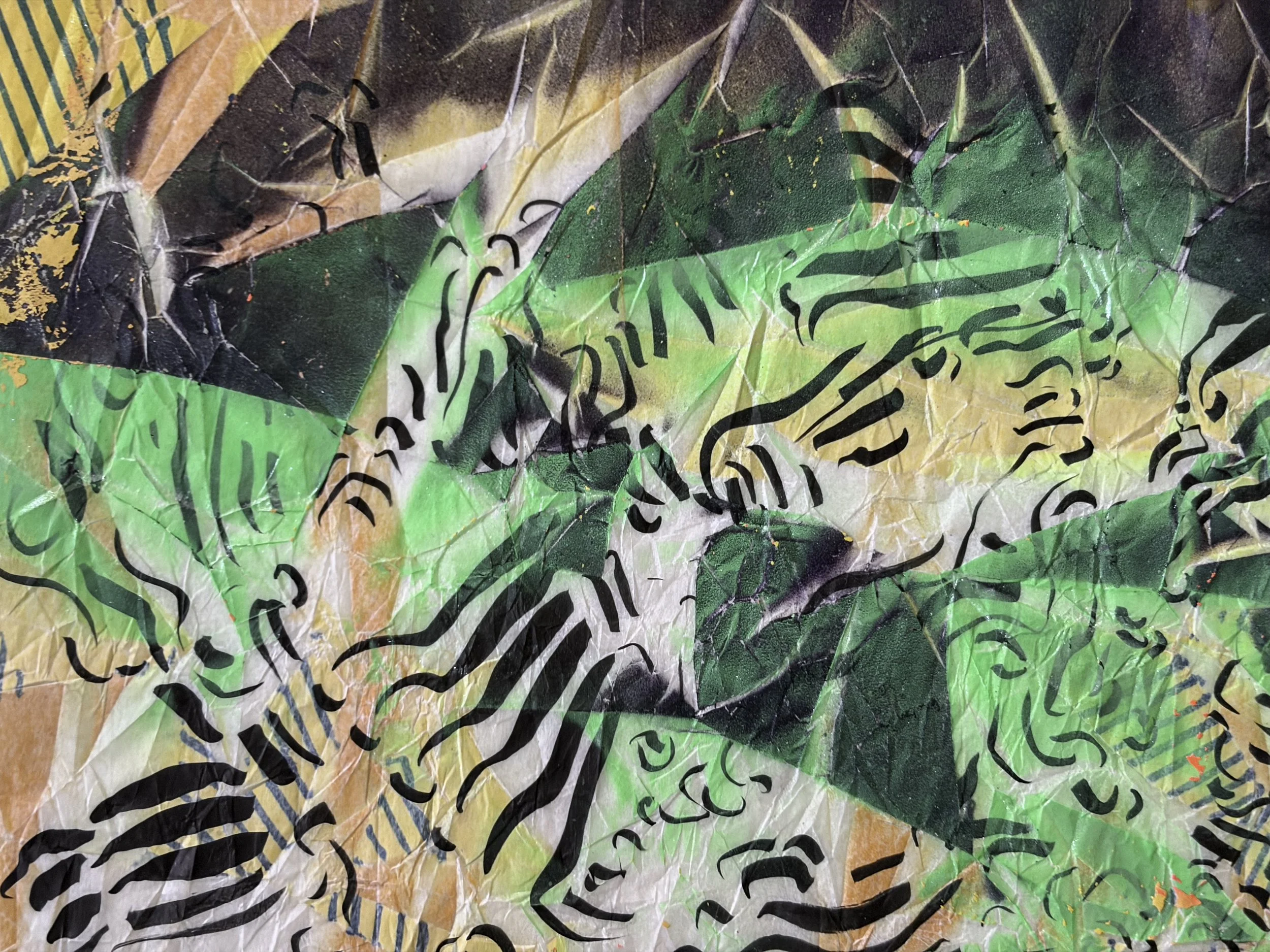
Below: The reverse surface reveals another layer of complexity, where the colors and structures become more spatial and dimensional. The green presence changes from surface reflection into something deeper, like a glow passing through the material or a trace left behind by another state of the work.
The dark gray-black passages create a strong graphic contrast, standing apart from the more layered neutrals elsewhere in the series. They suggest impact, compression, or a structure interrupted by force—a surface that has been struck, broken, or rearranged.
Reflection: Surprise, Surprise No. 16 explores the relationship between natural patterns and the materials of everyday life. The work moves between farmland, reflections, discarded objects, and accumulated fragments, asking how visual meaning changes when familiar materials are removed from their original context.
The process of folding, transferring, and reopening the tracing paper creates a similar transformation. Marks become separated from their original intentions and return as something altered: part landscape, part object, part memory.
Unlike some works in the series that suggest a single emerging figure or environment, Surprise, Surprise No. 16 feels more like an accumulation of impressions—a visual drawer of collected fragments where nature, industry, and daily life overlap. The result is not disorder, but a new kind of organization created through collision and change.
Above: Surprise, Surprise No. 16 carries the energy of a landscape viewed through multiple scales at once. A luminous green glow moves across the surface like reflected light, colored glass, or a strange atmospheric presence entering the image. The larger drawing marks create a feeling of fractured material—broken glass, translucent plastic, or reflective surfaces catching light from unexpected angles.
Warm oranges, golds, and yellows bring the feeling of summer fields and late-season vegetation, while blue linear passages suggest aerial views of agricultural landscapes: rows of crops, planted fields, and patterns created through human organization of the land.
The image shifts between natural and manufactured environments. It can feel like a walk through dry leaves, a field seen from above, or a collection of fragments gathered from everyday life and transformed into a new visual ecosystem.
Below: The reverse surface reveals another layer of complexity, where the colors and structures become more spatial and dimensional. The green presence changes from surface reflection into something deeper, like a glow passing through the material or a trace left behind by another state of the work.
The dark gray-black passages create a strong graphic contrast, standing apart from the more layered neutrals elsewhere in the series. They suggest impact, compression, or a structure interrupted by force—a surface that has been struck, broken, or rearranged.
Reflection: Surprise, Surprise No. 16 explores the relationship between natural patterns and the materials of everyday life. The work moves between farmland, reflections, discarded objects, and accumulated fragments, asking how visual meaning changes when familiar materials are removed from their original context.
The process of folding, transferring, and reopening the tracing paper creates a similar transformation. Marks become separated from their original intentions and return as something altered: part landscape, part object, part memory.
Unlike some works in the series that suggest a single emerging figure or environment, Surprise, Surprise No. 16 feels more like an accumulation of impressions—a visual drawer of collected fragments where nature, industry, and daily life overlap. The result is not disorder, but a new kind of organization created through collision and change.