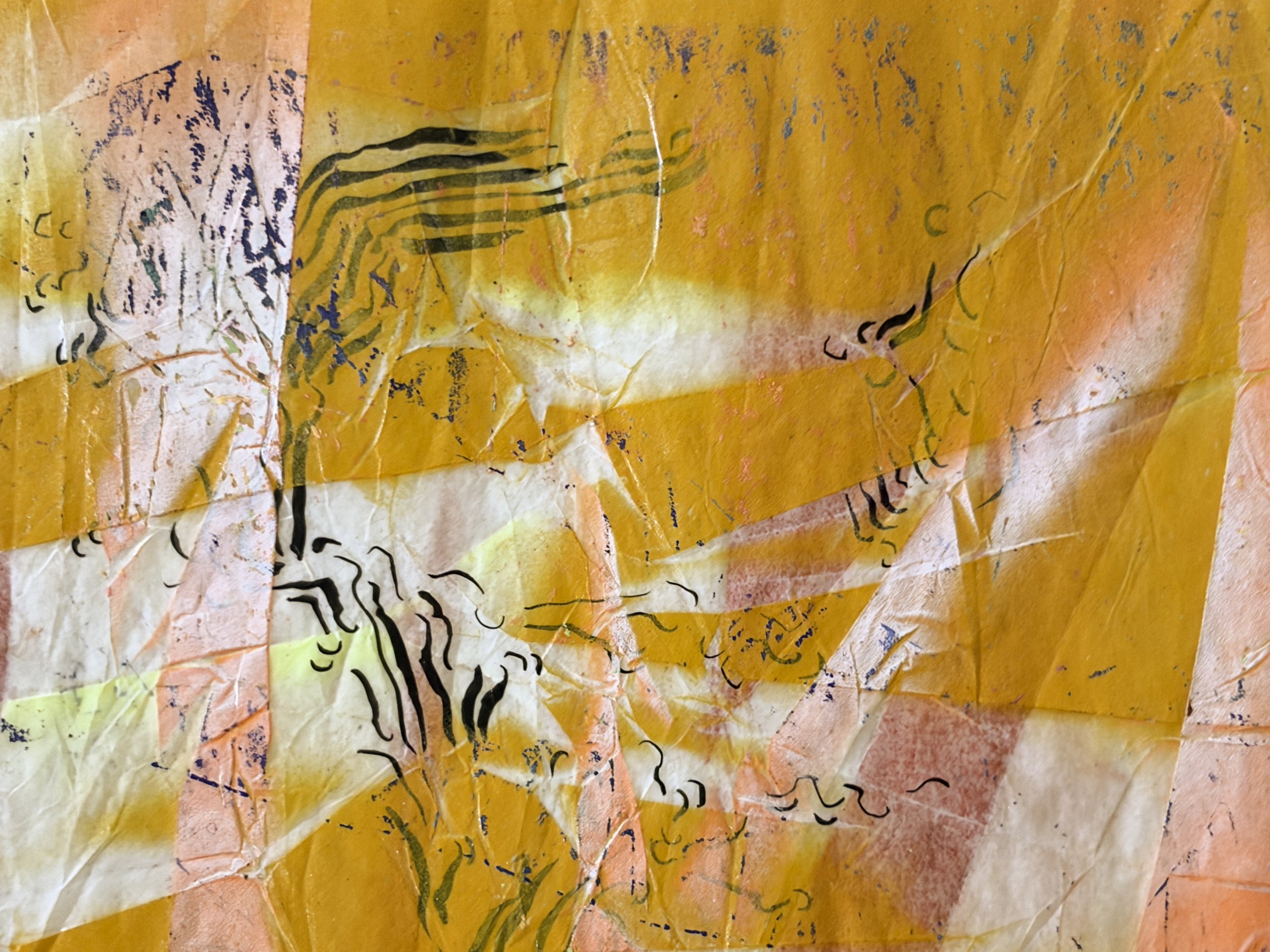
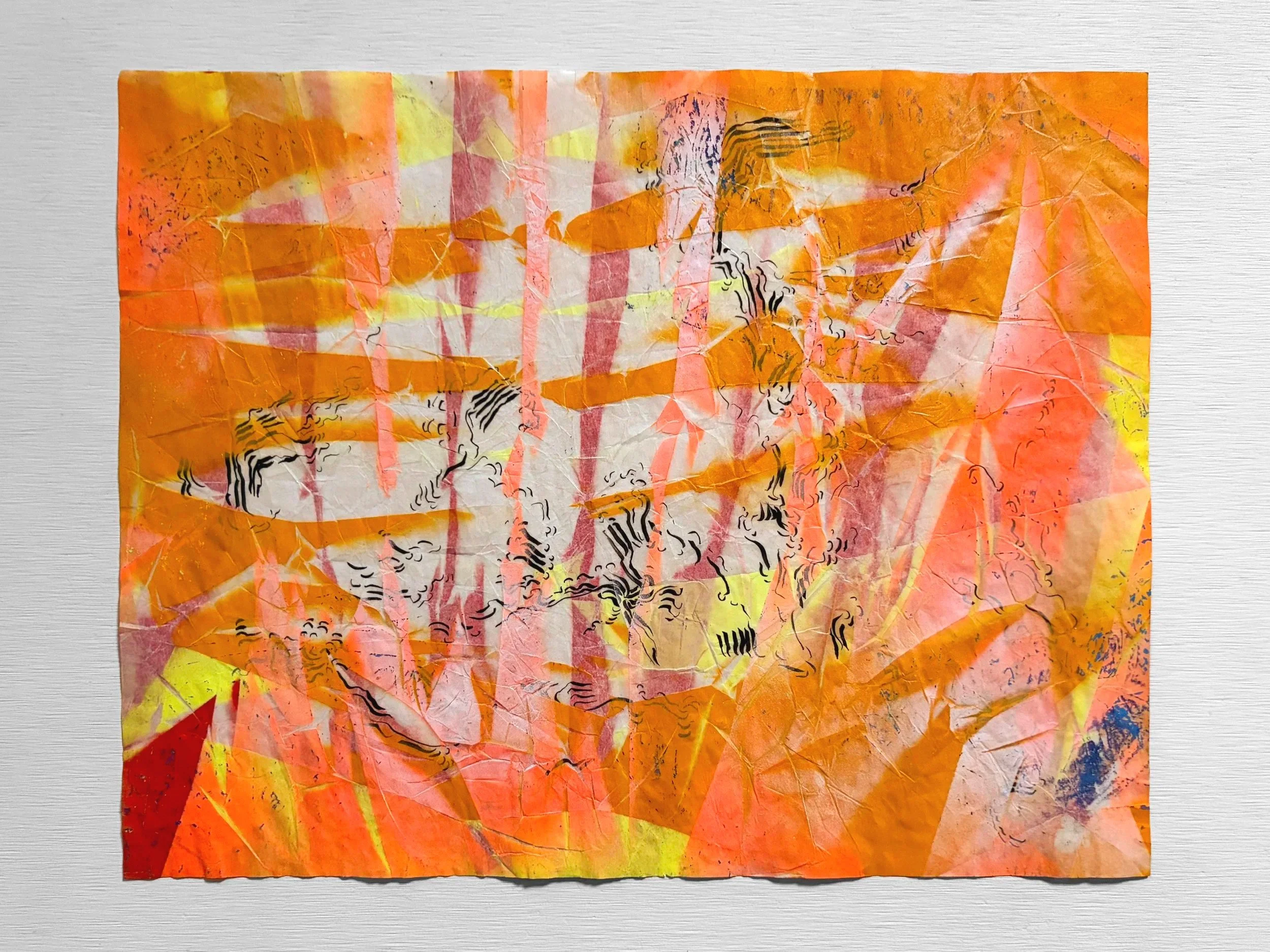
Above: Surprise, Surprise No. 15 creates the sensation of looking through a piece of amber held toward the light. Rich oranges, yellows, and subtle reds form a warm translucent field where fragments of drawing appear suspended within the surface. The image suggests preserved material: insects trapped in resin, organic fragments held in time, or remnants of a moment that has been captured before disappearing.
The drawing appears partially obscured and interrupted, as if broken apart and suspended within the layers of color. What might have once been a continuous gesture has become a collection of fragments, creating the feeling of looking into a specimen whose internal history can only be partially reconstructed.
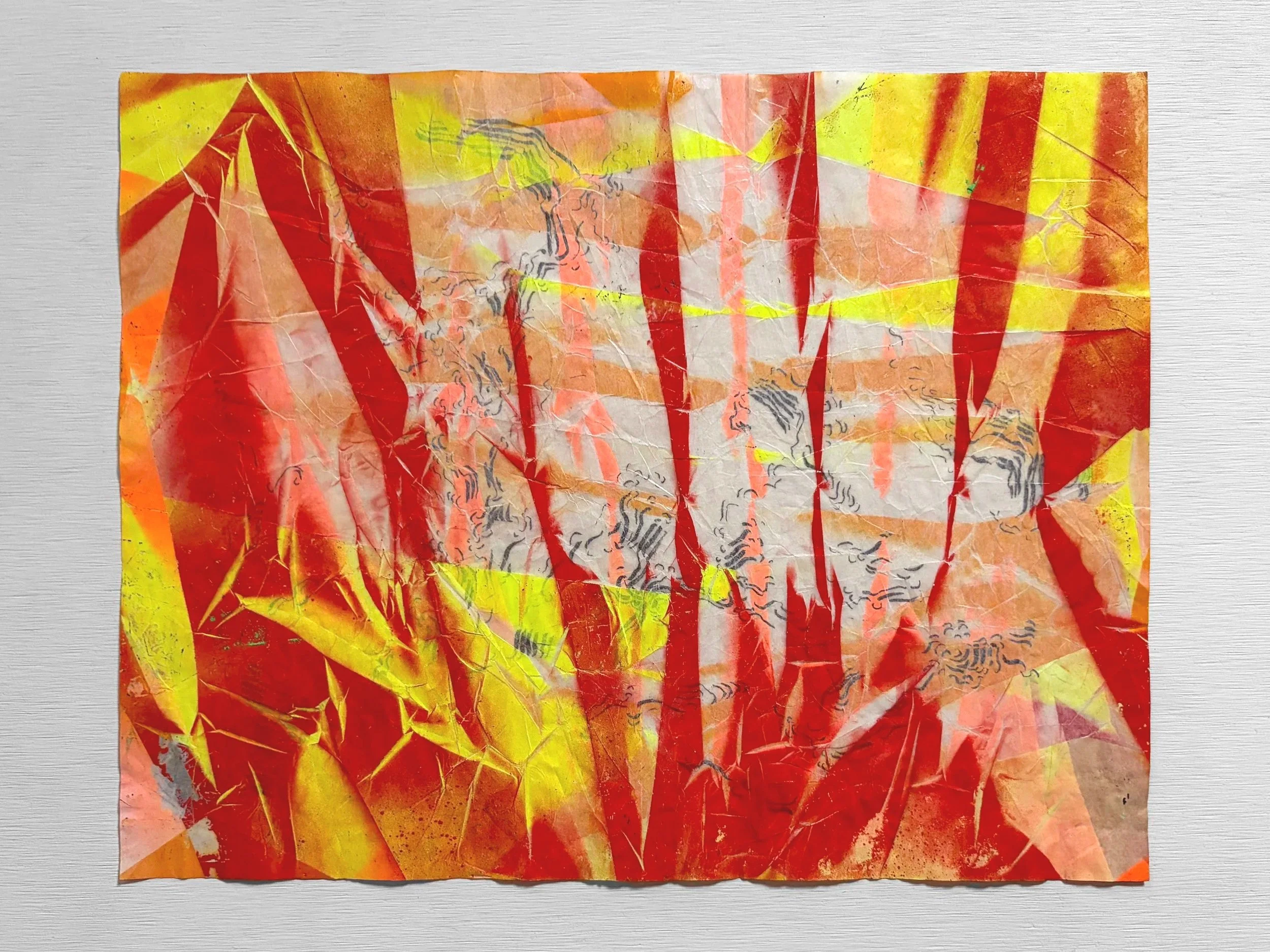
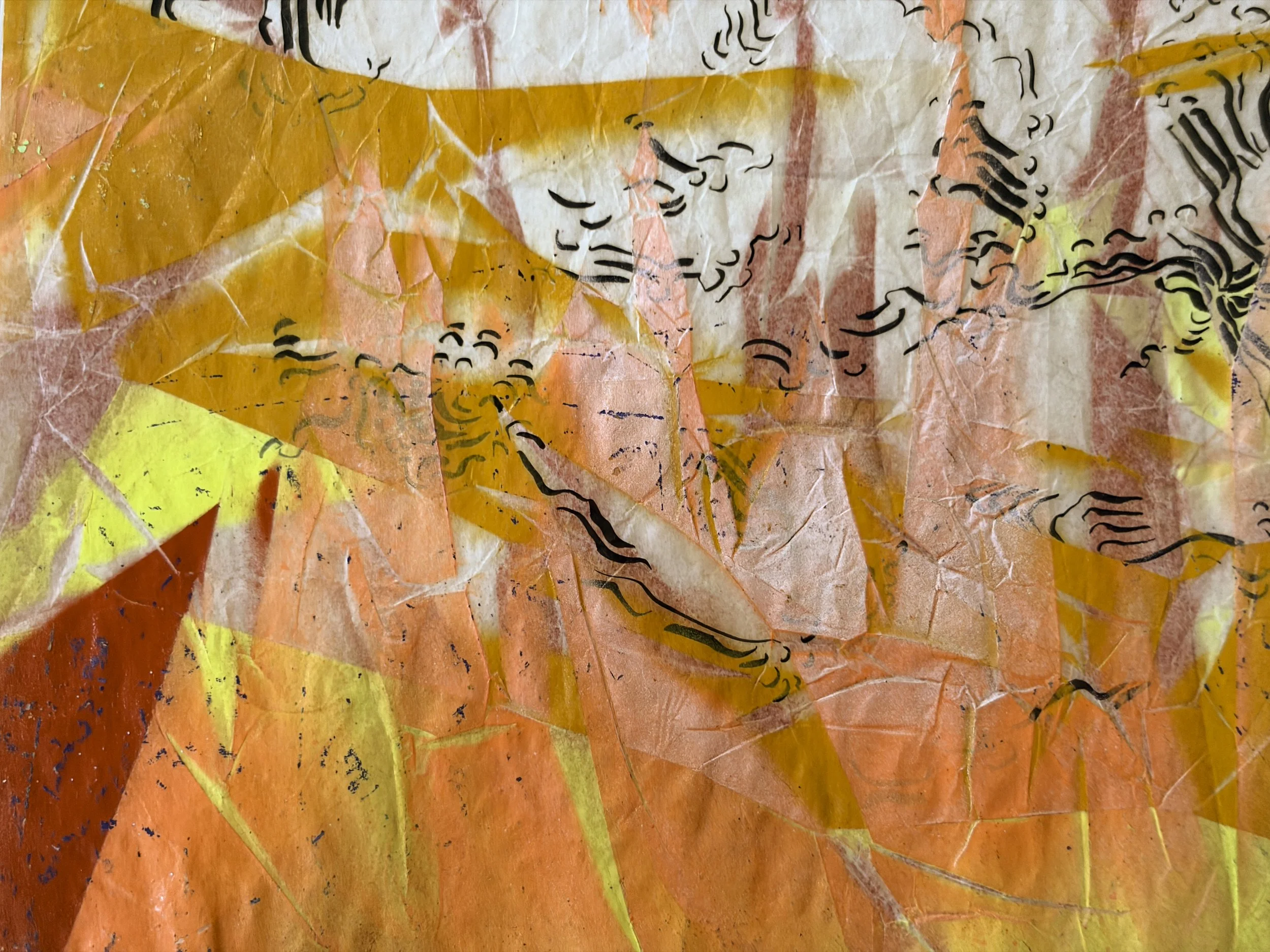
Below: The reverse surface reveals greater contrast and dimensionality, allowing the hidden structures within the work to become more apparent. Darker colors emerge beneath the luminous orange field, creating the sensation of looking deeper into the material rather than simply seeing another surface.
The image shifts between organic and geological forms. Vertical clusters suggest crystals growing upward, while the translucent colors recall minerals, resin, and other materials that hold evidence of formation within themselves. The two sides create different experiences of the same object: one more unified and atmospheric, the other more complex and spatial.
Reflection: Surprise, Surprise No. 15 explores the fascination of objects that preserve traces of time. Amber has long captured human imagination because it contains evidence of another moment: something living, moving, and temporary transformed into something enduring.
The process behind the work follows a similar logic. Layers of drawing, paint, folding, pressure, transfer, and reopening accumulate into a surface where previous states remain present but partially hidden. The finished image becomes a kind of visual specimen, holding fragments of its own history within the material.
Like a dream remembered imperfectly or a natural object studied closely, the work invites searching rather than resolution. The viewer looks through the surface, looking for what has been preserved, what has disappeared, and what unexpected forms have emerged in between.
Above: Surprise, Surprise No. 15 creates the sensation of looking through a piece of amber held toward the light. Rich oranges, yellows, and subtle reds form a warm translucent field where fragments of drawing appear suspended within the surface. The image suggests preserved material: insects trapped in resin, organic fragments held in time, or remnants of a moment that has been captured before disappearing.
The drawing appears partially obscured and interrupted, as if broken apart and suspended within the layers of color. What might have once been a continuous gesture has become a collection of fragments, creating the feeling of looking into a specimen whose internal history can only be partially reconstructed.
Below: The reverse surface reveals greater contrast and dimensionality, allowing the hidden structures within the work to become more apparent. Darker colors emerge beneath the luminous orange field, creating the sensation of looking deeper into the material rather than simply seeing another surface.
The image shifts between organic and geological forms. Vertical clusters suggest crystals growing upward, while the translucent colors recall minerals, resin, and other materials that hold evidence of formation within themselves. The two sides create different experiences of the same object: one more unified and atmospheric, the other more complex and spatial.
Reflection: Surprise, Surprise No. 15 explores the fascination of objects that preserve traces of time. Amber has long captured human imagination because it contains evidence of another moment: something living, moving, and temporary transformed into something enduring.
The process behind the work follows a similar logic. Layers of drawing, paint, folding, pressure, transfer, and reopening accumulate into a surface where previous states remain present but partially hidden. The finished image becomes a kind of visual specimen, holding fragments of its own history within the material.
Like a dream remembered imperfectly or a natural object studied closely, the work invites searching rather than resolution. The viewer looks through the surface, looking for what has been preserved, what has disappeared, and what unexpected forms have emerged in between.