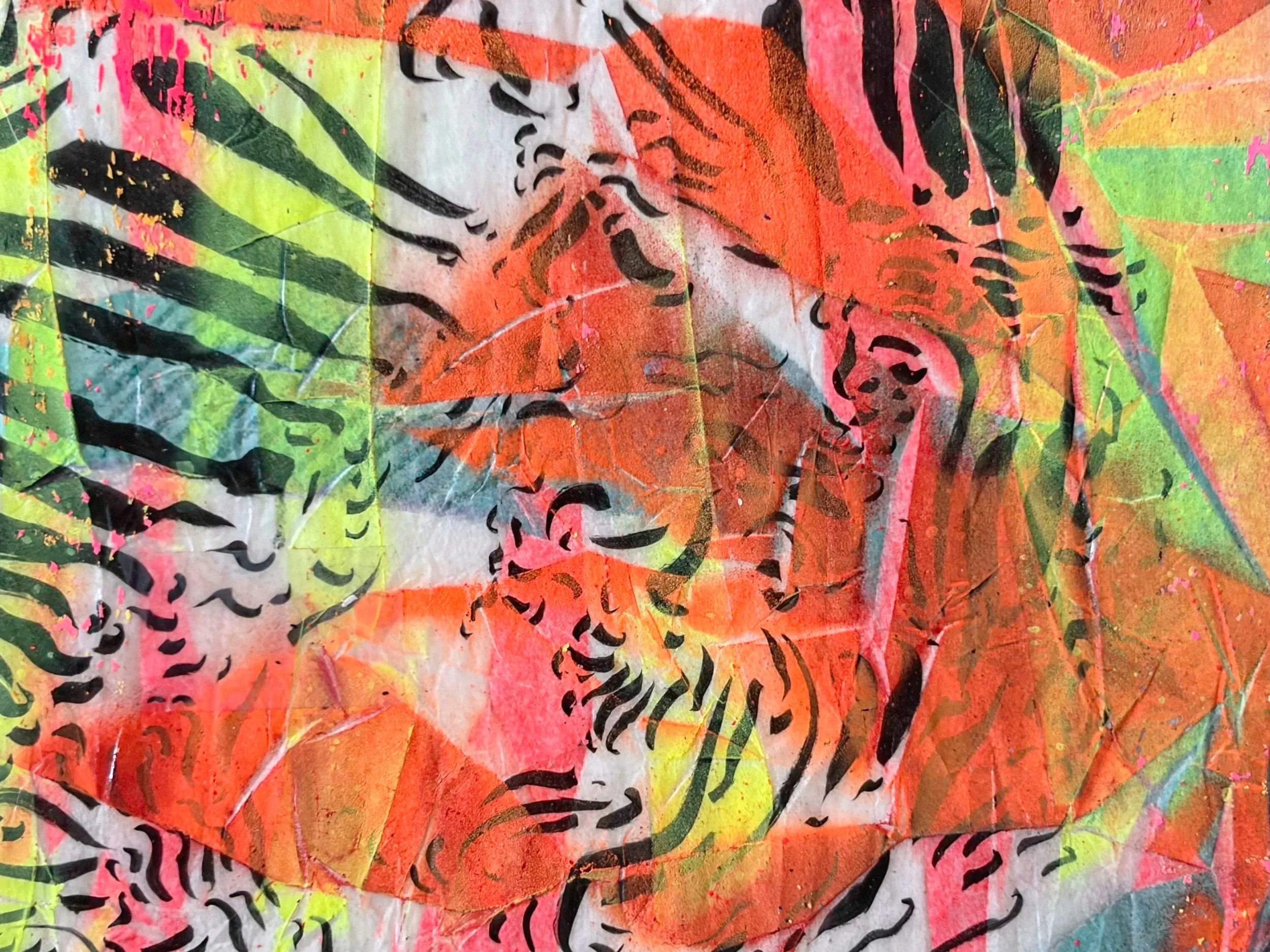
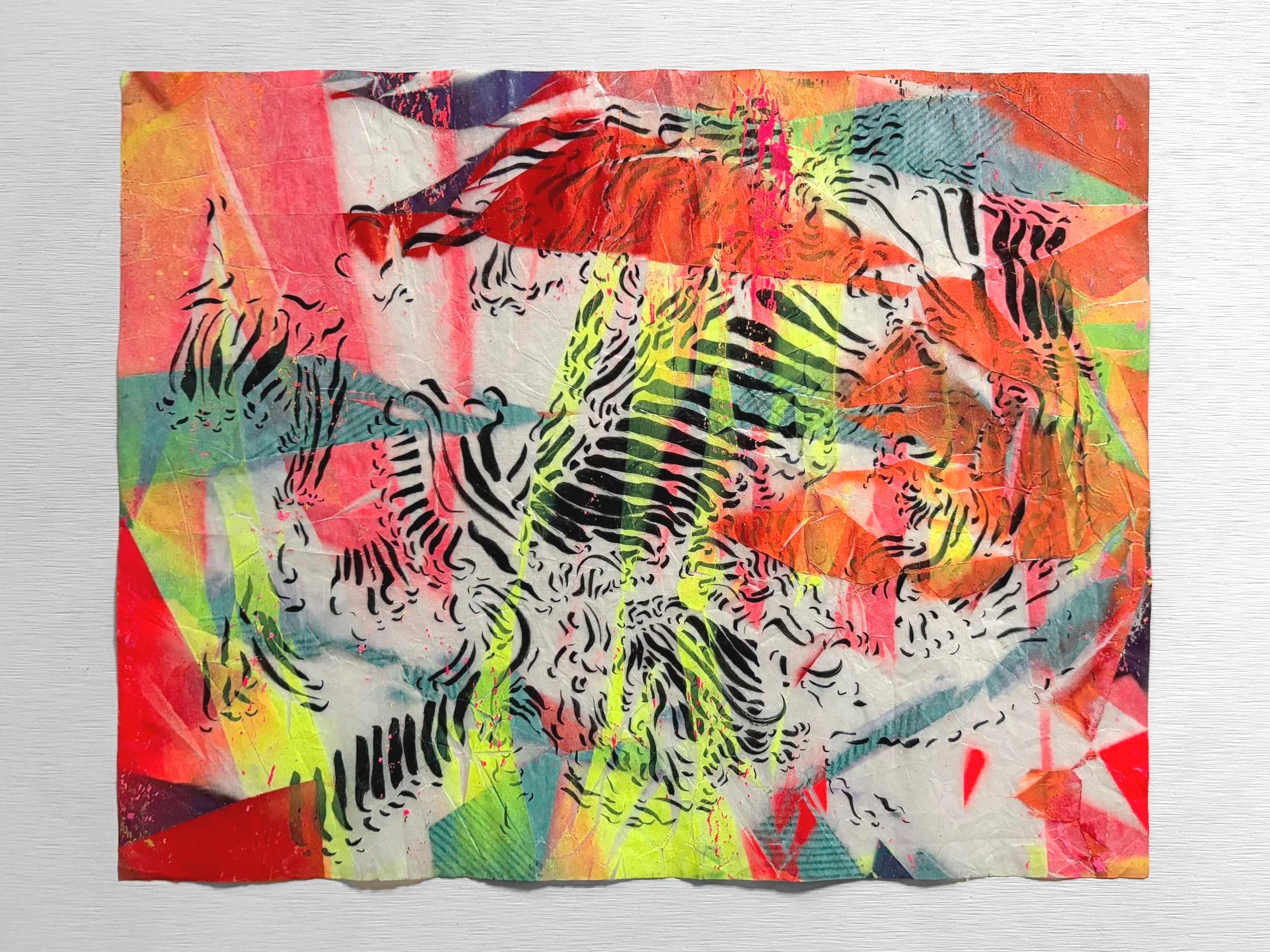
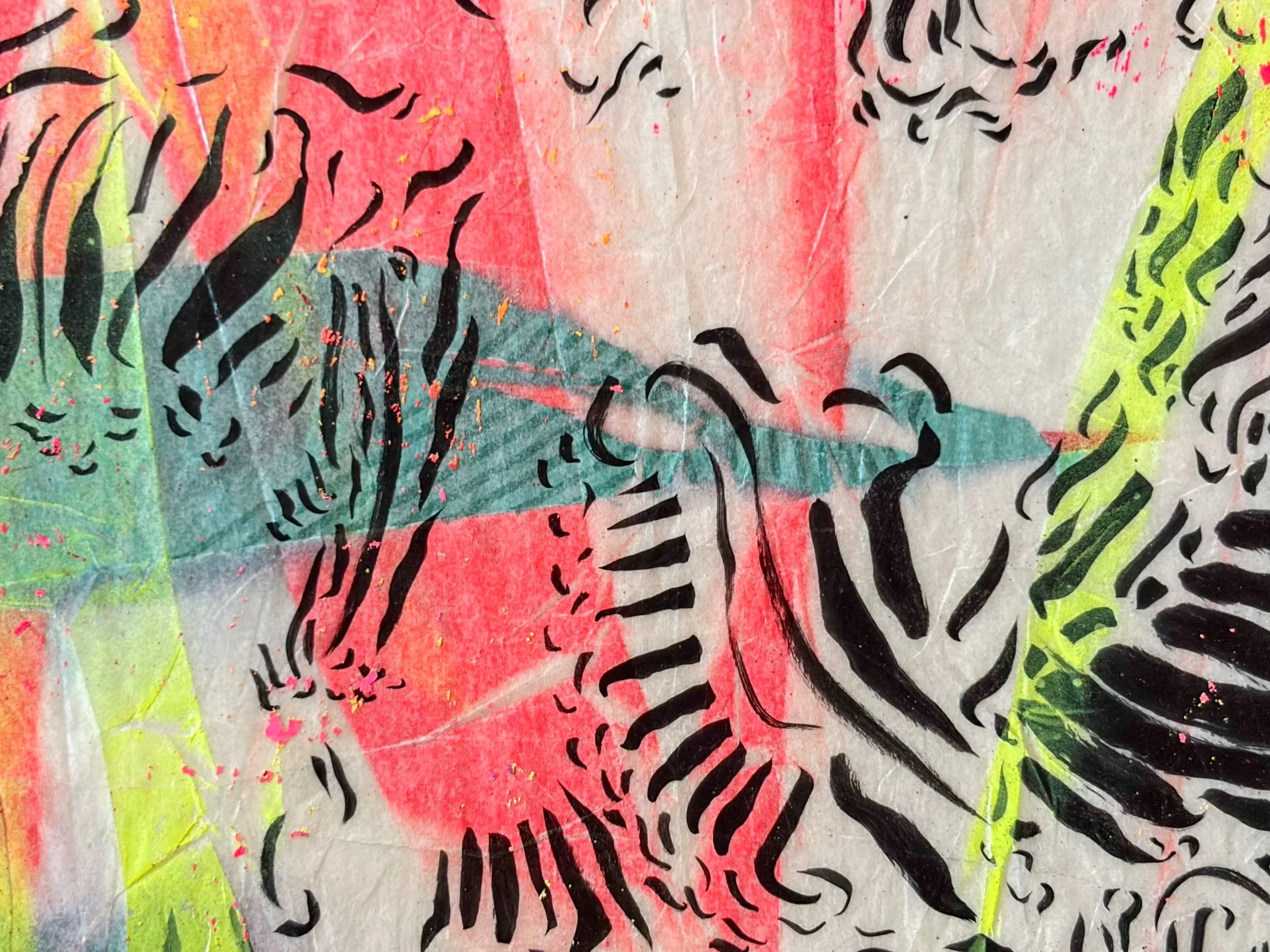
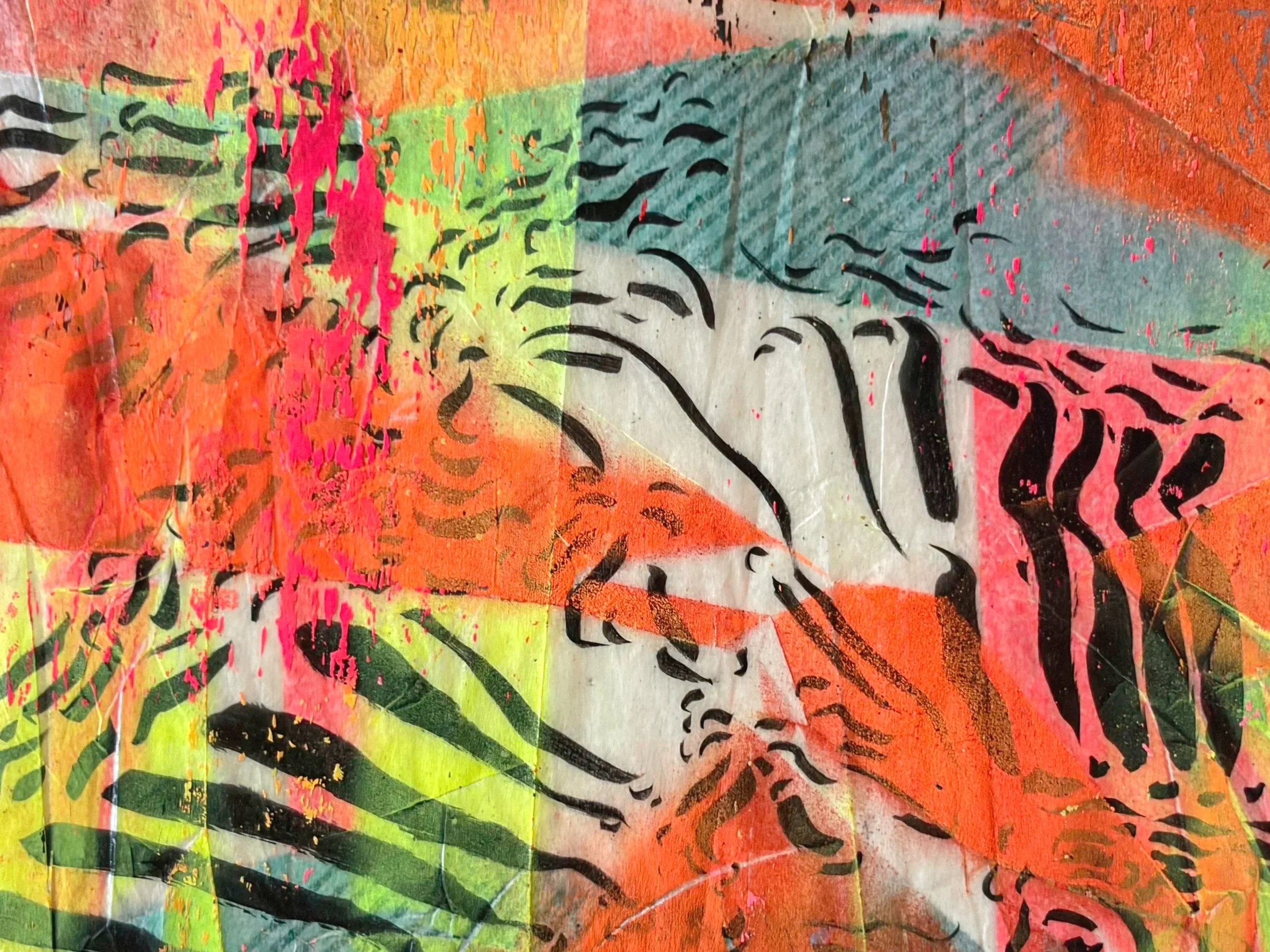
Above: Surprise, Surprise No. 12 occupies the space between flame, landscape, and organic remains. The drawn structures move like charred wood grain after a fire, where burning transforms branches into dark networks of cracks, stripes, and divisions. At the same time, the marks suggest feathers, grasses, animal traces, or forms suspended between movement and stillness.
The work carries a visceral quality without becoming fixed to a single image. A viewer may sense the remains of a creature, the aftermath of weather, or a landscape transformed by fire. Fluorescent yellow moves across the surface like a final flare of heat or light catching on a fragile structure, creating tension between decay and renewal.
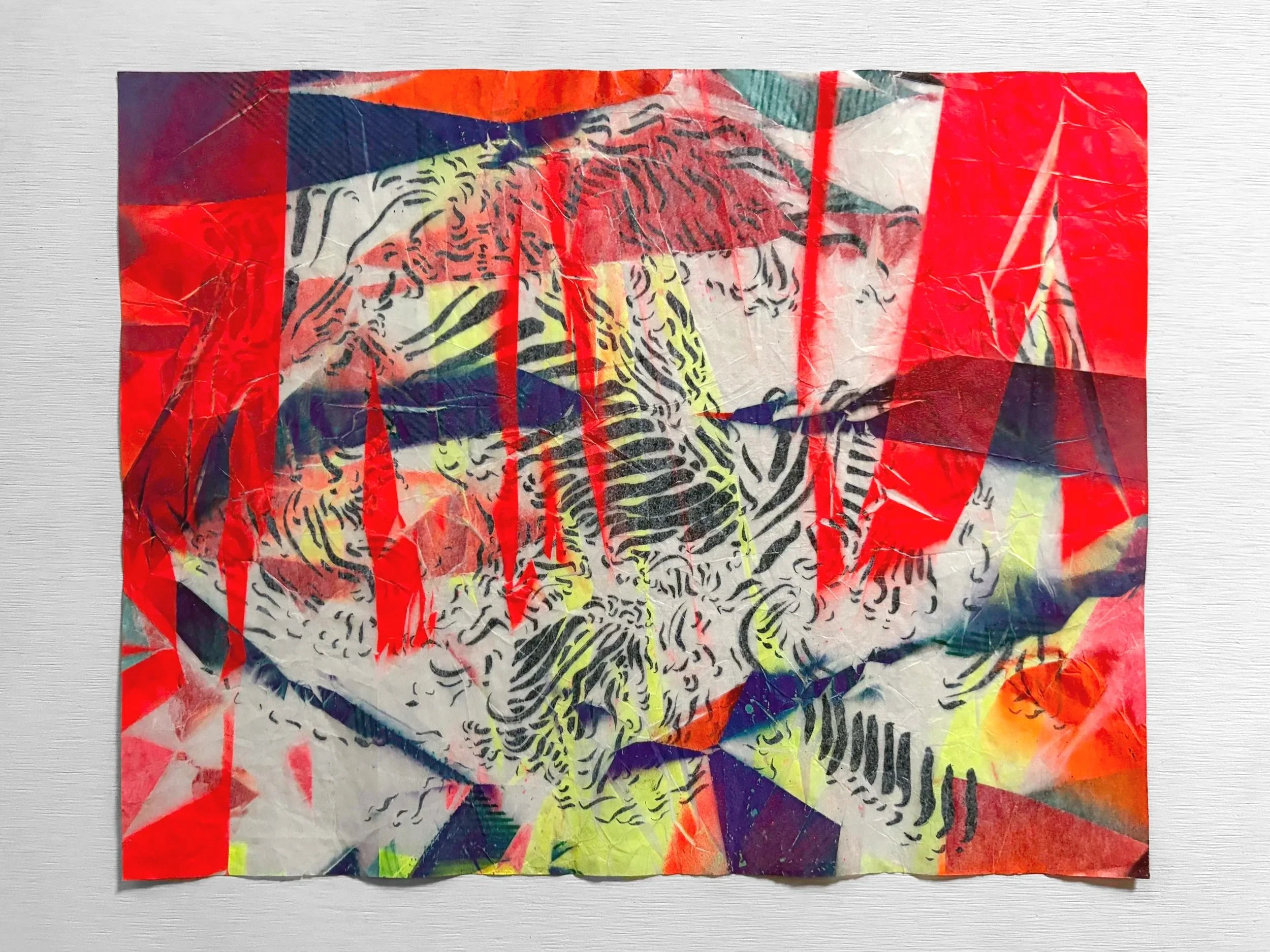
Below: The reverse surface reveals another hidden energy within the work. Strong red fluorescent passages and deeper blue-green tones emerge as a dramatic shift from the Above view, transforming the image into something colder, deeper, and more mysterious.
The contrast between the two sides heightens the feeling that the work contains multiple realities. What appears warm and exposed from one direction becomes darker and more concealed from another. The hidden surface becomes part of the experience, creating a desire to see what cannot be simultaneously seen.
Reflection: Surprise, Surprise No. 12 explores the instability of interpretation: how the same marks can become animal, landscape, fire, weather, or memory depending on how they are encountered. The image exists in the space between recognition and uncertainty, where the mind searches for patterns and stories within complex surfaces.
The process of folding, transferring, and reopening the tracing paper creates a work that carries traces of transformation. Like burned wood, fossils, feathers, or natural specimens, the surface feels like evidence of something that has already happened. Yet the image remains open, continuing to shift between states.
There is also a tension between revelation and concealment. To display only one side of a two-sided work creates a deliberate absence—the visible image becomes an invitation to imagine the hidden one. Surprise, Surprise No. 12 embraces that unresolved condition: a finished object that still contains a world that cannot be fully accessed.
Above: Surprise, Surprise No. 12 occupies the space between flame, landscape, and organic remains. The drawn structures move like charred wood grain after a fire, where burning transforms branches into dark networks of cracks, stripes, and divisions. At the same time, the marks suggest feathers, grasses, animal traces, or forms suspended between movement and stillness.
The work carries a visceral quality without becoming fixed to a single image. A viewer may sense the remains of a creature, the aftermath of weather, or a landscape transformed by fire. Fluorescent yellow moves across the surface like a final flare of heat or light catching on a fragile structure, creating tension between decay and renewal.
Below: The reverse surface reveals another hidden energy within the work. Strong red fluorescent passages and deeper blue-green tones emerge as a dramatic shift from the Above view, transforming the image into something colder, deeper, and more mysterious.
The contrast between the two sides heightens the feeling that the work contains multiple realities. What appears warm and exposed from one direction becomes darker and more concealed from another. The hidden surface becomes part of the experience, creating a desire to see what cannot be simultaneously seen.
Reflection: Surprise, Surprise No. 12 explores the instability of interpretation: how the same marks can become animal, landscape, fire, weather, or memory depending on how they are encountered. The image exists in the space between recognition and uncertainty, where the mind searches for patterns and stories within complex surfaces.
The process of folding, transferring, and reopening the tracing paper creates a work that carries traces of transformation. Like burned wood, fossils, feathers, or natural specimens, the surface feels like evidence of something that has already happened. Yet the image remains open, continuing to shift between states.
There is also a tension between revelation and concealment. To display only one side of a two-sided work creates a deliberate absence—the visible image becomes an invitation to imagine the hidden one. Surprise, Surprise No. 12 embraces that unresolved condition: a finished object that still contains a world that cannot be fully accessed.