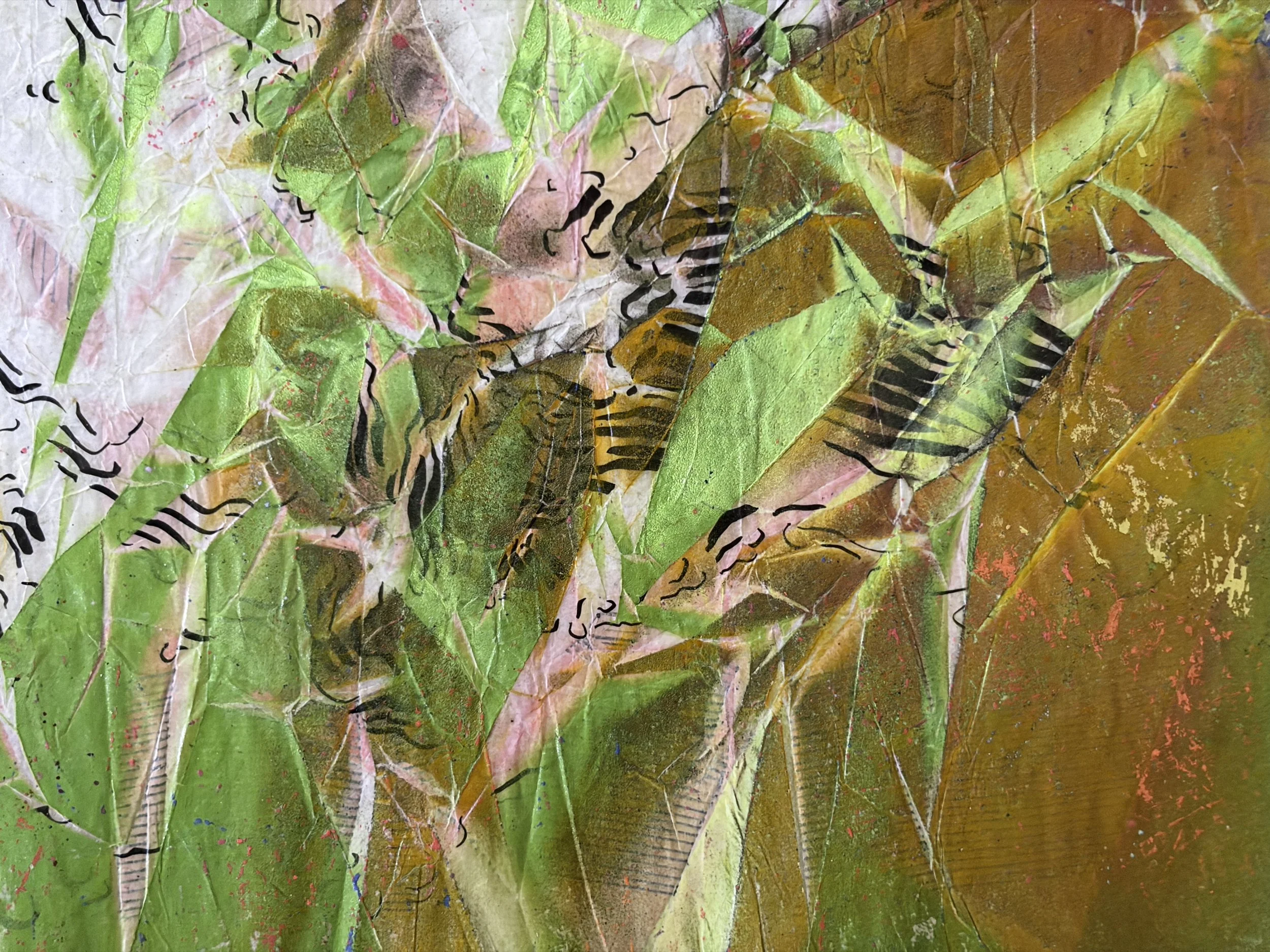
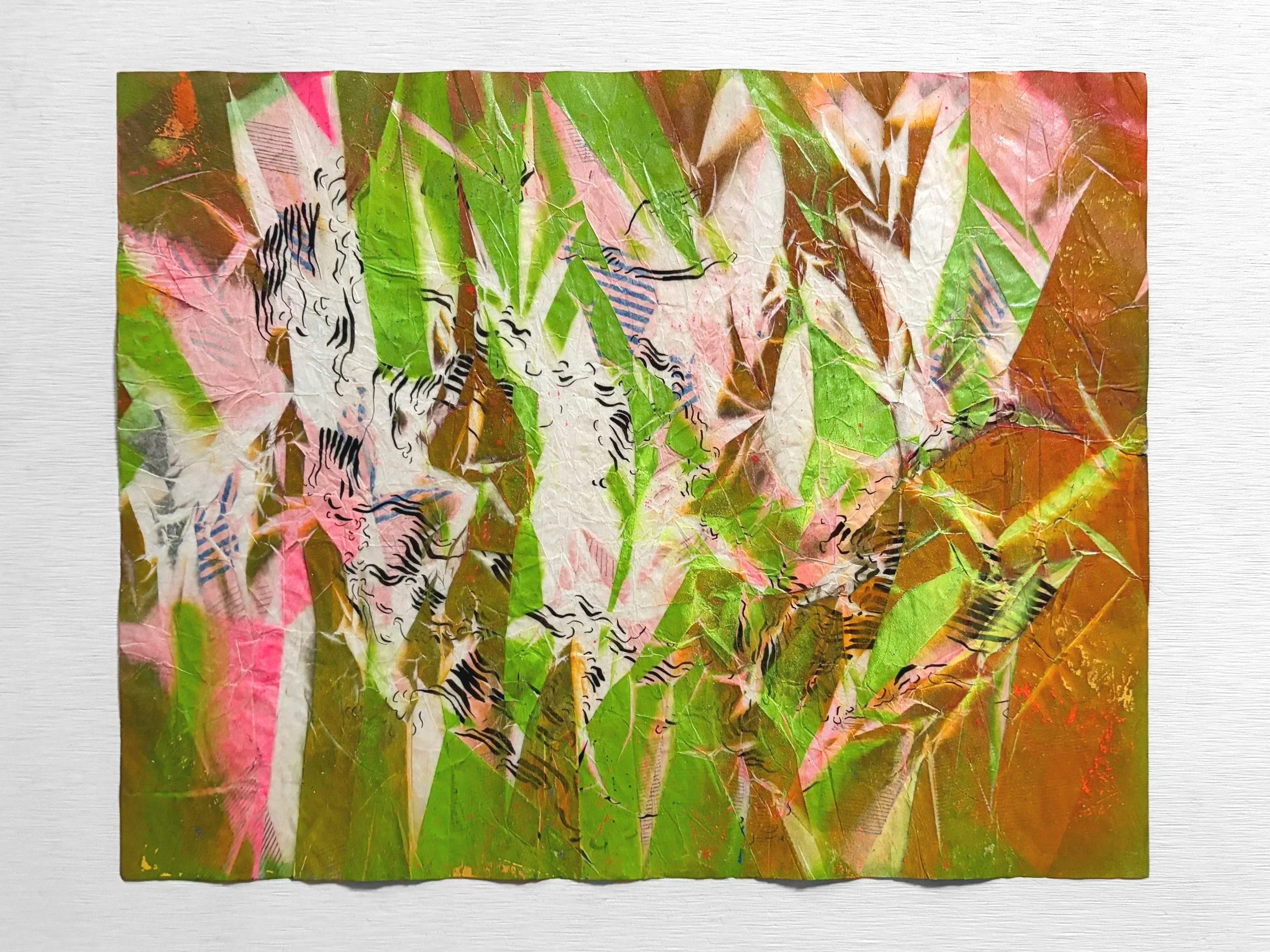
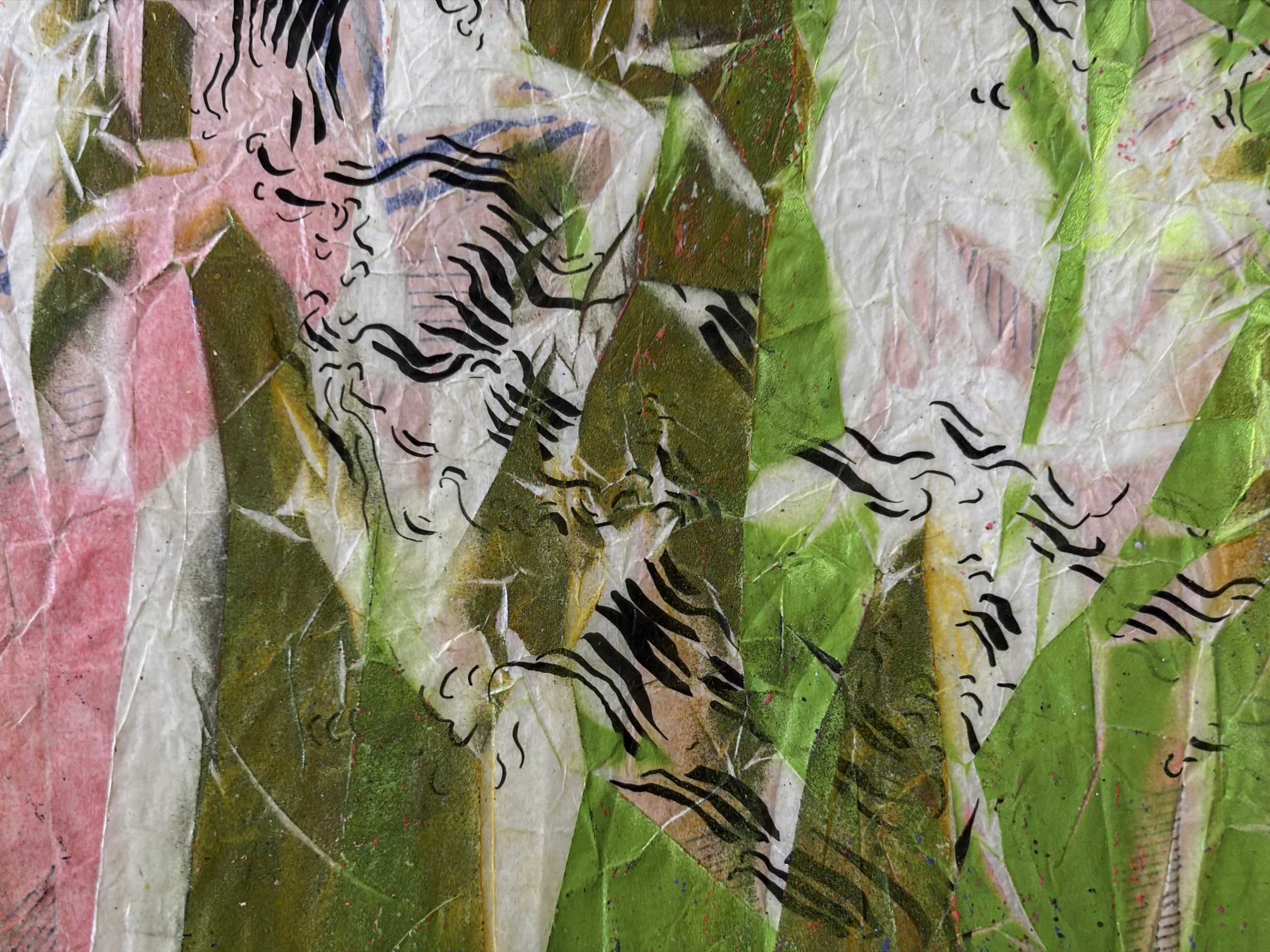
Above: Surprise, Surprise No. 10 presents a rich, verdant field where layers of color create the feeling of a living environment. Deep greens, warm oranges, and rusty earth tones suggest vegetation, mineral surfaces, and the shifting colors of plants as they move through changing light.
The image carries the feeling of an ecosystem observed closely: an orchid, tropical flower, desert bloom, or hidden garden where growth has taken hold. Yet the drawing remains partially concealed beneath accumulated layers of paint, making the underlying structures feel less like identifiable forms and more like traces of something growing, moving, or becoming absorbed into its environment.
The colors appear natural at first glance, but closer looking reveals the complexity beneath them. Fluorescent pigments and traditional colors overlap to create surfaces that behave like organic matter—lush, layered, and full of internal variation.
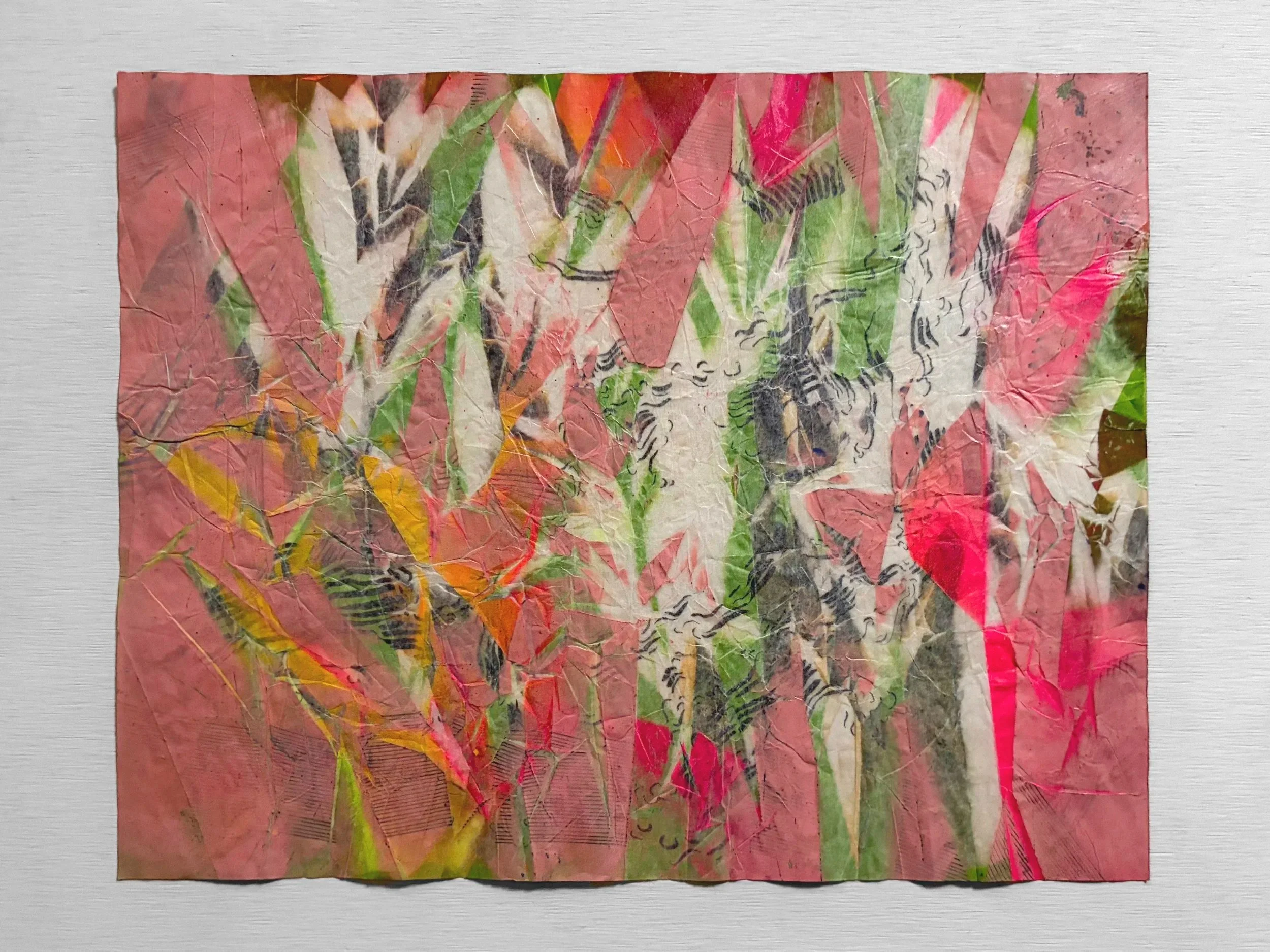
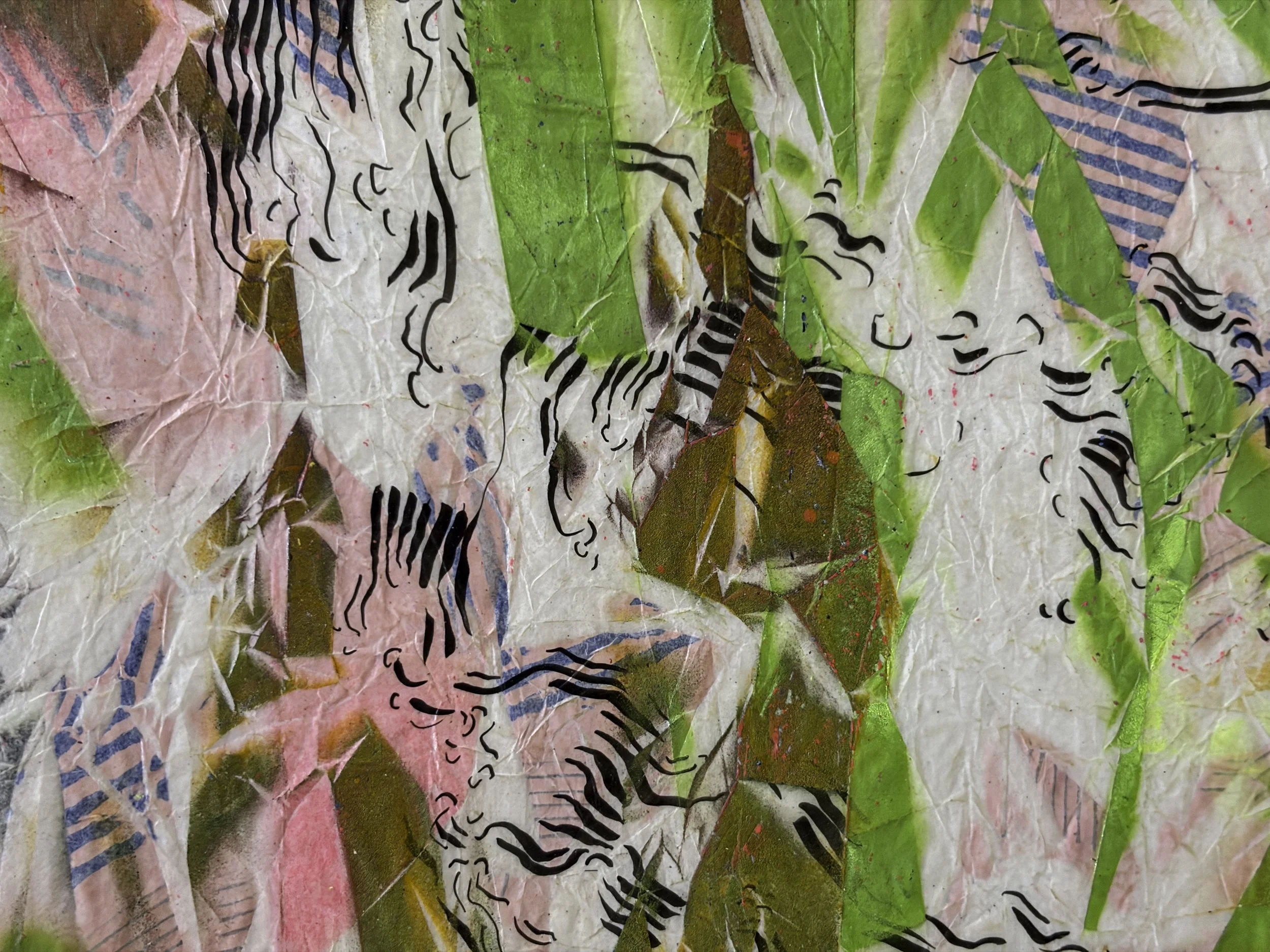
Below: The reverse surface reveals another atmosphere within the same image. Hidden fluorescent passages become more apparent, allowing the warmer colors to emerge with a different intensity. The relationship between the two sides suggests a landscape viewed under different conditions of light, like the same place seen at midday and again at dusk.
Blue linear passages create a sense of depth, recalling water moving through a stream bed, reflected light beneath vegetation, or a distant layer within the landscape. The image shifts between terrestrial and aquatic, tropical and desert, growth and mineral formation.
Reflection: Surprise, Surprise No. 10 explores how perception builds coherence from complexity. A single color can be the result of many hidden layers; a single form can emerge from countless overlapping decisions. The work reflects the way we experience natural environments, where what appears simple from a distance often reveals extraordinary complexity when examined closely.
The process of folding, transferring, and reopening the tracing paper allows the image to develop like a remembered place. Forms are partially revealed and partially hidden, creating a landscape that feels both familiar and impossible to locate.
Like a dream fragment or a memory of a landscape encountered long ago, Surprise, Surprise No. 10 does not describe a specific place. Instead, it creates the sensation of discovering one—a place where color, growth, water, and time have accumulated into a single living image.
Above: Surprise, Surprise No. 10 presents a rich, verdant field where layers of color create the feeling of a living environment. Deep greens, warm oranges, and rusty earth tones suggest vegetation, mineral surfaces, and the shifting colors of plants as they move through changing light.
The image carries the feeling of an ecosystem observed closely: an orchid, tropical flower, desert bloom, or hidden garden where growth has taken hold. Yet the drawing remains partially concealed beneath accumulated layers of paint, making the underlying structures feel less like identifiable forms and more like traces of something growing, moving, or becoming absorbed into its environment.
The colors appear natural at first glance, but closer looking reveals the complexity beneath them. Fluorescent pigments and traditional colors overlap to create surfaces that behave like organic matter—lush, layered, and full of internal variation.
Below: The reverse surface reveals another atmosphere within the same image. Hidden fluorescent passages become more apparent, allowing the warmer colors to emerge with a different intensity. The relationship between the two sides suggests a landscape viewed under different conditions of light, like the same place seen at midday and again at dusk.
Blue linear passages create a sense of depth, recalling water moving through a stream bed, reflected light beneath vegetation, or a distant layer within the landscape. The image shifts between terrestrial and aquatic, tropical and desert, growth and mineral formation.
Reflection: Surprise, Surprise No. 10 explores how perception builds coherence from complexity. A single color can be the result of many hidden layers; a single form can emerge from countless overlapping decisions. The work reflects the way we experience natural environments, where what appears simple from a distance often reveals extraordinary complexity when examined closely.
The process of folding, transferring, and reopening the tracing paper allows the image to develop like a remembered place. Forms are partially revealed and partially hidden, creating a landscape that feels both familiar and impossible to locate.
Like a dream fragment or a memory of a landscape encountered long ago, Surprise, Surprise No. 10 does not describe a specific place. Instead, it creates the sensation of discovering one—a place where color, growth, water, and time have accumulated into a single living image.